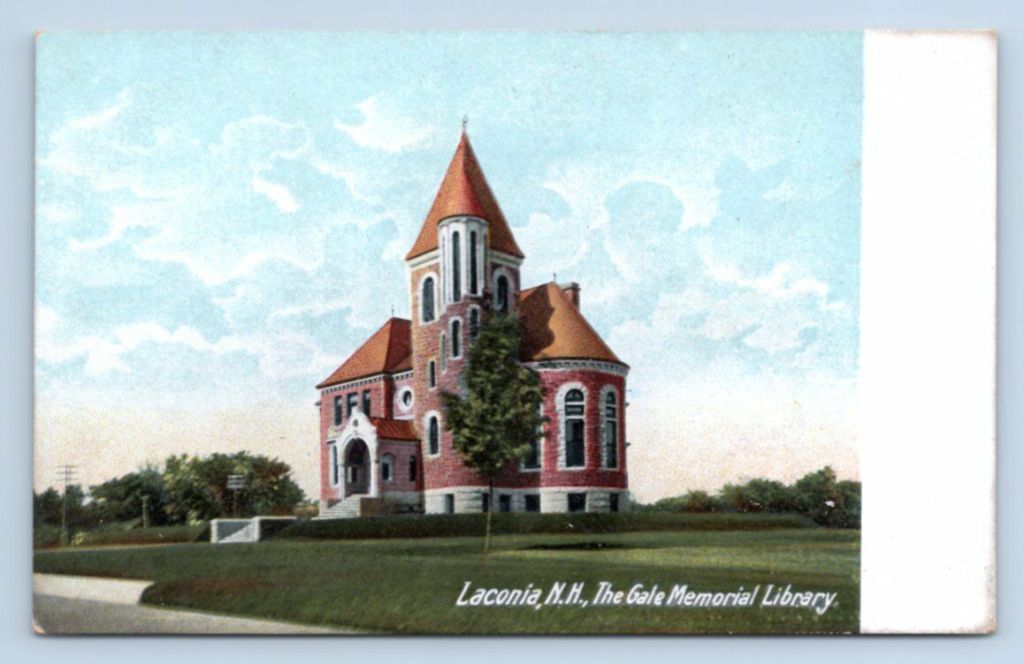
The Gale Memorial Library, Laconia, New Hampshire (front) (Public Domain – Pre-1923 postcard)
The Gale Memorial Library, Laconia, New Hampshire (back) (Public Domain – Pre-1923 postcard)
The Gale Memorial Library is located at 695 Main Street in Laconia, New Hampshire. The Richardsonian Romanesque-style building was funded by a local banker, Napoleon Bonaparte Gale, who, knowing the importance of public libraries, bequeathed $100,000 for “a substantial and proper building of brick and stone for the Public Library,” as well as a hospital and park. Designed by Boston architect, Charles Brigham, and constructed between 1901 and 1903, it is listed on the National Register of Historic Places.
Napoleon Bonaparte Gale
Napoleon Bonaparte Gale (1815-1984), was a successful Laconia banker.
Pre-1923 postcard of The Egyptian National Library and Archives (public domain)Pre-1923 postcard of The Egyptian National Library and Archives (back) (public domain)
The Egyptian National Library and Archives (دار الكتب والوثائق القومية) “Dar el-Kotob”, formerly known as The Kehdivial Kutub Khana, is a non-profit government organization, and is located in Cairo. It is the largest library in Egypt and one of the largest libraries in the world.
Established in 1870. It was originally located in Prince Mustafa Fadel’s palace in Darb Al Gamamiz. However, due to its rapid increase in inventory, a new building was built in 1904 in Bab Al Khalq, which also included the Museum of Islamic Art.
In January 2014, a car bomb explosion targeting the Police Headquarters across the street caused extensive damage to the Library building and collections, and forced the Library to close for renovations until early 2019.
The National Library currently houses several million volumes, including some of the oldest Arabic-language and Eastern manuscripts in the world.
Engraving above side entry to the Old Central Cultural Center (author unknown) (no know copyright restrictions)
The “Colored Branch” of the Rosenberg Library in Galveston, Texas, was the first public library in Texas for African Americans. It is believed that it was also the first public library for African Americans in the entire southern region of the United States. The main branch of the Rosenberg Library, established in 1904 from a trust bequeathed by Henry Rosenberg, was located at 2310 Sealy Street, but due to Jim Crow laws and forced segregation, African American residents were prohibited from using the new library. Shortly before the opening of the new Rosenberg Library, the Board of Directors resolved to open a “colored” branch “so that the white and colored citizens of Galveston may separately derive advantages from the bequest of Henry Rosenberg for the establishment and maintenance of a Free Public Library for the use of the people of Galveston.” Subsequently, a new “colored branch” opened in 1905. It was located in an annex building of Central High School, the first public school for African Americans, located at 1304 27th Street. The segregated branch opened with over 4,000 volumes and 210 library members. In 1965, the Galveston School District integrated and the students at Central High School slowly merged with Ball High School. Central High School closed it’s doors in 1968 and in 1976 became the Old Central Cultural Center. The words “Colored Branch of Rosenberg Library” are still above the stone doorway leading into the annex.
Henry Rosenberg
Portrait of Henry Rosenberg courtesy of the Rosenberg Library. No known copyright restrictions. Used in accordance with the 17 USC 107, Fair Use Doctrine.
Henry Rosenberg born in Switzerland in 1824, arrived in Galveston, Texas in February 1843 and worked as a clerk in a dry-goods store. He eventually purchased the business and turned it into the leading dry-goods store in Texas by 1859. Subsequently, he branched into financing and investing in the banking, real estate and transportation industries. He died in Galveston in 1889 and bequeathed part of his fortune to the city of Galveston.
Walter Lacey
Lt. Walter Jay Lacy (1915-1998) was a 1932 graduate of Central High School in Galveston, and joined the Galveston Police Department in 1939. After enlisting in the US Marine Corps and serving a tour during WWII, he resumed his duties for the Galveston Police Department and served the community of Galveston as a detective for 40 years and a civil employee for another 15 years. Lt. Lacy, a highly decorated officer, was recognized by the Texas House of Representatives for his services to the Galveston Police Department, received The Outstanding Officer and Detective Division Award from the 50’s Club of Galveston, and an award from the Texas Peace Officers Association for outstanding services in 1997.
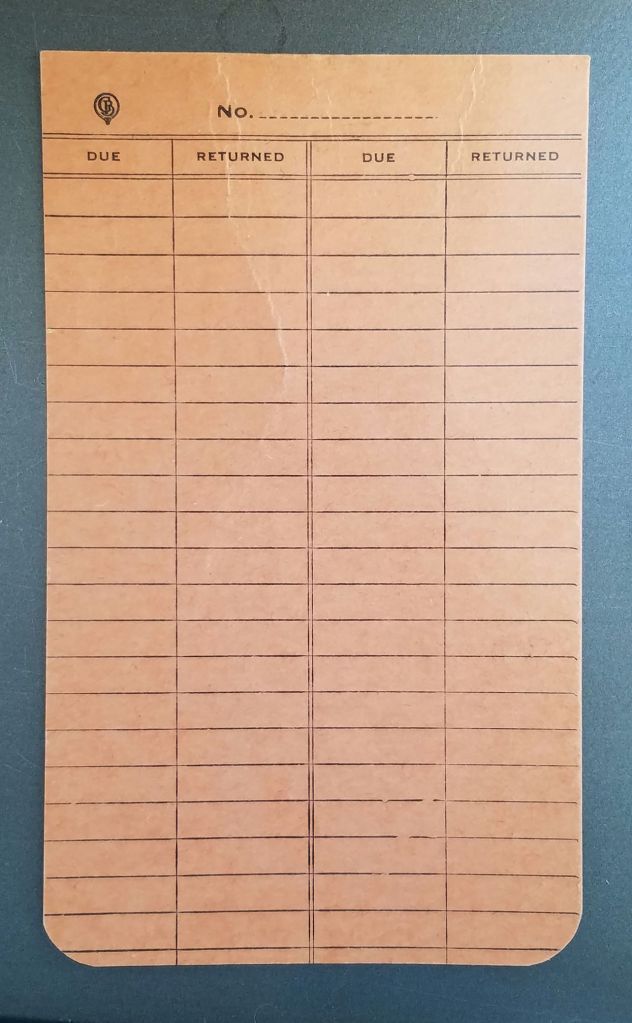
Pre-1974 Roswell P. Flower Memorial Library Borrower’s Card
Pre-1974 Roswell P. Flower Memorial Library Borrower’s Card (front)
Pre-1974 Roswell P. Flower Memorial Library Borrower’s Card (back)
Roswell P. Flower Memorial Library
Roswell P. Flower Memorial Library (Photo from “An Illustrated Souvenir of the Roswell P. Flower Memorial Library,” Watertown, New York, July 11, 1903, Dedication Pamphlet)(Public Domain)
The Roswell P. Flower Memorial Library was funded by Mrs. Emma Flower Taylor in memory of her father and designed by Orchard, Lansing & Joralemon of Niagara Falls. The library was dedicated on November 10, 1904.
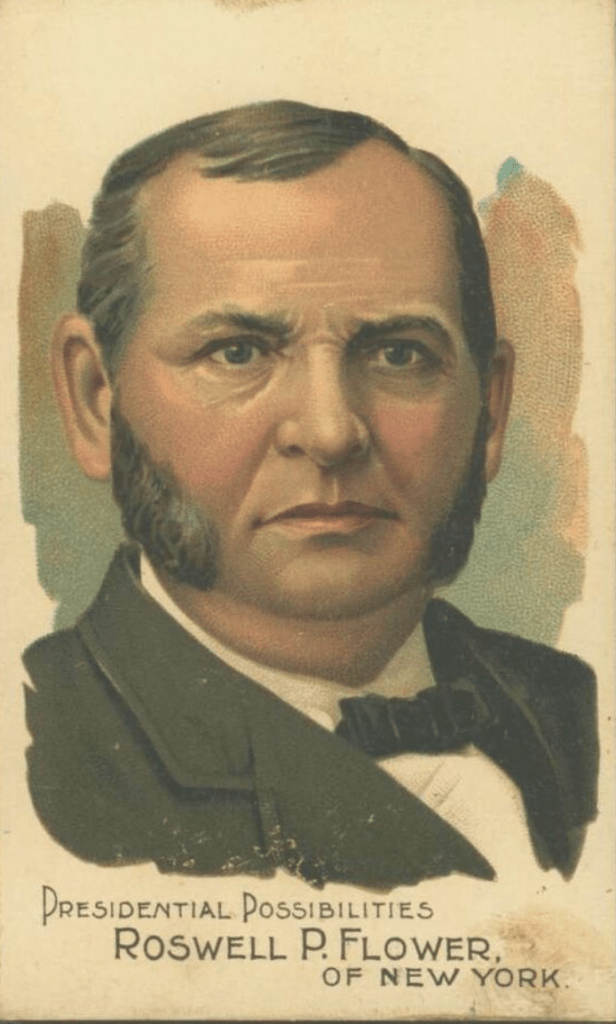
Roswell Pettibone Flower
Cigarette trade card from the “Presidential Possibilities” series, issued in 1888 by W. Duke Sons & Co. (public domain)
Roswell P. Flower (1835–1899), was a New York State Congressman from 1881 to 1890, and the 30th Governor of New York from 1891 to 1894.
Howard Ray Ferguson
Howard Ray Ferguson (1926–2001) was born in Watertown and worked for the Black-Clawson Co. in Watertown.
Temporary Columbia University Libraries Identification Card for Reference and Stack Privileges issued to Elenor M. Alexander on July 13, 1942 for one week expiring July 20, 1942
1940s Columbia University Libraries Card (front)
1940s Columbia University Libraries Card (back)
Columbia University Libraries
Columbia University’s Low Library (Public Domain – pre-1923 postcard)
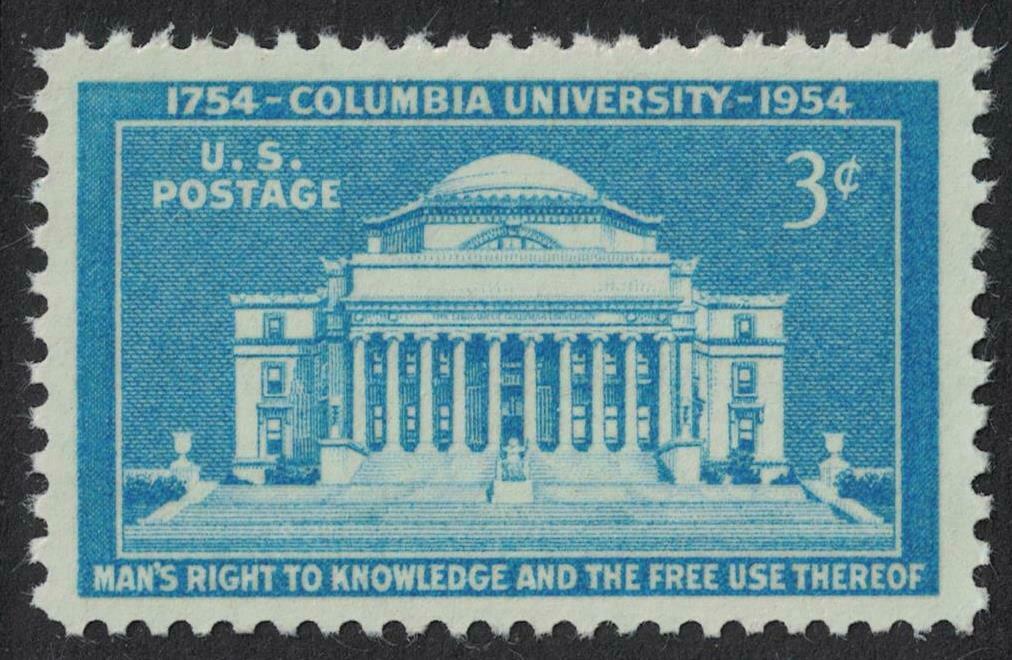
The Library of Columbia University, also known as the Low Library, served as the main library from 1890s to the 1930s. By the 1930s, the Low Library had over a million volumes and space because an issue, but with a .4 million dollar donation from the Standard Oil Company, the new Butler Library, with space for over 2 million volumes, was constructed and opened in 1934. Today, the Columbia University Libraries hold more than 5 million volumes, as well as 2.5 million microform unites and 22 million manuscript items. The Columbia University Library system collection would stretch nearly 174 miles. It is the fifth largest academic library in the United States and the largest academic library in the State of New York. The Low Library now serves as the university’s administrative center.
The libraries currently in the Columbia University Library System are:
• Avery Architectural and Fine Arts Library
• Barnard College Library
• Burke Library at the Union Theological Seminary
• Business & Economics Library (Watson) at the Columbia Business School
• Butler Library
• Center for Human Rights Documentation and Research
• Columbia Center for Oral History
• Columbia University Archives
• Digital Humanities Center
• Digital Science Center
• Digital Social Science Center
• East Asian Library (Starr)
• Engineering Library (Monell)
• Geology Library
• Geoscience Library at the Lamont-Doherty Earth Observatory in Pallisades, NY
• Global Studies
• Health Sciences Library at the Columbia University Medical Center in Washington Heights in Manhattan
• Jewish Theological Seminary
• Journalism Library
• Arthur W. Diamond Law Library at the Columbia Law School
• Lehman Social Sciences Library at the School of International School of International and Public Affairs
• Mathematics Library
• Milstein Undergraduate Library of Columbia College
• Music & Arts Library (Weiner)
• Off-Site Shelving Facility (ReCAP)
• Rare Book & Manuscript Library
• Science & Engineering Library
• Journalism Library of Columbia Journalism School
• Social Work Library of Columbia University School of Social Work
• The Gottesman Libraries of Teachers College
1954 commemorative 3 cent stamp celebrating the 200th anniversary of the Low Memorial Library
Dr. Charles Clarence Williamson
From the Library Journal April 1, 1920 (Public Domain)
C. C. Williamson (1877-1965) served as Director of the Columbia University Libraries and Dean of the Columbia School of Library Service from 1926 to 1940. He began his career at the New York Public Library in 1911 using his background in economics to become the head of the then new Division of Economics. His 1919 report for the Carnegie Corporation, The Williamson Report, criticized the educational requirements of librarians and believed a university graduate degree and not a college bachelor’s degree was the appropriate education for professional librarians. In response to the Williamson Report, The Graduate Library School of the University of Chicago was founded in 1928 and provided librarians with a one year of postgraduate education in librarian science. By the 1950s, most library schools offered master’s programs in library science. In 1999, Williamson was named as one of 100 American librarians that made a lasting impact on library service.
Elenor M. Alexander
Elenor M. Alexander (Naughton) (1920-1995), born in Morristown, New Jersey, was the night supervisor at the Ocean County Observer for 10 years, and as a 40-plus year resident of Brick, New Jersey, served her community as a Girl Scout and Cub Scout leader.
Early 1900’s Missouri Penitentiary Library Card (front)
Early 1900’s Missouri Penitentiary Library Card (back)
Missouri Penitentiary Library
Missouri Penitentiary, Jefferson City, Missouri (Public Domain, Pre-1923 postcard)
Called the “Bloodiest 47 acres in America,” the Missouri Penitentiary in Jefferson City opened in 1836. It was Missouri’s primary maximum security prison and the oldest operating penal facility west of the Mississippi River when it closed in 2004.
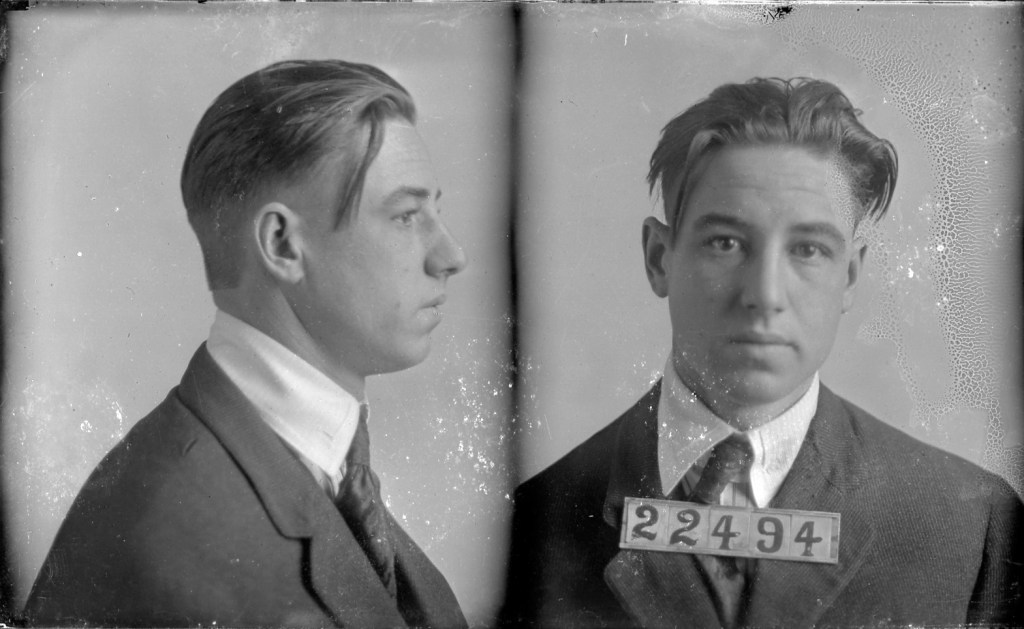
Inmate mugshot, Thomas J. Barker (Inmate Photograph Collection, Missouri State Archives, no known copyright restrictions)
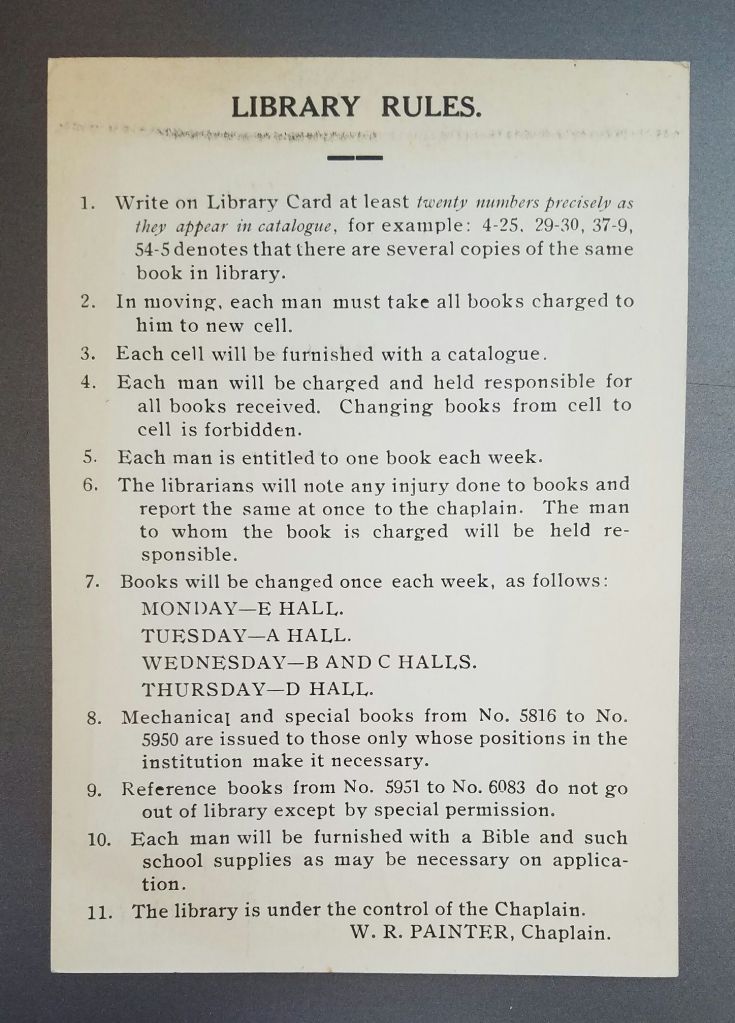
Library Rules
Write on Library Card at least twenty numbers precisely as they appear in catalogue. For example: 4-25, 29-30, 37-9, 54-5 denotes that there are several copies of the same book in library.
In moving, each man must take all books charged to him to new cell.
Each cell will be furnished with a catalogue.
Each man will be charged and held responsible for all books received. Changing books from cell to cell is forbidden.
Each man is entitled to one book each week
The librarians will note any injury done to books and report the same at once to the chaplain. The man to whom the book is charged will be held responsible.
Books will be changed once each week, as follows:
MONDAY — E HALL
TUESDAY — A HALL
WEDNESDAY — B AND C HALLS
THURSDAY — D HALL
Mechanical and special books from No. 5816 to No. 5950 are issued to those only whose positions in the institution make it necessary.
Reference books from No. 5951 to No. 6083 do not go out of library except by special permission.
Each man will be furnished with a Bible and such school supplies as may be necessary on application.
The library is under the control of the Chaplain.
W. R. Painter
From the 1917 Mexico Weekly Ledger, Mexico, MO
William Rock Painter (1874-1947) served as Prison Chaplain and Librarian from 1901 to 1908. He served as Missouri State Lieutenant-Governor from 1913 to 1917, and Interim Warden of the penitentiary in 1917. As Warden, he advocated education to combat illiteracy and abolished “silent meals” in the cafeteria, believing that silent meals should only be used as punishment and not a rule of behavior for inmates. Painter went on to become a leader in the Democratic Party in the Missouri State Senate serving from 1917 to 1929.
Hugh Stephens
Hugh Stephens (1877-1960) was an American businessman, heir to the Tribune Printing Company and publisher of the Daily Tribune. His wife, Bessie Miller Stephens, along with members of the Tuesday Club, a literary club founded in 1895, helped establish a subscription library in Jefferson City, and later, with the help of a grant from the Andrew Carnegie fund, a free library.
The Public Library, Fairbanks, Alaska (Public Domain pre-1923 post card)
The Public Library of Fairbanks located at 901 1st Avenue in Fairbanks, Alaska, was built in 1909, with funds provided by Philadelphia philanthropist and cartographer, George Coupland Thomas (1884-1955), who made his fortune publishing atlases, maps and tourist guides. Prior to that, the city of Fairbanks had limited library services provided by the Episcopal Church. The log building served as the public library until 1977, at which point the Noel Wien Public Library opened. In 1978, the building was designated a National Historic Landmark due to the historic conference that took place on July 5 and 6, 1915, when the building was the site of a meeting between Alaska Native leaders and the U.S. federal government, during which native land claims were discussed. It was not until the 1971, when the Alaska Native Claims Settlement Act was enacted, that those matters were resolved.
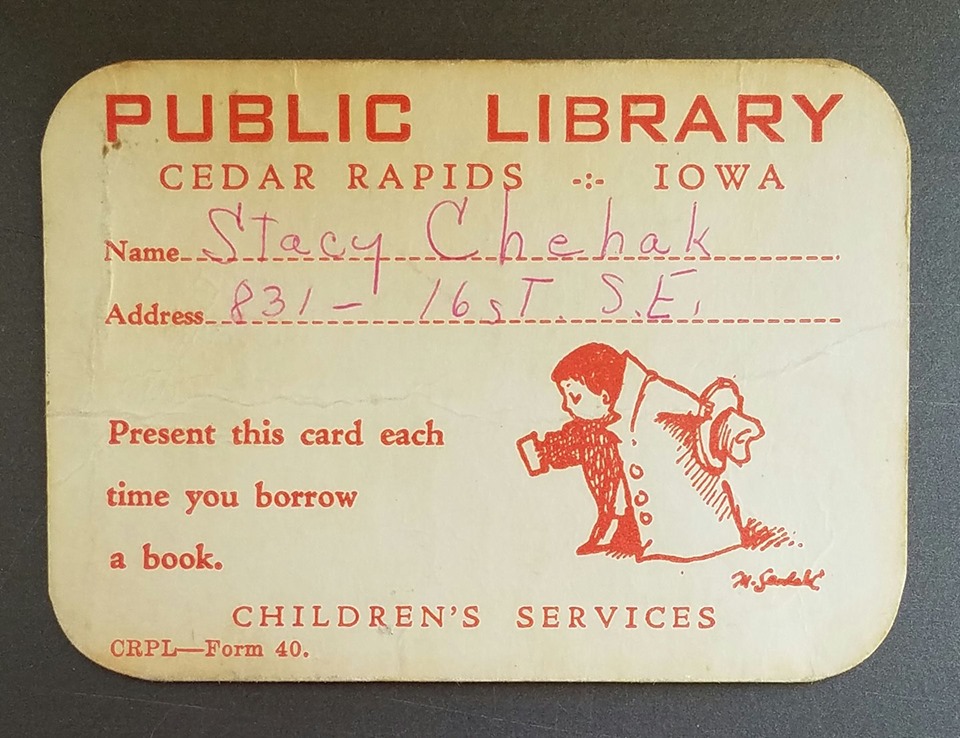
Cedar Rapids Public Library, Children’s Services, 1950s Borrower’s Card, issued to Stacy Chehak
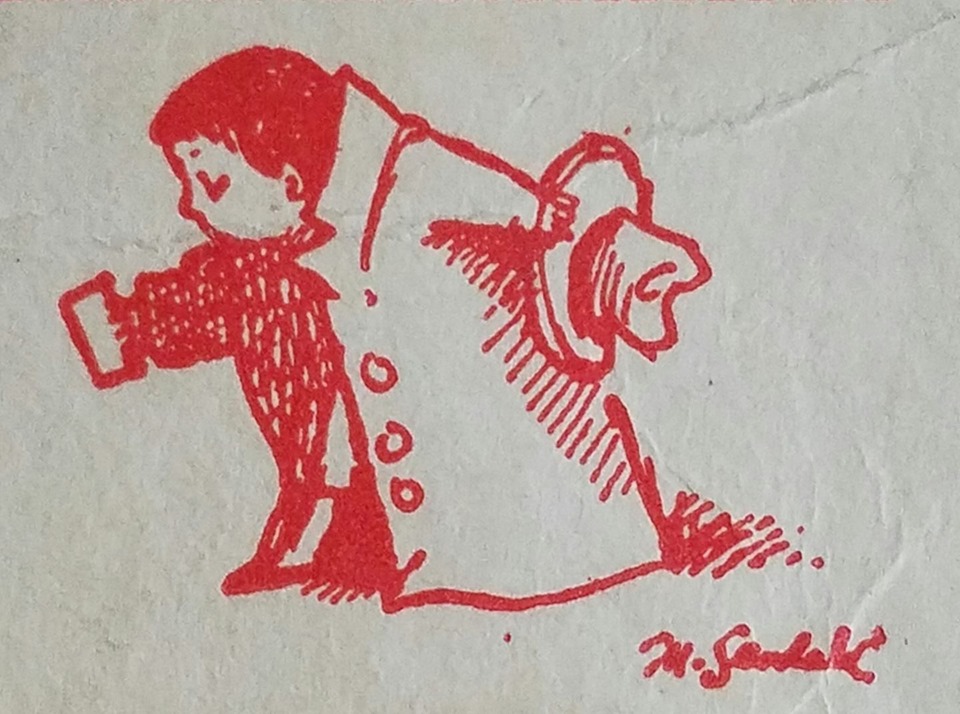
Cedar Rapids Public Library, Children’s Services, Borrower’s CardEarly Maurice Sendak illustration
Cedar Rapids Public Library
Advertisement of the Free Library and Reading Room at First Avenue, The Cedar Rapids Gazette, Friday, January 12, 1883
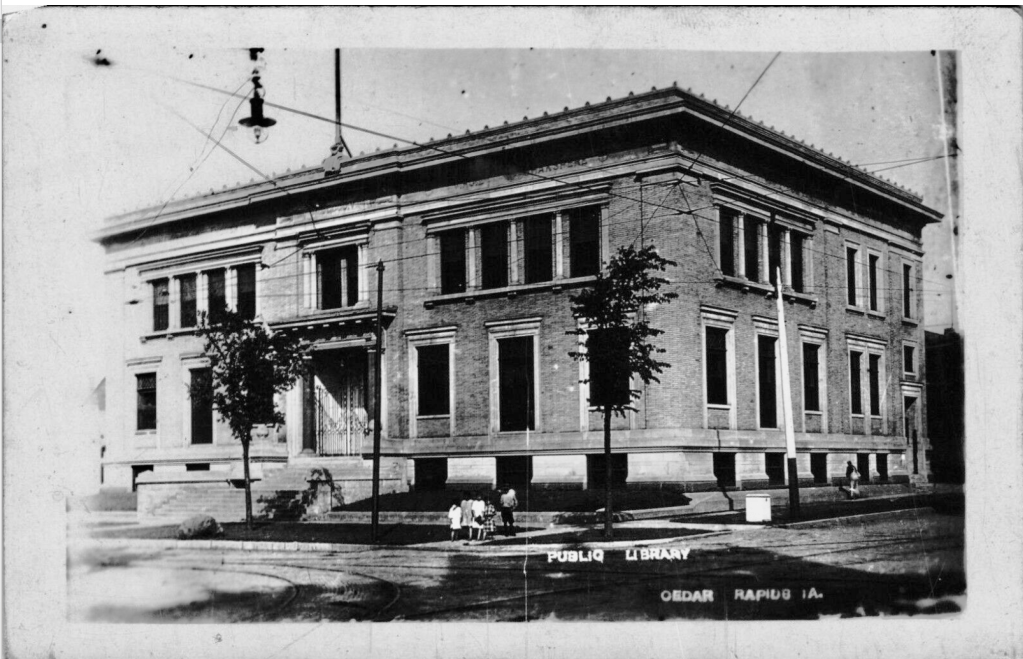
On June 23, 1905, after having outgrown smaller spaces in the Granby Building and Dow Auditorium, which the Cedar Rapids Public Library occupied during the late 1800s, a new 29,000 sq. ft. building funded by Andrew Carnegie opened at Third Avenue and Fifth Street. By the late 1960s, overcrowding would again become a problem. New book donations were turned away and overstock was stored in the basement. In the 1970s, through the donations of the Hall Foundation of Cedar Rapids and other private donors, a new 83,000 sq. ft. building was constructed at 500 First Street SE, which opened on February 17, 1985. However, on June 13, 2008, the city of Cedar Rapids experienced catastrophic flooding which destroyed many private and city buildings, including the main public library. Much of the adult and reference collections were destroyed and the library was forced to relocate to leased space while a new permanent location was constructed. The new Ladd Library opened in August 2013 at 450 Fifth Avenue SE. The former Carnegie building is now the Cedar Rapids Museum of Art and houses the world’s largest collection of the “American Gothic” artist, Grant Wood among other noted Iowan artists.
Cedar Rapids Public Library at 3rd Avenue and 5th Street (public domain postcard)
Anastasia “Stacy” Marie Chehak
Anastasia Marie Chehak (1953-2017) was a nationally-known diabetes expert, author and medical community leader. She was the founder of Anastasia Marie Laboratories, Inc. and The Voice of Diabetes Network, a live radio program. Serving on the US Senate Health Advisory Board under President Ronald Reagan was among her many achievements. A 1978 graduate of the University of Oklahoma’s Health Sciences Center, she dedicated her life’s work to finding a cure for diabetes.
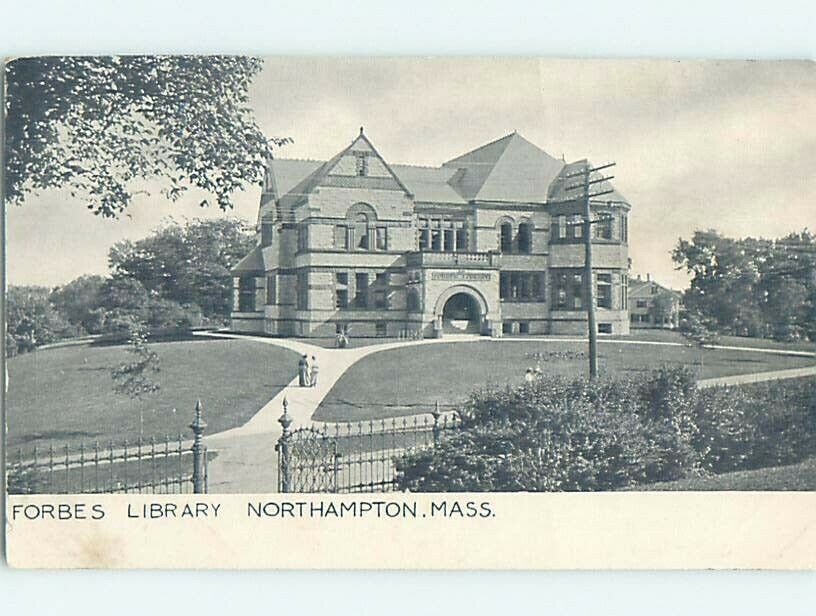
Forbes Library, Northampton, MA (pre-1923 postcard – public domain)
The Forbes Library, also known as “the castle on the hill,” due to its solitary location, opened on October 23, 1894 at 20 West St, Northampton, Massachusetts. Judge Charles Edward Forbes (1795-1881), a desiring a public library for the citizens of Northampton, left in his will a large sum for “purchase of a site and erection of a building for the accommodation of a public library, and for the purchase of books etc. to be placed therein for the use of the inhabitants of the said town of Northampton and their successors forever.”
William C. Brocklesby (1841-1910), who had designed a number of buildings at nearby Smith College, was commissioned to design and build a “fireproof building” to house the new library. Brocklesby designed a Richardsonian Romanesque, three-story stone building with an all steel frame and a stone, slate and copper exterior. The large building could accommodate over 400,000 volumes. The library underwent a complete renovation between 1998 and 2001 and is listed on the Register of Historic Buildings. The Forbes Library is also home to the Calvin Coolidge Presidential Library & Museum.
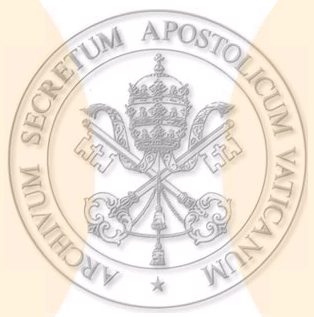
The Vatican Archives was established in1612 when Pope Paul V ordered all Church records to be assembled in one place. Located in Vatican City, it is the central archive for all acts promulgated by the Holy See. Also located in the Vatican Archives are state papers, correspondent, papal account books, and other church documents accumulated over the centuries. Part of the Vatican Library until the sometime in the 17th century, Pope Paul V separated the archives from the main library, which limited access to scholars and completely closed off access to the public. In 1881, Pope Leo XIII reopened the archives for research.
The Vatican is currently undergoing an in-house digitization project to make archive documents more available to researchers and to provide an extra layer of preservation for aging documents. Over seven million images have been digitized and are now available online.
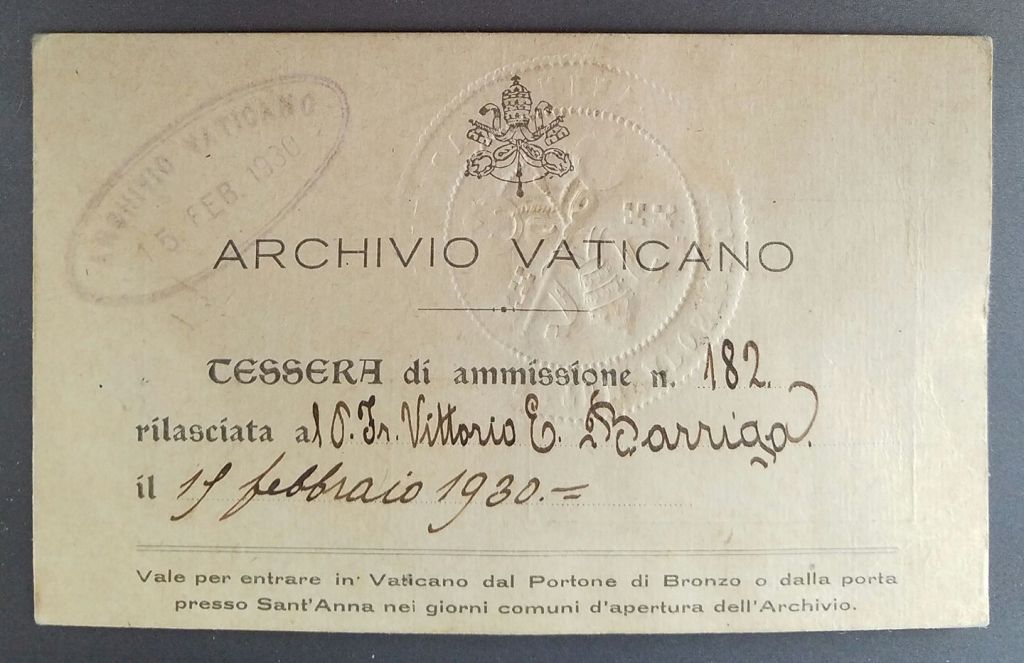
The Vatican Archives (no known copyright restrictions)
Translation:
FRONT:
ARCHIVIO VATICANO (VATICAN ARCHIVE)
Tessera di ammissione n. 182 rilasciata al O. Fr. Vittorio E. Barriga il 14 Febbraio 1930 (Admission card n. 182 issued to O. Fr. Vittorio E. Barriga on 14 February 1930)
Vale per entrare in Vaticano dal Portone di Bronzo a dalia porta presso Sant’Anna nei Giorni Comuni d’apertura dell’Archivio (Allows entrance to the Vatican from the Bronze Door to the door at Sant’Anna during open days of the Archive)
BACK:
Per la validate occorre la fotografia, la firma del titolare e il bollo a data dell’Archivio. (Needs photograph, the holder’s signature and Archive date stamp to be validated.)
Firma del titolare (Signature of Holder)
Validita mesi (Months valid)
Scade il 14 Luglio 1930 (Expires on July 14, 1930)

















 thelibrarycardmuseum.com