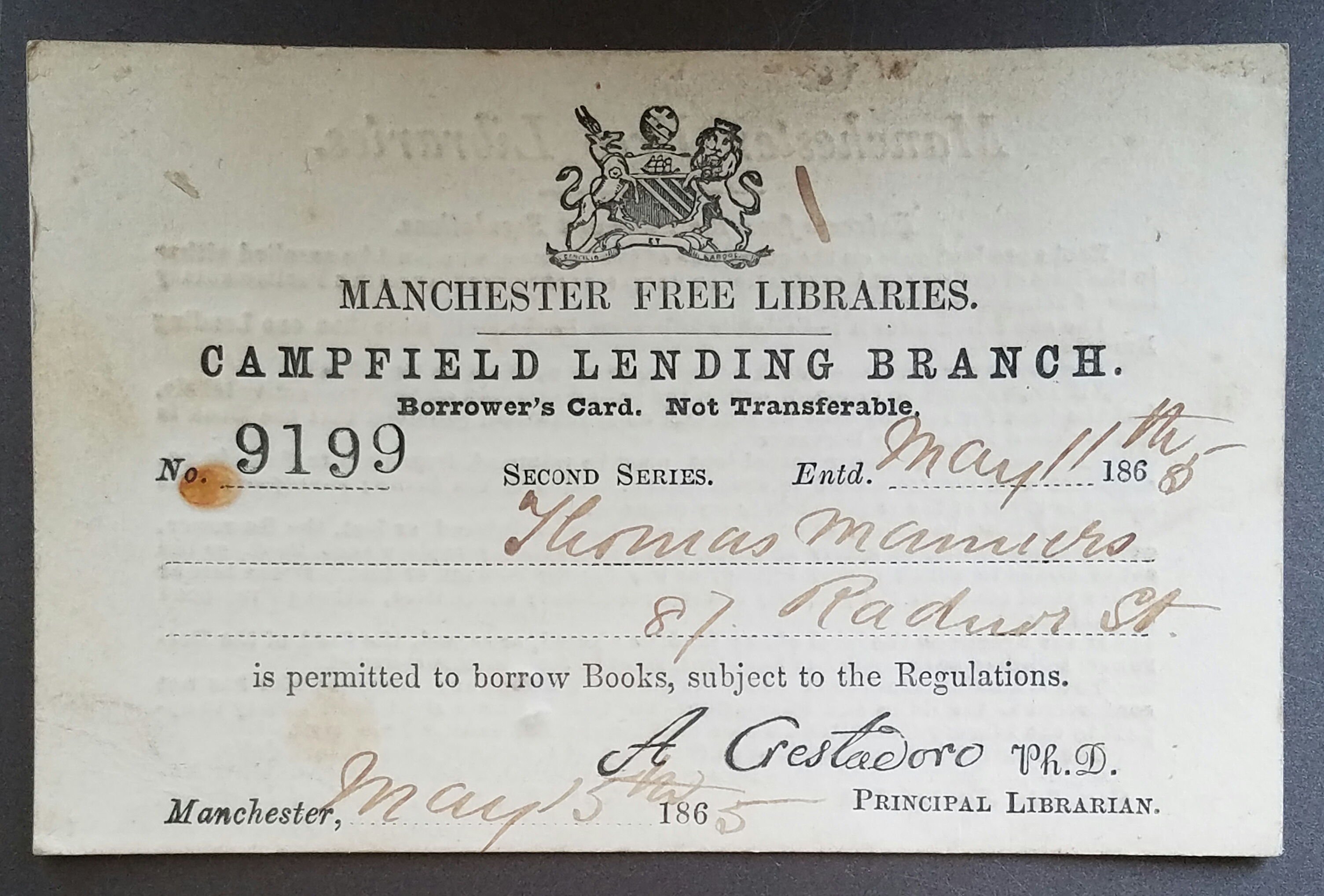
Ontario City Library, Ontario, California

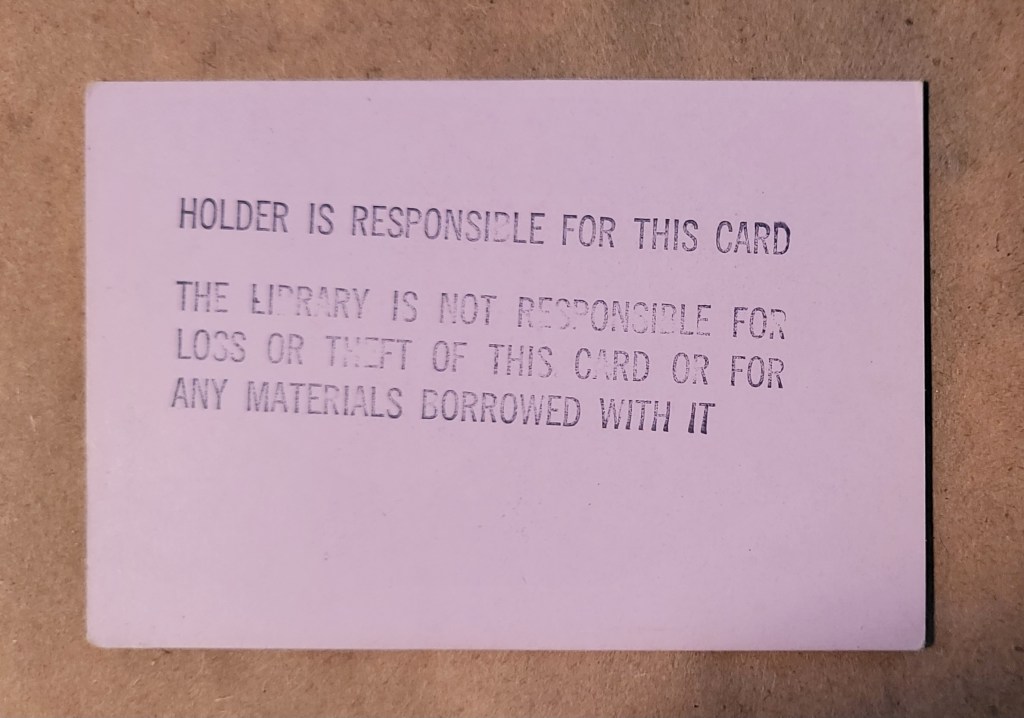
1961-1964 Ontario City Library Card for Chaffey High School Students
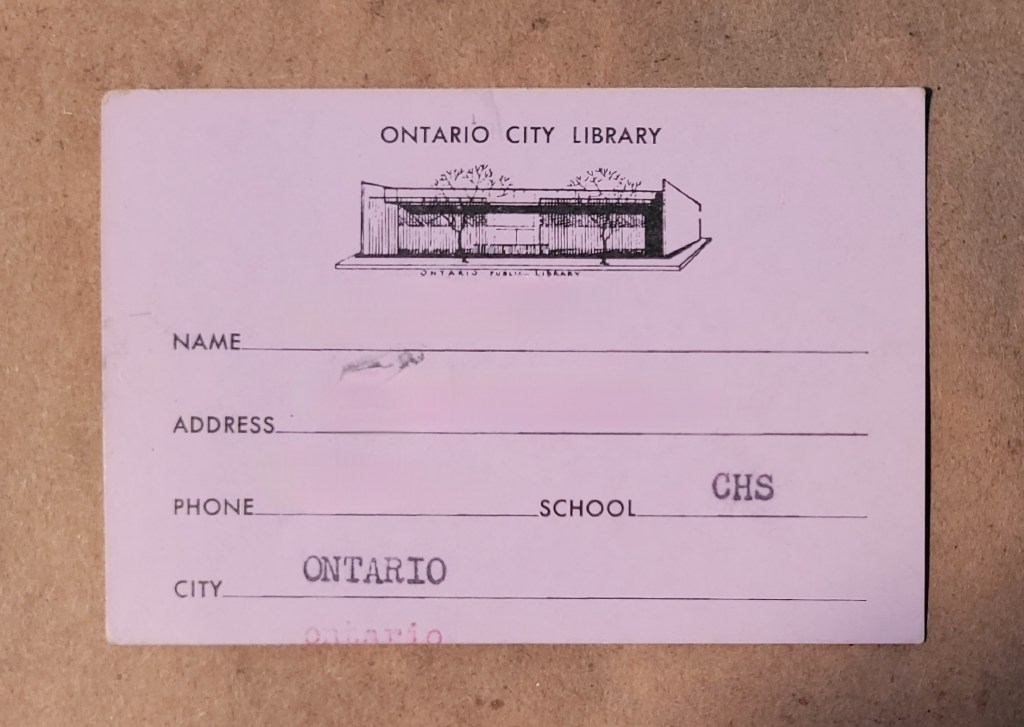
1961-1964 Library Card issued to Chaffey High School students for use at the Ontario City Library (front)
(living person information redacted)
1961-1964 Library Card issued to Chaffey High School students for use at the Ontario City Library (back)

Ontario, California – The Chaffey Brothers’ Vision
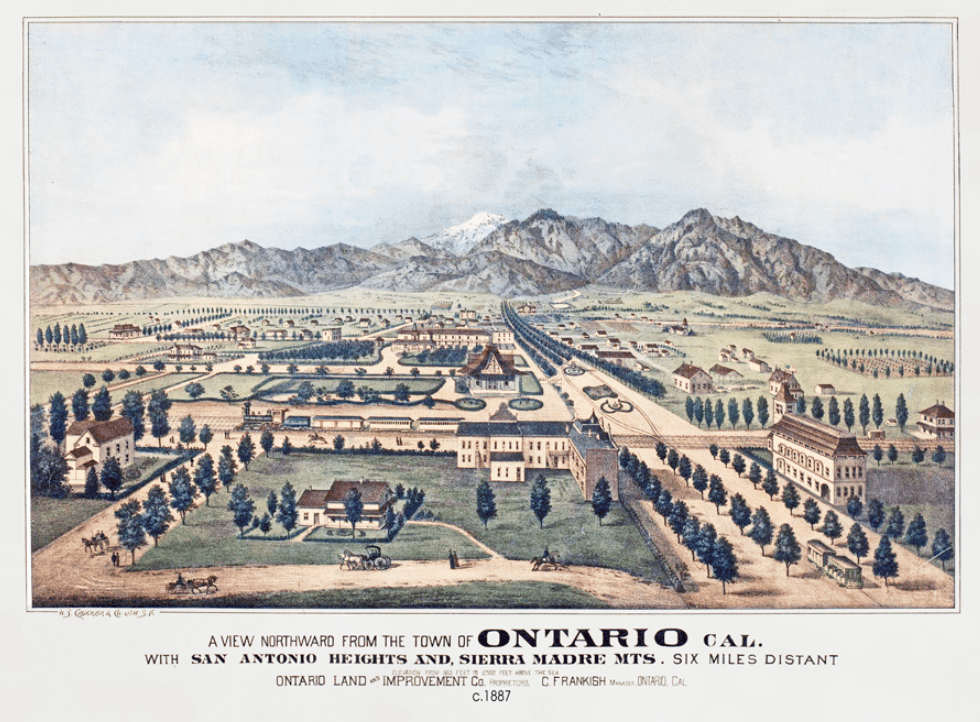
Ontario, California, circa 1887, published by H.S. Crocker Co.
Pre-1923 public domain publication. No known copyright restrictions.

In 1881, brothers William B. (1856-1926) and George Chaffey, Jr. (1848-1938), both engineers from Brockville, Ontario, Canada, began purchasing parcels of land in Southern California with the intention of creating “irrigation colonies” complete with water resources, water-powered cable cars, grand avenues illuminated with electric lights, and convenient access to the existing Southern Pacific Railway. Those land purchases became the Etiwanda, Upland, and Ontario Settlements. Due to the mild winter climate and easy access to water from the nearby mountains, citrus farmers were some of the first landowners in Ontario.

Advertisement announcing the town and settlement of Ontario. Ten-acre and 120-acre parcels were sold for $150-250 per acre.
Pomona Times-Courier, 23 Dec 1882, Sat ·Page 3

Ontario City Library

The Ontario City Library was established in 1885, according to Publication No. 3, “The Libraries of California in 1899”, which was published by the Library Association of California in April 1900. Although it was organized by the town of Ontario, the library earned its revenue through annual subscriptions of $1.00 and community fund-raising events, such as citrus fairs and concerts. Not until 1902 would the library become a free public library.

One of the earliest newspaper mentions of the “Ontario Public Library” was in 1886 when Richard Gird, a successful silver miner and local real estate investor from Tombstone, Arizona, donated fifty volumes to the “Ontario Public Library.”  

Los Angeles Herald, 04 Jun 1886, Fri · Page 5

In 1894, for the first time, the Trustees of the California State Library recognized and included the “Ontario Public Library” in the fiscal report for the Forty-Fourth and Forty-Fifth Fiscal Years (July 1, 1892 to June 30, 1894). It was noted that the library was “too recently organized to furnish statistics.”

One of the earliest locations of the library was at the southwest corner of A Street (now Holt’s Boulevard) and Euclid Avenue in a 2-story brick building known as the Ohio Block. The Ohio Block was built by Miss Eleanor Freeman (1848-1904) in 1888. Freeman, originally from Cincinnati, Ohio, was so charmed by the weather in Ontario that a temporary three-week stay resulted in the purchase of a twenty-acre tract of land. Freeman and her niece, Mary Ellen Agnew (1851-1914), served as the first librarians.
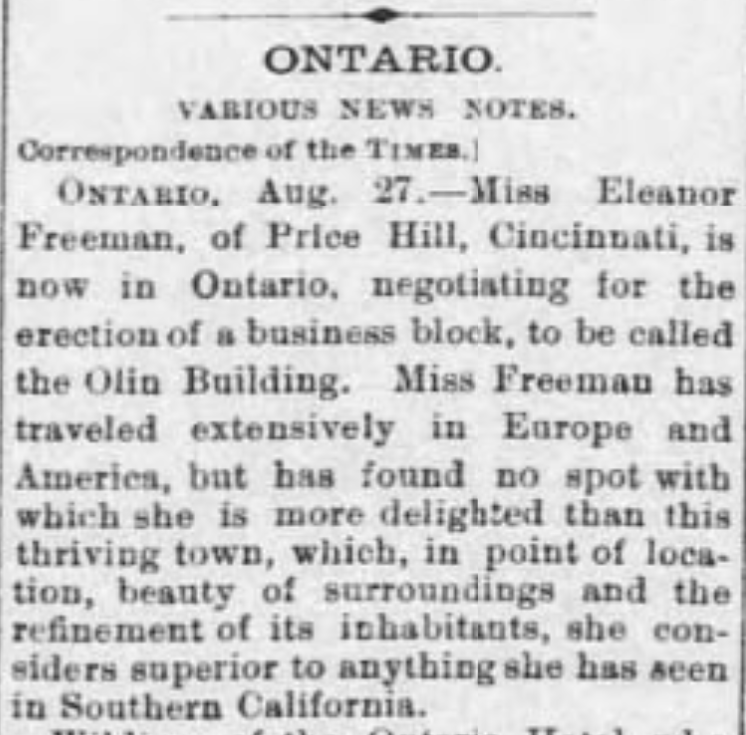
The Los Angeles Times, 29 Aug 1885, Sat ·Page 4
Built in 1888, the Ohio Block was razed in 1931. Photo Source: City of Ontario Facebook Page/Robert E. Ellingwood Model Colony History Room. No known Copyright restrictions.
Euclid Avenue Postcard, circa 1905. Originally published by Brück & Sohn Kunstverlag (Germany).
Creative Commons CC0 1.0 Universal Public Domain Dedication.
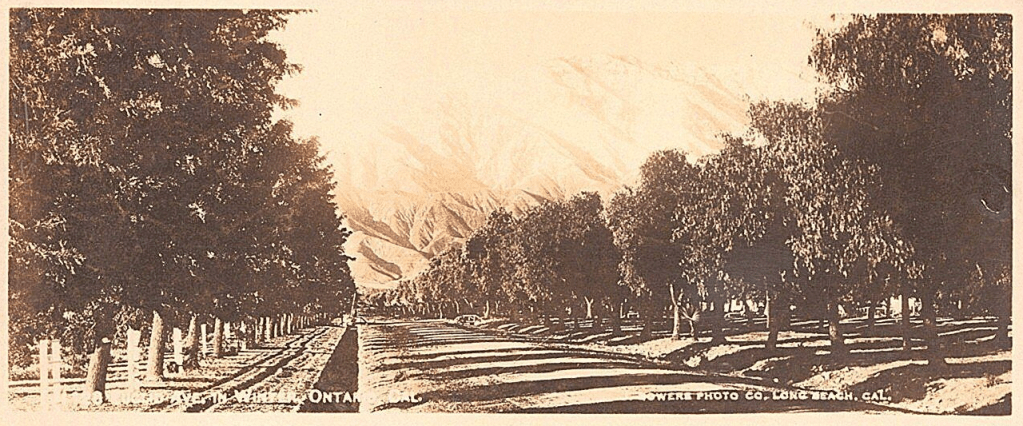
“Euclid Avenue in Winter,” circa 1905-1910. Photographer: John Bowers. (1865-1911)
Pre-1923 public domain postcard. No known copyright restrictions.

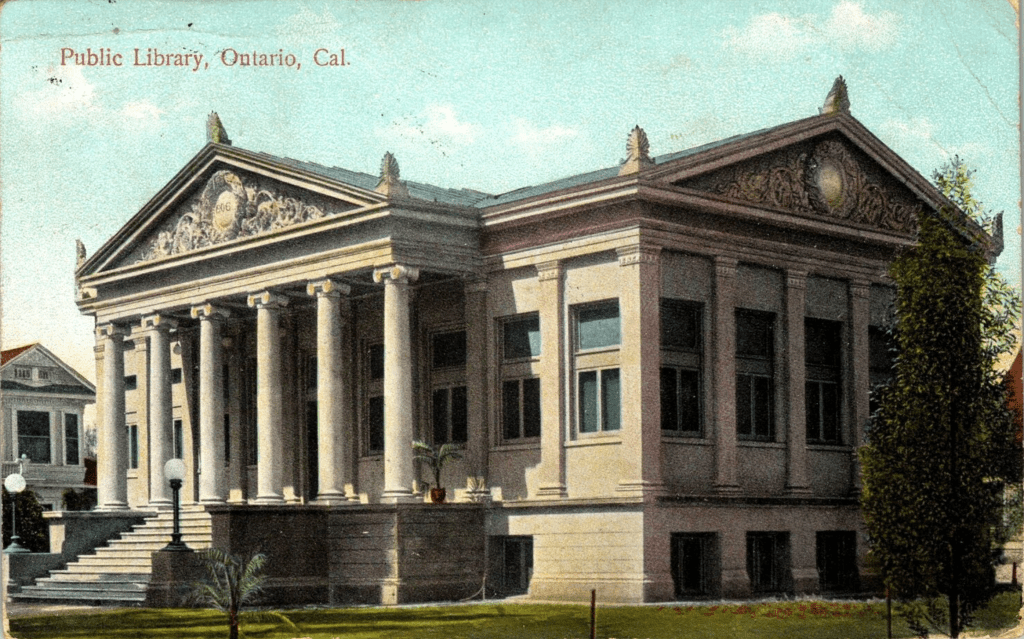
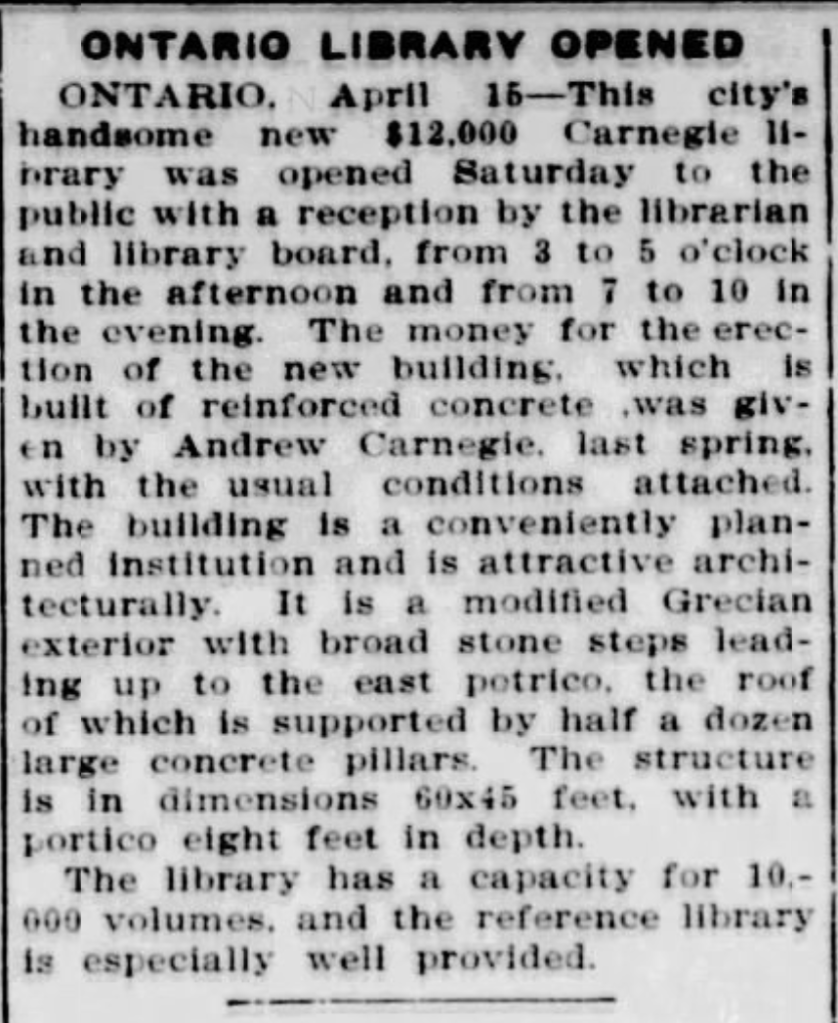
In 1903, the “Ontario Public Library” requested assistance from philanthropist Andrew Carnegie to secure funds for the construction of a new library building. In April 1906, after receiving a donation of $10,000 towards the project, the head librarian, Miss Kezzie A. Monroe, visited the Covina Public Library in California, which had opened in 1905. She gathered ideas from the library tour, and Architect F.P. Burnham was hired to prepare plans for the new Ontario library building. On April 13, 1907, the new library building located at D Street and Euclid Avenue opened, stocked with approximately 3,400 volumes with plenty of room for growth.
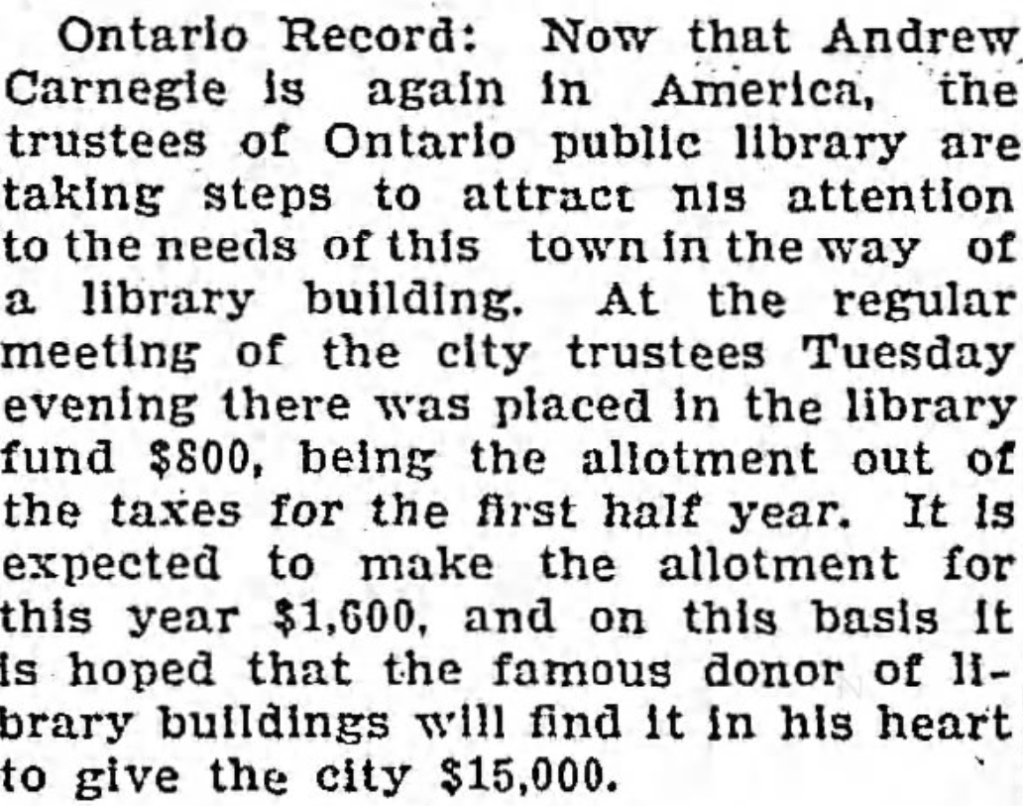
Daily Times-Index, 26 Jan 1903, Mon ·Page 2
Long Beach Tribune, 16 Apr 1907, Tue ·Page 2
Ontario Public Library. Pre-1923 public domain postcard. No copyright restrictions.

Over the next decade, the library saw steady growth in inventory and readership, and, once again, additional space was needed, as reported by the head librarian, Miss Monroe, in the 1919 annual report. 

Los Angeles Evening Express, 29 Jul 1919, Tue ·Page 2

In the meantime, the Library faced trials and tribulations, such as unwanted neighbors, bees, and pests! Oh my!

The San Bernardino County Sun, 07 Apr 1921, Thu ·Page 11

As a result of vigorous action by the community to halt the conversion, Mr. Owen announced that he had “no desire to offend the people of Ontario and would place the property on the market and seek another site.”1

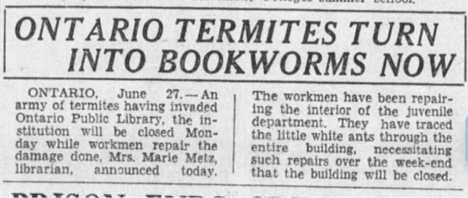
The Pasadena Post, 16 May 1929, Thu ·Page 17
The Los Angeles Times, 29 Jun 1930, Sun ·Page 52

On July 22, 1932, the newly expanded (and insect-free!) Carnegie Library building was opened to the public. The new wing, designed by Los Angeles Architect Harry L. Pierce, nearly doubled the floor space and reading rooms.

By mid-1943, the Library Board again proposed constructing a new library building. However, the selection of a new site would prove daunting. In April 1948, the Board purchased an additional lot adjoining the library property at D Street and Euclid Avenue, but an ongoing disagreement regarding the new library’s location lingered. In October 1953, the City Planning Commission approved a site at G Street and Euclid Avenue. However, having never officially reached an agreement for a new location, the library eventually fell into disrepair, and in July 1959, the library building was closed to the public, forcing the librarian to process loans and returns at the front door.
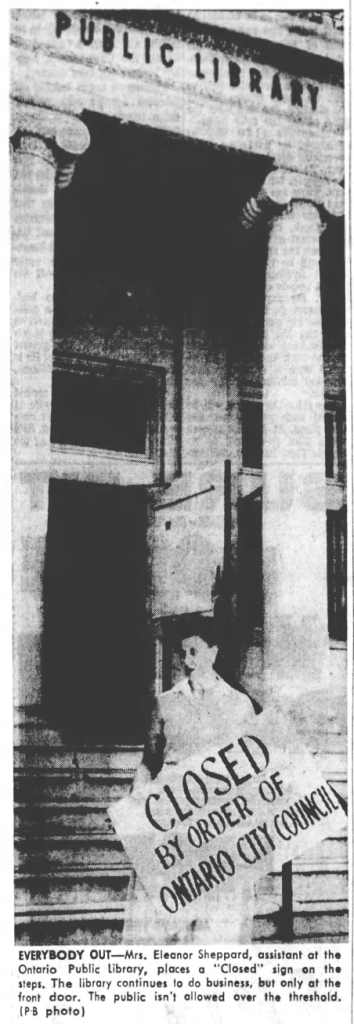
Progress-Bulletin, 29 Jul 1959, Wed ·Page 61

By August, the former Jack Clark Buick Co. building at 302 E. B Street was leased for use as a temporary library location. The building included a showroom, garage, and a much-needed parking lot. The temporary quarters opened on September 15 after the building’s interior was revamped for use as a library by the installation of new library shelving and 700 ft. of new fluorescent lighting. The former showroom was converted into the main reading room, and the builk of the library’s 60,000 volumes was available in the former garage.
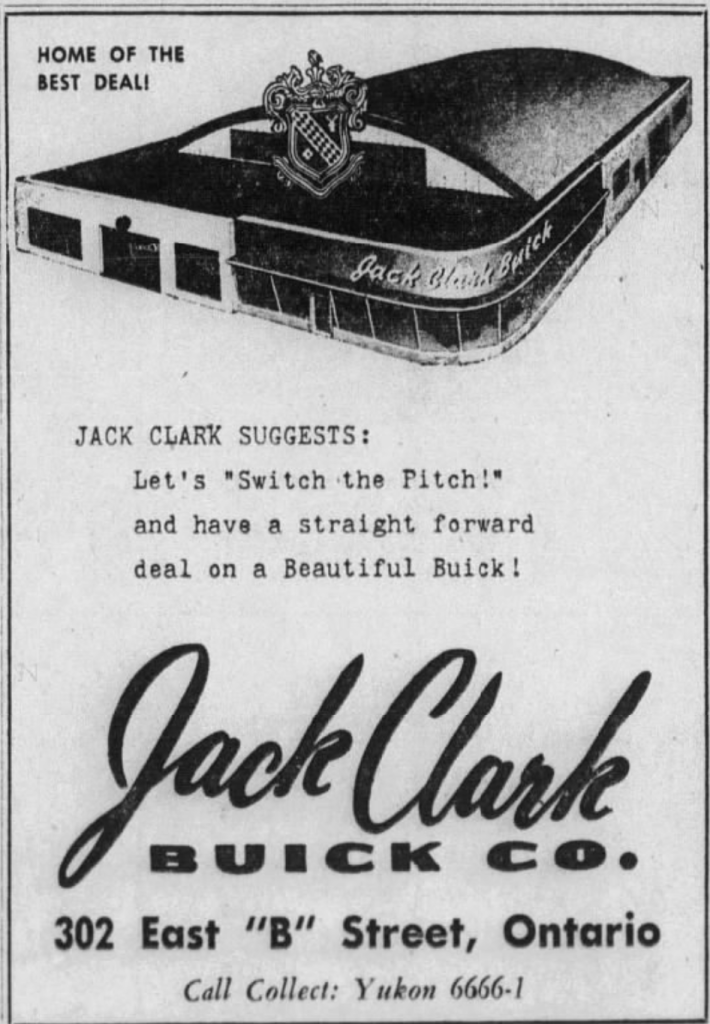
Jack Clark Buick Co. Newspaper Advertisement, The Los Angeles Times, 12 Jun 1955, Sun ·Page 162
Site of the temporary library, the Jack Clark Buick Co. building, Progress-Bulletin, 05 Aug 1959, Wed ·Page 57

Plans for the construction of a permanent library building on the north side of C Street between Lemon and Plum Avenues were put into motion almost immediately. By February 1960, a construction contract had been awarded to the Campbell Construction Co. of Ontario. The new library was opened to the public in mid-December 1960 and formally dedicated on January 16, 1961.

Architect’s (Dewey Harnish & Associate) rendering of the new library, Progress-Bulletin, 29 Apr 1960, Fri ·Page 21
Early 1960s postcard of the Ontario City Library. Publisher: Columbia Wholesale Supply. No known copyright restrictions

Library expansion was back in the news by April 1968 when voters overwhelmingly approved a $370,000 bond for the project. Architects Harnish, Morgan & Causey were contracted, and the expansion project began in January 1969. As part of a multi-phase plan, the library would eventually extend to the east of Plum Street. The library was expanded from 18,500 to 42,500 sq ft and was dedicated on March 1, 1970. 
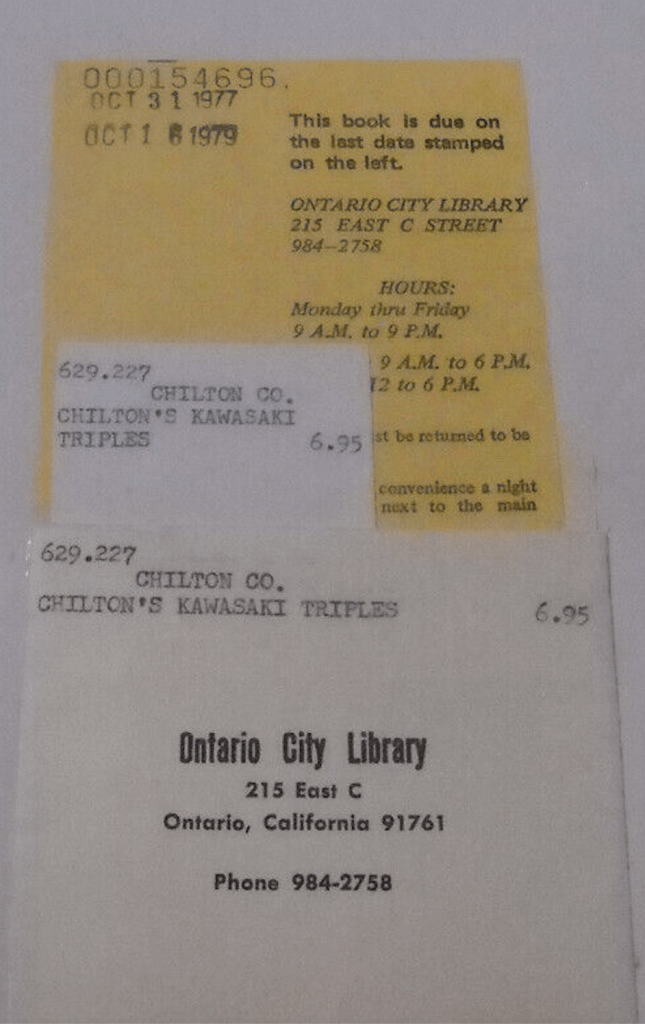
Late 1970s Ontario City Library card pocket and due date slip

In 2002, the library began another expansion project, which would add an additional 11,000 sq ft. During the construction, the library was temporarily housed at the Ontario Ranch Market at 120 E. D Street. Purchase, renovation, and relocation to the temporary location cost upwards of $3M.

The Ontario City Library after renovations (2006) Photo by Rockero (Wikimedia Commons). Public Domain – no copyright restrictions.

In 2010, the Ontario City Council renamed the library to the Ovitt Family Community Library in honor of the Ovitt family’s years of service to the city of Ontario. The Ovitt Library continues to operate at 215 E. C Street in Ontario.

The Oakland Park City Library, Oakland Park, Florida

Early-Mid 1990s Library Card Nos. 12963 and 12964 for the Oakland Park City Library

Early-Mid 1990s Library Card No. 12963 for the Oakland Park City Library (front)
Early-Mid 1990s Library Card No. 12964 for the Oakland Park City Library (front)

Oakland Park City Library

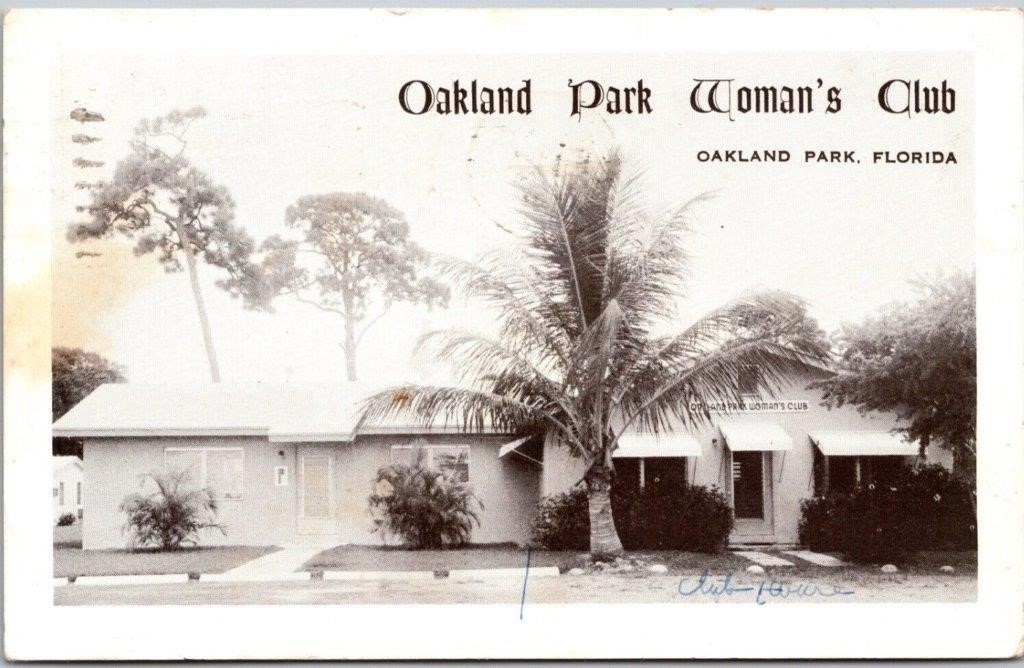
Initially organized as a project of the Oakland Park Women’s Club, the Oakland Park City Library was originally located at the Oakland Park Women’s Clubhouse at 3721 NE Thirteen Avenue.  Ethel Gordon (1897-1973), a member of the Oakland Park Women’s Club, having “never lived in a town without a library” suggested organizing a community library in Oakland Park.  In May 1954, the organization of a library at the Clubhouse was added to the budget for the upcoming year.  Ethel Gordon was elected Chairman of the Americanism Department.

“Oakland Park Women’s Club Hold Busy Final Session,” Fort Lauderdale News, May 24, 1954, Page 9

In February 1955, the community was invited to the Clubhouse to inspect the new library and to bring books or donations, and in May 1955, the library was officially opened to the public.  The Mayor of Oakland Park and members of the City Commission were invited and given complimentary membership cards.

“Oakland Park Library Gets 100 More Books,” The Miami Herald, February 13, 1955, Page 34
“Library Opening Slated for Today,” Fort Lauderdale News, May 18, 1955, Page 14
Pre-1960 Postcard by Spaulding & Co. (no known copyright restrictions)

The Library Today

On October 16, 2013, the Oakland Park City Commission voted to officially change the name of the library to The Ethel M. Gordon Oakland Park Library in recognition of her role in the establishment of the Oakland Park Library.

Fun fact:  Children under the age of 16 may obtain a library card in their name as soon as they can print their full name!

The library is located at 1298 NE 37 Street in Oakland Park and is open Monday-Saturday.  For more information on Oakland Park’s community library, go to:

https://oaklandparkfl.gov/200/Ethel-M-Gordon-Oakland-Park-Library.

Mid Century Modern-style home of Ethel M. Gordon Oakland Park Library (photo courtesy of Google Maps)

Merced County Free Library, Gustine Branch, Gustine, California

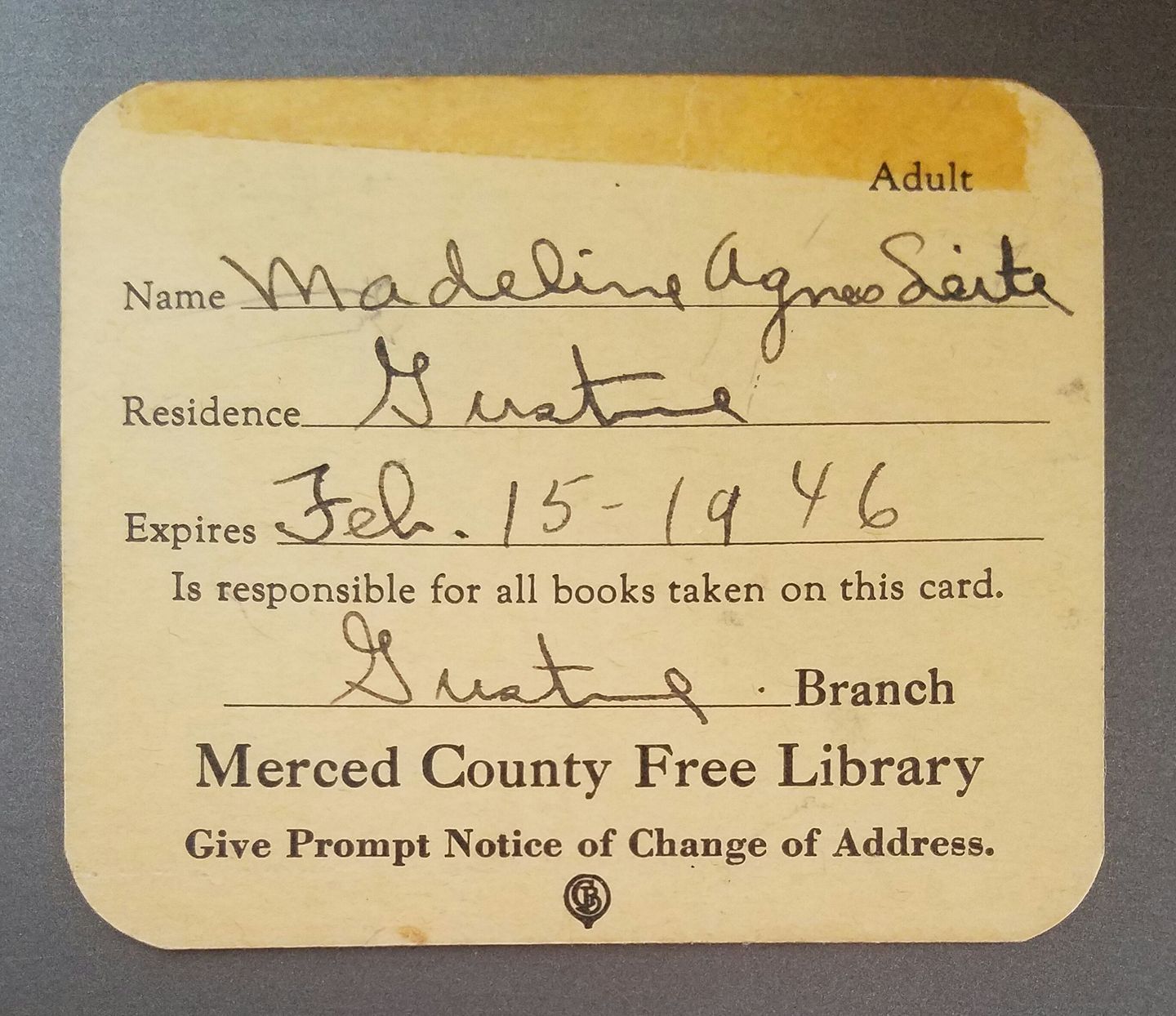
Pre-1946 Library Card issued to Madeline Agnes Leite

1946 Merced County Free Library Card (front)

Merced County Free Library

The Merced County Free Library’s Gustine Branch, opened in November 1910.  Born from the donations of benefactors, including the Merced County Ladies Library, a membership social library which operated out of Nelson Cody’s (Buffalo Bill’s cousin) Corner Drug Store at 17th and Canal Streets in downtown Merced.  The initial offering of 500 volumes were donated by Nelson’s wife, Anna Marie Nelson Cody, and were located in a back room at the Park Restaurant.  The Gustine Branch relocated in 1948 to 6th Street and 2nd Avenue at Henry Miller Park where it still operates.

Madeline Agnes Leite (1928-2009)

Madelyn Agnes Silva “Mattie” Leite Amaral was a California native and advocate for disabled persons. 

Manchester Free Libraries, Campfield Lending Branch, Manchester, England

Borrower’s Card No. 9199 (2nd Series) issued to Henry Thomas Manners on May 16, 1865

1865 Manchester Free Libraries Borrower’s Card (front)
1865 Manchester Free Libraries Borrower’s Card (back)

Manchester Free Libraries – Campfield Lending Branch

The Manchester Free Library at Campfield was the first lending library in England.   

Mirroring the Museums Act of 1845, which would “[empower] boroughs with a population of 10,000 or more to raise a ½d for the establishment of museums,” the Public Libraries Act (also known as the Free Library Act) was instituted in England.  While establishing the Act was not without argument, most notably the imposition of taxes, the voting body (the burgess-role) adopted the Act and became law with Royal Assent on August 14, 1850.

Soon after the Public Libraries Act was established, the Mayor of Manchester, John Potter (1815-1858), began a two-year effort to raise funds to house and stock the future library, and with the support of wealthy benefactors, the library finally opened with much fanfare on September 5, 1852.  Attendance at the opening ceremonies was over 1,000 persons, and included addresses from notable writers, Charles Dickens, William Makepeace Thackeray and Sir Edward Bulwark Lytton.

During the first weekend, nearly 10,000 people passed through the doors of the new library.

Etching by unknown artist of Manchester Free Libraries – Campfield Lending Branch, Manchester, England (Source:  “Manchester Public Free Libraries: a History and Description, and Guide to Their Contents and Use,” by William Robert, 1899) (Usage: no known copyright restrictions)

Edward Edwards (1809-1882) – First Librarian of the Manchester Free Libraries (1852-1857)

Edward Edwards was one of the three proponents of the  Public Library Act of 1850, and subsequently appointed the first librarian of the Manchester Public Library.  While being granted an £80 pension, his “passion for the spread of knowledge led to personal poverty.”  His books and papers being his only assets at his death, he died penniless at the age of 73.

Andrea Crestadoro (1808-1879) – Chief Librarian, Manchester Free Libraries (1864-1879)

Andrea Crestadoro was Chief Librarian of the Manchester Free Libraries from 1864 to 1879.  He is credited with the development and implementation of the Keyword in Context Indexing catalog system used at the Manchester Free Libraries.

Henry Thomas Manners (abt. 1819-1895)

Henry Thomas Manners was an English merchant for Fabric manufacturer, Ashton & Company of Manchester, England.