Library of Hawaii, Honolulu, Territory of Hawaii

Pre-1954 Library of Hawaii Borrower’s Card No. M 8144 issued to Mrs. Margaret B. Jennings
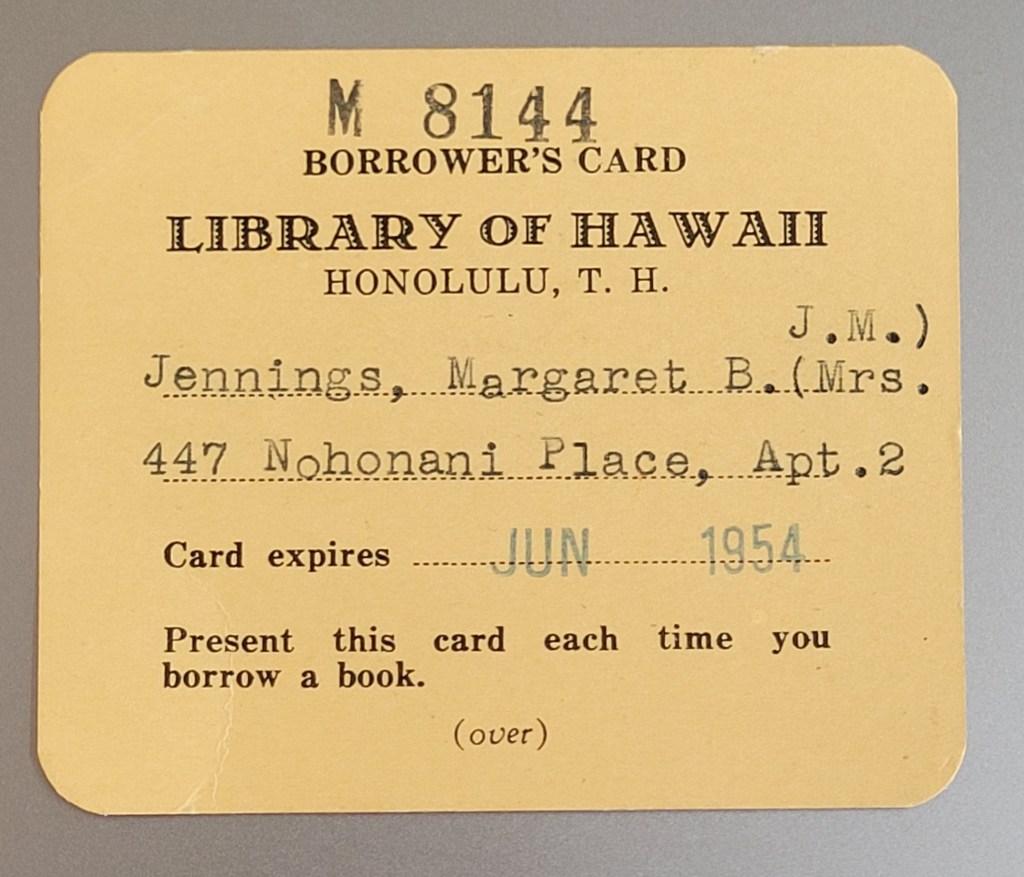
Pre-1954 Library of Hawaii Borrower’s Card No. M 8144 issued to Mrs. Margaret B. Jennings (front)
Pre-1954 Library of Hawaii Borrower’s Card No. M 8144 issued to Mrs. Margaret B. Jennings (back)

Library of Hawaii

The Library of Hawaii, had its official beginning in 1909, when on April 17th of that year, the Territorial Governor of Hawaii, Walter Francis Frear (1863-1948), signed House Bill No. 143, Act 83, entitled “An Act to provide for the establishment and maintenance of the Library of Hawaii.” 1

Prior to the passing of the Bill, Governor Frear met with Andrew “Andy” Carnegie to discuss Carnegie’s offer of $100,000 to build a new public library building. By selling the property at the corner of Alakea and Hotel Streets, which was occupied by the The Honolulu Library and Reading Room Association (a membership library established in 1879), the proceeds  of the sale would aid in the establishment of the proposed public circulating library. In addition, the Association’s 20,000 volume inventory would be transferred to the proposed public library.2

The Honolulu Library and Reading Room Association at Alakea and Hotel Streets. Pre-1910. Photo by Ray Jerome Baker from the Bernice P. Bishop Museum, R. J. Baker Collection of the Kamehameha Preparatory Department. (Public Domain)

The Carnegie Library

In May 1910, it was announced that New York architect, Henry Davis Whitfield, Andrew Carnegie’s brother-in-law, was chosen to design the new library, and Honolulu architect, Henry Livingstone Kerr, would supervise the construction of the building.3 Whitfield, who also designed Eaton Hall at Tufts University (1908) and the Federal Building in Hilo, Hawaii (1915), was considered at the time to be the world’s foremost expert on library design, having already designed many of the larger Carnegie libraries. Kerr designed over 900 buildings in Hawaii, including Honolulu’s historic McCandless Building (1906) and the Yokohama Specie Bank Building (1910).

Construction of the new Library building began on Saturday, October 21, 1911, when a two by three foot by twenty inch ironstone cornerstore, inscribed “Library of Hawaii, 1911,”4 was laid by members of the Hawaiian Lodge during an elaborate ceremony officiated by the Masons. 

The Library Opens

On February 1, 1913, the Library of Hawaii opened to the public with much enthusiasm. Governor Frear, the recipient of Card No. 1, was issued the first book, “The Government of Our Cities,” by W. B. Munro, by the Librarian,Miss Allyn. A free concert by the Hawaiian Band, and speeches by Chairman A. Lewis, Jr., of the Library Board, and Prof. M. M. Scott of the Honolulu Library and Reading Room Association proceeded the official opening of the doors to the public.5

The Sunday Advertiser, Honolulu, Hawaii, February 2, 1913, page 10;

The two-story Mediterranean Revival style building located at 478 South King Street in Honolulu, was fronted by the signature Carnegie columns. Inside, patrons were greeted by an airy and spacious front delivery area, separate children’s area, catalogue, reading and reference rooms. A lanai reading room, and separate lecture, study, and children’s story rooms were located on the second floor In addition to the new library building, a traveling library was instituted to ensure citizens on islands other than O’ahu would have access to the new public service.6

Pre-1923 photograph by Rice and Perkins.(Public Domain)

In 1927, much needed renovations to expand the building were approved by the territory legislature. Two wings were added to the original building, as well as an open-air courtyard in the middle.

In 1978, the building was designated a historic site and was added to the National Register of Historic Places.

The Library of Hawaii is now part of the Hawaii State Public Library System, which is comprised of fifty-one libraries on all of the major islands. The library system contains over 3 million books and reference materials.

Margaret B. Jennings

Margaret Bronson Jennings (1924-2018) born February 15, 1924 in New Orleans, Louisiana. She was an LSU fan and a member and officer of the Krewe of Attakapas.

Sources: [1] The Honolulu Advertiser, Honolulu, Hawaii, April 17, 1909, page 2; [2] The Hawaiian Star, Honolulu, Hawaii, March 26, 1909, page 4; [3] The Hawaiian Star, Honolulu, Hawaii, May 21, 1910, page 5; [4] The Hawaiian Star, Honolulu, Hawaii, October 16, 1911, page 8; [5] The Honolulu Advertiser, Honolulu, Hawaii, February 1, 1913, page 10; [6] The Sunday Advertiser, Honolulu, Hawaii, February 2, 1913, page 10.

San Diego Public Library, San Diego, California

Pre-1937 San Diego Public Library Borrower’s Card No. 75273 issued to Lee R. Moore

Pre-1937 San Diego Public Library Borrower’s Card No. 75273 issued to Lee R. Moore (front)
Pre-1937 San Diego Public Library Borrower’s Card No. 75273 issued to Lee R. Moore (back)

San Diego Public Library

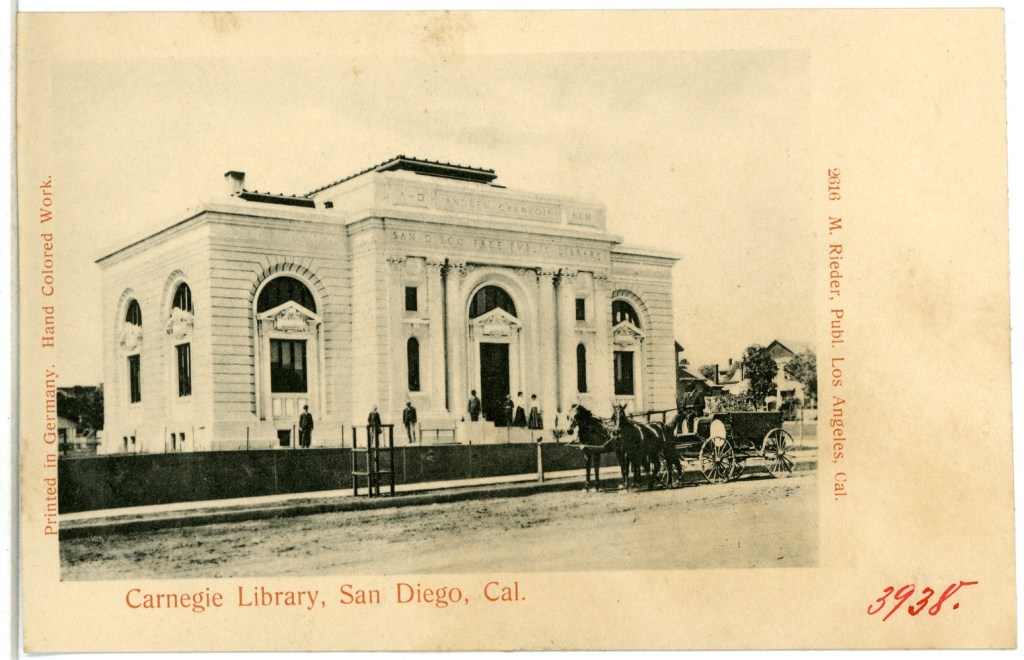
San Diego Public Library (pre-1923 public domain postcard)

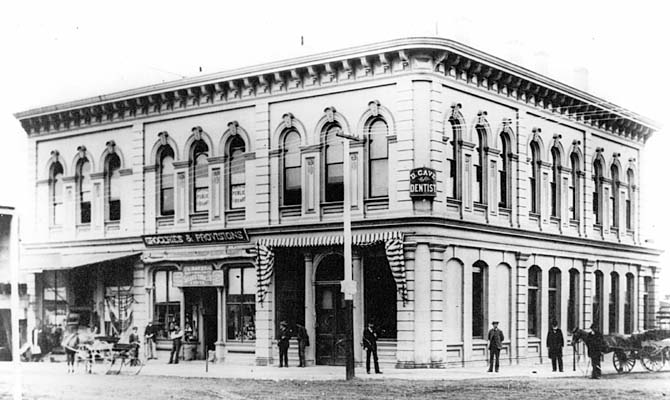
Opened to the public on July 15, 1882, the San Diego Public Library’s first location was the Commercial Bank building (aka the Consolidated National Bank) at 5th and G Streets.  The use of rooms on the 2nd floor2 was provided to the library non gratis for the first six month,1 after which rent was paid from the $650 city appropriation.

Commercial Bank Building (pre-1923 public domain photo; photographer unknown)

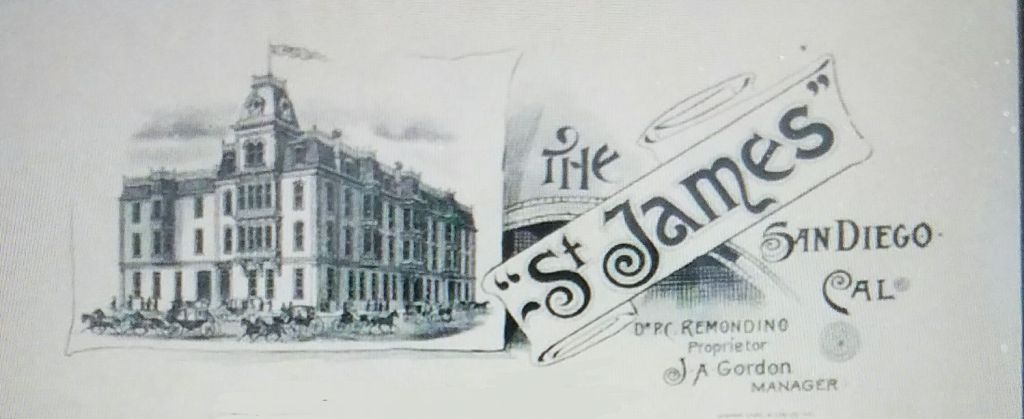
In 1893, the library was moved once again to the fashionable St. James Building at 7th and F Streets and would remain there for at least five years.3

Drawing from a 1890’s St James Hotel breakfast menu (No known copyright restrictions)

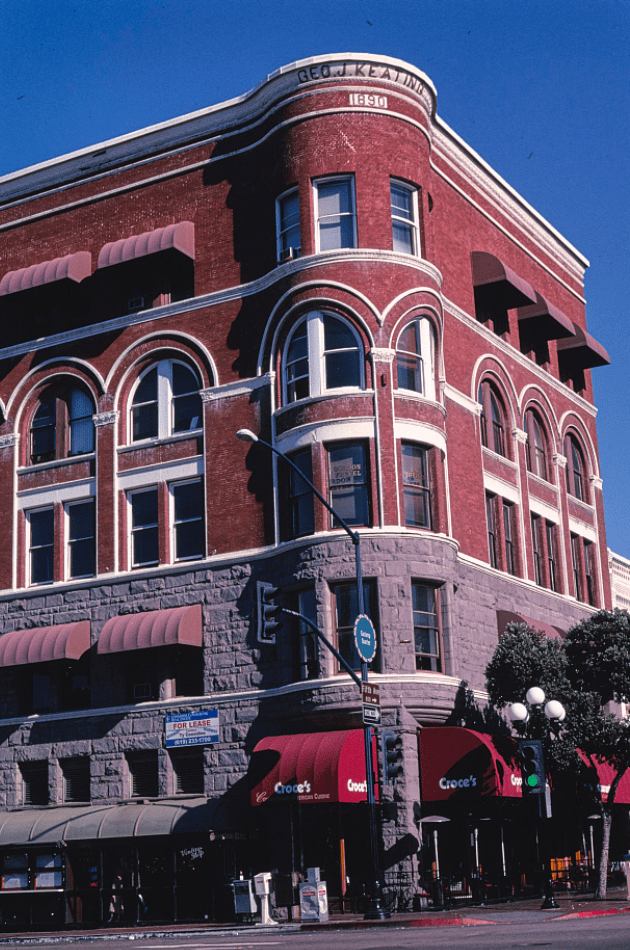
By 1898, the library began to outgrow its accommodations, so arrangements were made for space on the 4th floor of the new Keating Building at Fifth and F Streets.  Rent increased from $50 to $85, but the rooms were more spacious and well-lit, and a modern elevator made access to the library much easier.4 The Keating Building was designed by George J. Keating, founder of a farm equipment company, and built in 1890 by his wife, Fannie, after his death on June 25, 1888.


Keating Building.  Photo by John Margolies.  No known copyright restrictions.   From the John Margolies Roadside America photograph archive (1972-2008), Library of Congress, Prints and Photographs Division

While the Keating Building provided adequate square footage to accommodate the growing library, library space had been a concern several years prior to the move into the Keating Building.   Efforts to raise funds for the building of a permanent home large enough to house the growing library was undertaken by the Ladies’ Wednesday Club as early as 1896.5. But it wasn’t until mid-1899, that a new library building became a realistic goal.  In response to a letter sent to the Andrew Carnegie Corporation by library trustee, Mrs. Lydia K. Horton, in which she asked for photographs of previously built Carnegie libraries in hopes that the photographs would spark interest by her fellow trustees, the Carnegie Corporation promised a $50,000 grant to build the first Carnegie library west of the Mississippi River.6  On April 23, 1902, the new library building opened at Eighth and E Streets.  The building designed by architects, Ackerman & Ross of New York, had room for 75,000 volumes and boasted a museum, art gallery, and lecture room. The Carnegie Library building would serve as the main library until 1952 when the building was razed to allow the construction of a new, modernized building. The new library opened at the same location on June 27, 1954. The current location of the San Diego Central Library is 330 Park Blvd. in San Diego.

San Diego Public Library and Comic-Con

Since 2013, the San Diego Public Library has partnered with Comic-Con and designed limited-edition comic-themed library cards, which are only available at the San Diego Public Library booth at the yearly Comic-Con convention in San Diego.  The 2019 card, of which only 3,000 were made available, features Waldo over an image of  the San Diego Central Library, which is located at 330 Park Boulevard in San Diego.  

2019 San Diego Public Library Special Edition Comic-Con Library Card and Keychain Card (front)
2019 San Diego Public Library Special Edition Comic-Con Library Card and Keychain Card (back)

Lee R. Moore

Lee Reed Moore was born August 7, 1921, in Kansas City; He was the son of Lee R. Moore, Sr  of Texas and Orpha Moore.  Lee R. Moore was a salesman for Ryan Aeronautical Co.  He died on April 29, 1980.

1 Catalog of the San Diego Free Public Library: Compiled by the Order of the Board of Trustees, by Lulu Younkin, April 1889

2 The Record (National City, California), June 11, 1885, p. 2

3 The Los Angeles Times (Los Angeles, California) April 5, 1893, p. 7

4 The Los Angeles Times (Los Angeles, California) April 7, 1898, p. 13

5 The Los Angeles Times (Los Angeles, California), December 7, 1896, p. 5

6 The Los Angeles Times (Los Angeles, California), July 18, 1899, p. 15

Kelly High School Library, Chicago, Illinois

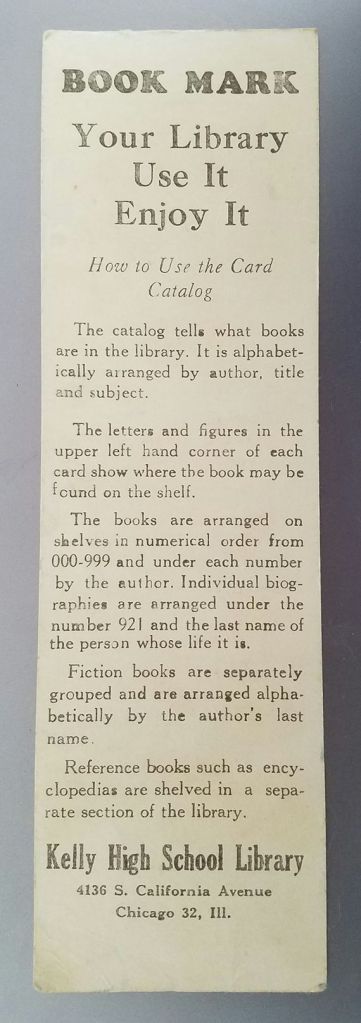
Pre-1943 Kelly High School Library Bookmark

Kelly High School, Chicago, Illinois

Named for Thomas J. Kelly, the Irish nationalist, Kelly High School located at 4136 S. California Avenue in Chicago, Illinois, opened in December 1928 as a junior high school, only serving grades six through ninth.  After the Board of Education abolished all junior high schools in Chicago in July 1933, Kelly began the1933 school year as a senior high school.  Kelly High School is the third largest high school in Chicago

How to Use the Card Catalog

“The catalog tells what books are in the library.  It is alphabetically arranged by author, title and subject.

The letters and figures in the upper left hand corner of each card show where the book may be found on the shelf.

The books are arranged on the shelf by numerical order from 000-999 and under each number by the author.  Individual biographies are arranged under the number 921 and the last name of the person whose life it is.  

Fiction books are separately grouped and are arranged alphabetically by the author’s last name.

Reference books such as encyclopedias are shelved in a separate section of the library.”

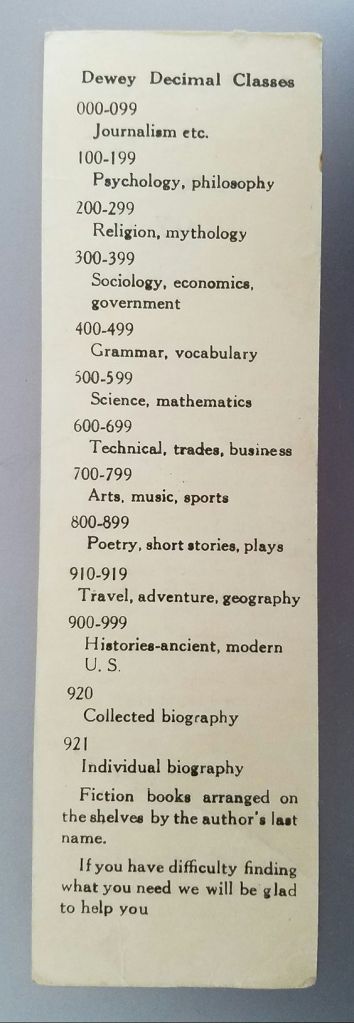
Dewey Decimal Classes

000-099 Journalism, etc

100-199 Psychology, philosophy

200-299 Religion, mythology

300-399 Sociology, economics, government

400-499 Grammar, vocabulary

500-599 Science, mathematics

600-699 Technical, trades, business

700-799 Arts, music, sports

800-899 Poetry, short stories, plays

900-999 Histories – ancient, modern U.S.

910-919 Travel, adventure, geography

920 Collected biography

921 Individual biography

Fiction books arranged on the shelf by the author’s last name.

If you have any difficulty finding what you need we will be glad to help you.

Thomas Joseph Kelly

Thomas Joseph Kelly (1833-1908) was an Irish revolutionary and leader of the Irish Republican Brotherhood (IRB).