U.S. INFORMATION SERVICE AMERICAN LIBRARY IN BELGRADE, YUGOSLAVIA

Pre-1954 Library Card for the American Library in Belgrade, Yugoslavia

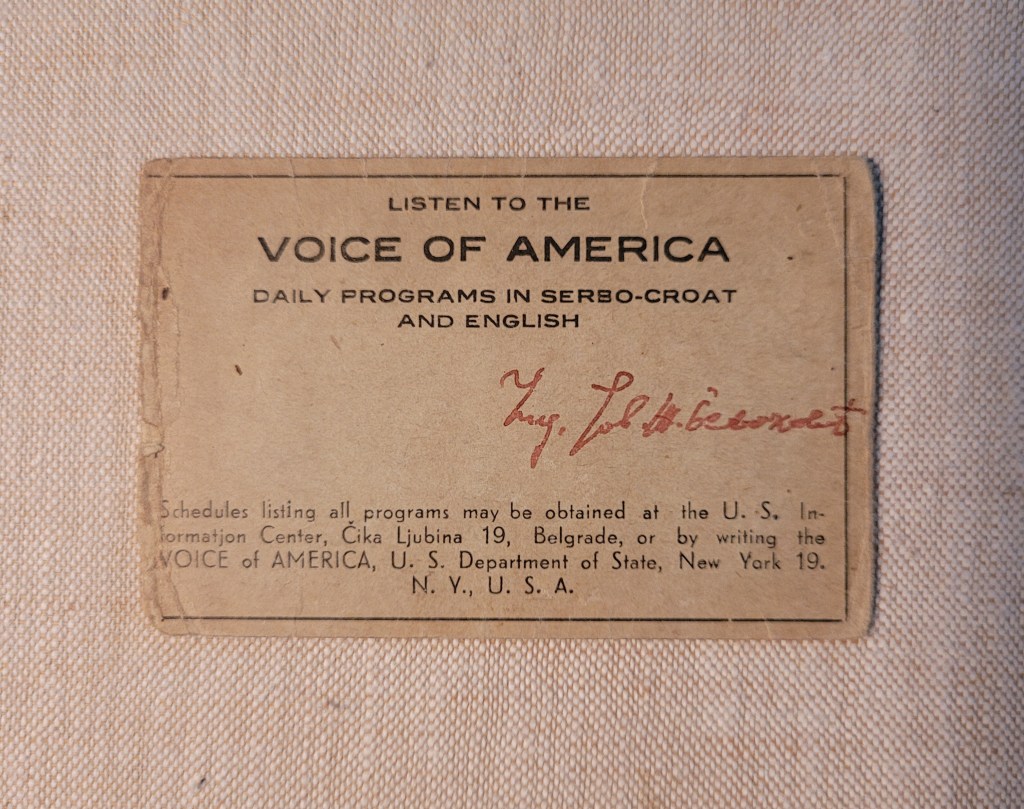
Pre-1954 Library Card for the American Library in Belgrade, Yugoslavia (front)

Pre-1954 Library Card for the American Library in Belgrade, Yugoslavia (back)

Department of State’s U.S. Information Service (USIS)

After World War II, and with the passing of the Smith-Mundt Act (of 1948), an act “to promote the better understanding of the United States among the peoples of the world and to strengthen cooperative international relations,” the United States Army in conjunction with the Department of State opened libraries in occupied areas of the world.  These libraries, also known as “information centers,” supplied “as representative a collection of significant United States publications in all fields of knowledge.” By 1953, When the U.S. Information Agency (USIA) replaced the USIS, there were 196 information centers and reading rooms, and 34 binational centers for a total of 230 information centers in 75 countries.  By 1970, there were 319 centers in 97 counties.  In addition to information centers, the USIS/USIA operated state-owned radio broadcasting organizations including Voice of America and Radio Free Europe. (Voice of America and Radio Free Europe are now operated by the U.S. Agency for Global Media (USAGM).  The USIA was abolished on October 1, 1999, and information and cultural exchange functions were transferred to the Department of State’s Under Secretary for Public Diplomacy and Public Affairs.  

The American Library in Belgrade, Yugoslavia

On October 19, 1945, the USIS officially opened the Belgrade Information Center in Belgrade, Yugoslavia.  Ambassador Richard C. Patterson, Jr. and “a group of high government officials and well-known personalities from the intellectual world” attended the opening ceremonies.  Although the USIS typically housed information centers at embassies, USIS officials believed visitors to the Belgrade center would feel intimated entering an embassy, so a “building of a less official nature” at Cika Ljubina 19, the historic Palata Zora building, was chosen as the Belgrade information center location.

Belgrade Information Center. Translation of signage: АМЕРИЦKA ИЗЛОЖБA = AMERICAN EXHIBITION (front), ИЗЛОЖБA СAД = USA EXHIBITION (side).  From Waging the Truth Campaign, Eighth Semiannual Report of the Secretary of State to Congress on the International Information and Educational Exchange Program, Volume 8, July 1 to December 31, 1951 (public domain)

Preparing the center’s library for opening day was no easy task.  Furnishing the library was a major hurdle since library furnishings were not available in Belgrade.  Accordingly, all furnishings had to be manufactured prior to opening the library.  This included library tables, chairs, bookcases, display racks and even curtains.  Obtaining permits from the local officials further delayed the opening.  The cost to open the library was $2,000 USD (approx. $35,000 today). 

The library was open to the general public from 10:00am-1:00pm and 4:00pm-8:00pm and closed only on Thursday.  These hours were most convenient for Yugoslav locals, as most government offices were open from 8:00am-2:00pm.  The library reading room contained magazines, newspapers, miscellaneous publications, and a small collection of fiction.  A reference library containing scientific and technical publications and books was kept separate.  Membership cards were issued to those interested in full use of the center.  The management of the library believed that  the effort to apply for a membership card limited the casual reader and left more room at tables for more serious students and researchers.  For those that held a membership card, fiction could be checked out for one week; however, reference materials were not allowed out of the premises.  The library was under the care of a US government “Information Specialist” and three English-speaking Serbians, one of which acted as the librarian.

In addition to library services, the information center maintained display windows on the ground floor in which the currently available books and reading themes were advertised, and an exhibit room with monthly photographic presentations on various subjects related to American culture.  The center also presented English-language lectures on American culture, such as music and authors.  American music recordings were also available for listening and proved to be in great demand. 

According to The Record (Vol. II, No. 5, May 1946), a publication by the Scientific and Cultural Cooperation Division of the Department of State, the library had 2,372 visitors in February 1946.  The most popular subjects were American architectures, aeronautics, history, electricity and radio.  Reading material on art, chemical research, mechanics, machinery, physics, medicine, music, transportation and American youth were frequently requested.

The American Library Closed

In September of 1946, the information center was closed by the Tito administration after it was accused of “engaging in anti-Yugoslav activities.”  Previously, in December 1945, the US government had announced that they would “recognize” the new Tito-led communist regime in Yugoslavia; however “our ambassador was instructed to make it clear to the government of Yugoslavia and the people of that country that our willingness to establish diplomatic relations with the new regime should not be interpreted as implying approval of the policies of the regime, its methods of assuming control, or its failure to implement the guarantees of personal freedoms promised its people.”   When this information was supplied to the Yugoslav people, the Tito administration failed to disclose the criticism that accompanied the recognition.  Upon learning of this transgression by the Tito administration, the USIS transmitted radio broadcasts of the full US statement and posted transcripts of the statement in their display windows.  Locals swarmed the center display windows to read the news causing the local police to disperse the crowds.  After some diplomatic negotiations, the center was allowed to reopen three months later on the condition that radio news bulletins would no longer be posted.
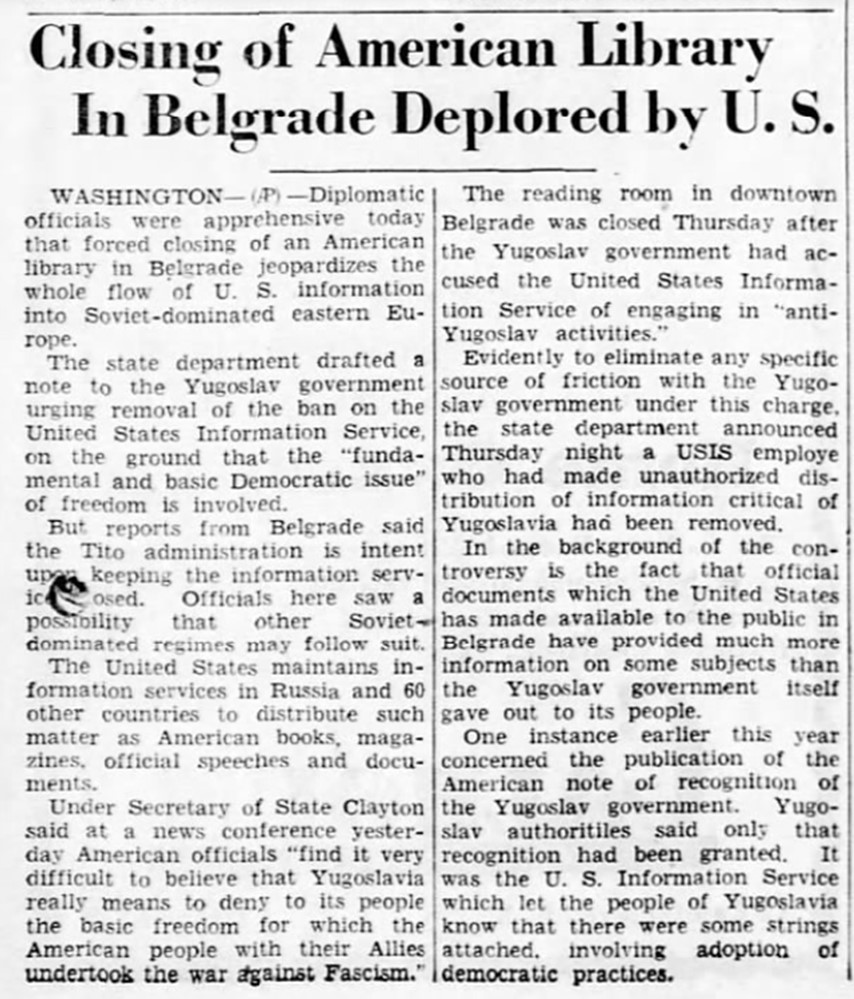
Battle Creek Enquirer, 28 Sep 1946, Sat., Page 1
The Herald-Sun, 15 Dec 1946, Sun., Page 5

The American Library in the News

The Gaffney Ledger, 4 Jan 1951, Thu., page 3
The Daily Clintonian, 12 Jan 1951, Page 3

The Palata Zora

The Palata Zora (English: Dawn Palace) was built in 1904 for royal court jewelers, Constanine and Nikola Z. Popović.  The building was confiscated and nationalized in 1944 upon the rise of the Socialist Federal Republic of Yugoslavia (SFRY). Since 2004, the Palata Zora has been home to the Instituto Cervantes,  a worldwide nonprofit organization created by the Spanish government to promote the Spanish language and the culture of Spanish-speaking countries. 
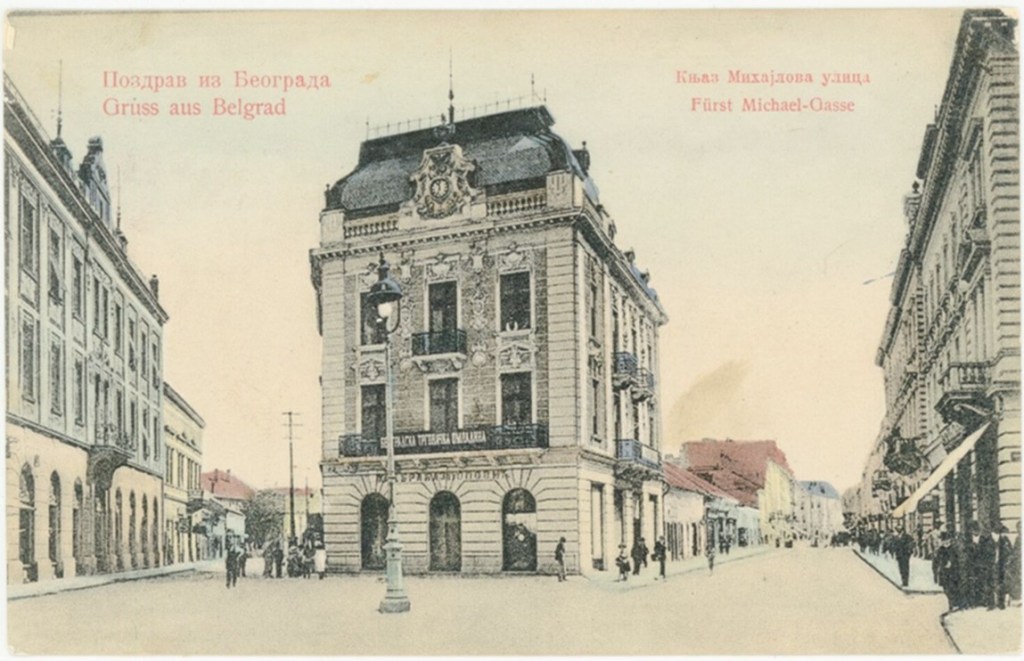
The Palata Zora’s Original Appearance (Public domain postcard)
The Palata Zora’s today. Home of the Institute Cervantes (2015).  Wikimedia Commons Attribution: Mister No, https://creativecommons.org/licenses/by/3.0/deed.en (no changes)


LaGrange Negro Library, LaGrange, Georgia

1952-1962 LaGrange Negro Library Borrower’s Card No. 3346 issued to Edward Paige, Jr.

1952-1962 LaGrange Negro Library Borrower’s Card No. 3346 issued to Edward Paige, Jr. (front)
1952-1962 LaGrange Negro Library Borrower’s Card No. 3346 issued to Edward Paige, Jr. (back)

LaGrange Negro Library

Established after 1951 with local funding, the LaGrange Negro Library was part of the Negro Library Community Center in LaGrange.  

Edward Paige, Jr.

Edward Paige, Jr.  (1933-1978) served as a Private First Class for the US Army during the Korean War.

Havana Military Academy, Biblioteca Rafael Maria Mendive, Havana, Cuba

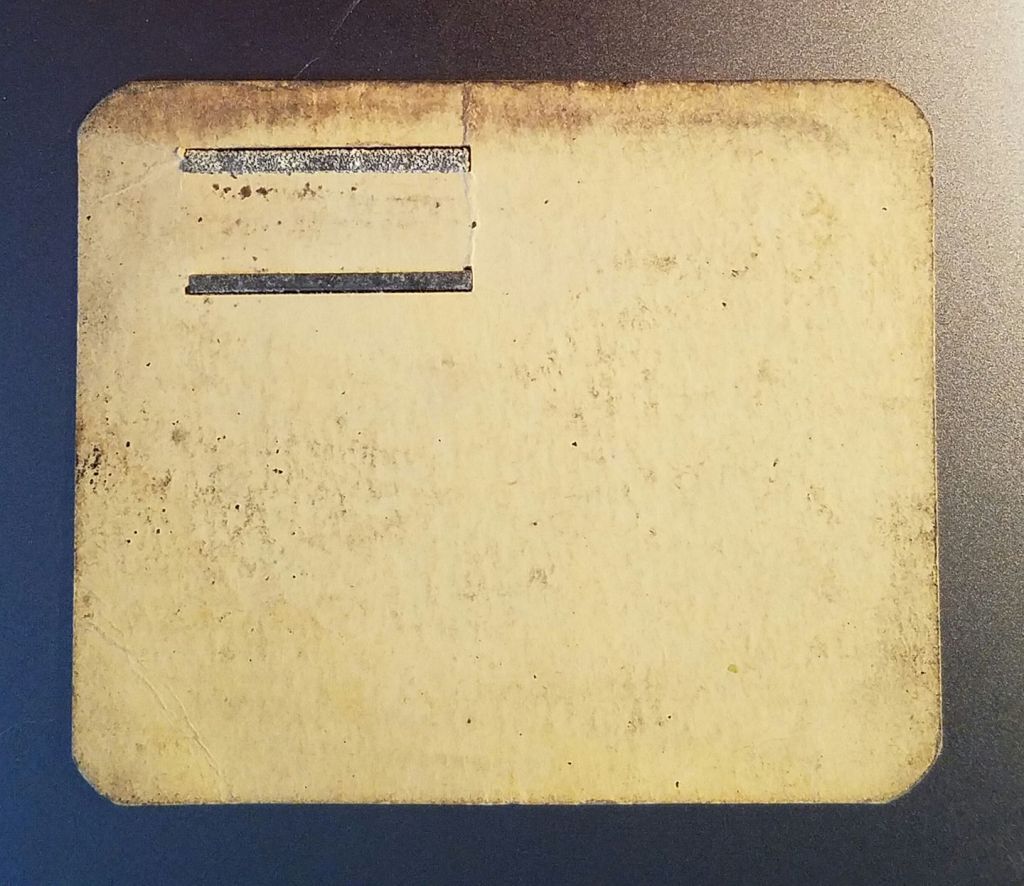
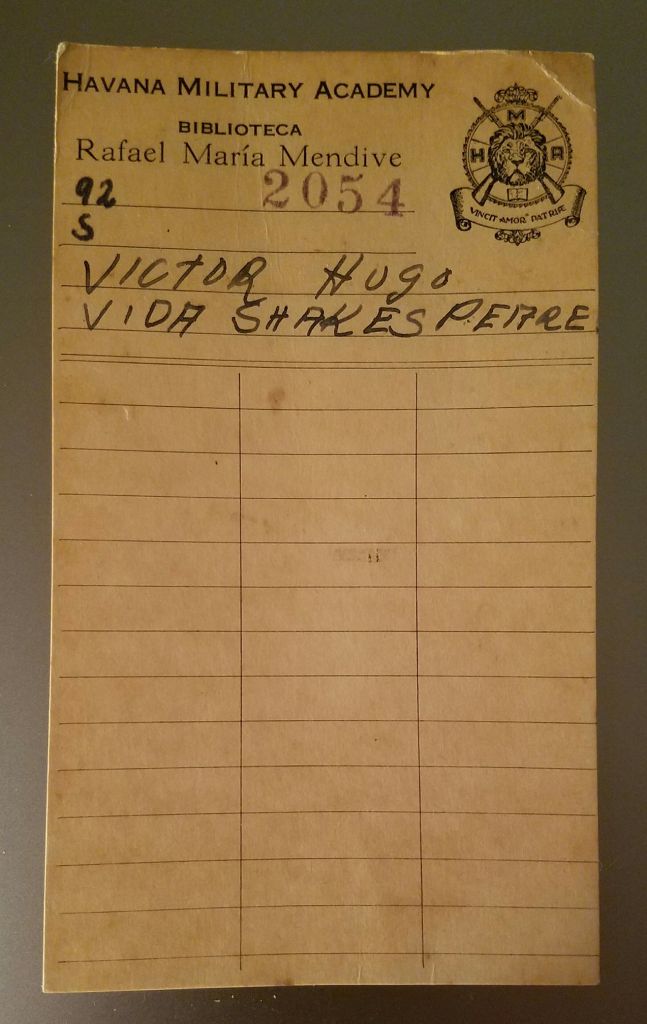
Pre-1960 Book Pocket and Book Card, Havana Military Academy, Biblioteca Rafael Maria Mendive

Pre-1960 Book Pocket with Book Card for Victor Hugo’s biography of William Shakespeare, Havana Military Academy, Biblioteca Rafael Maria Mendive
Pre-1960 Book Pocket, Havana Military Academy, Biblioteca Rafael Maria Mendive
Pre-1960 Book Card for Victor Hugo’s biography of William Shakespeare, Havana Military Academy, Biblioteca Rafael Maria Mendive

The Havana Military Academy, Havana, Cuba

The Havana Military Academy, founded by Raúl Chibás in 1947 before the Cuban Revolution, was an elite military-style boarding school on the outskirts of Havana, Cuba.

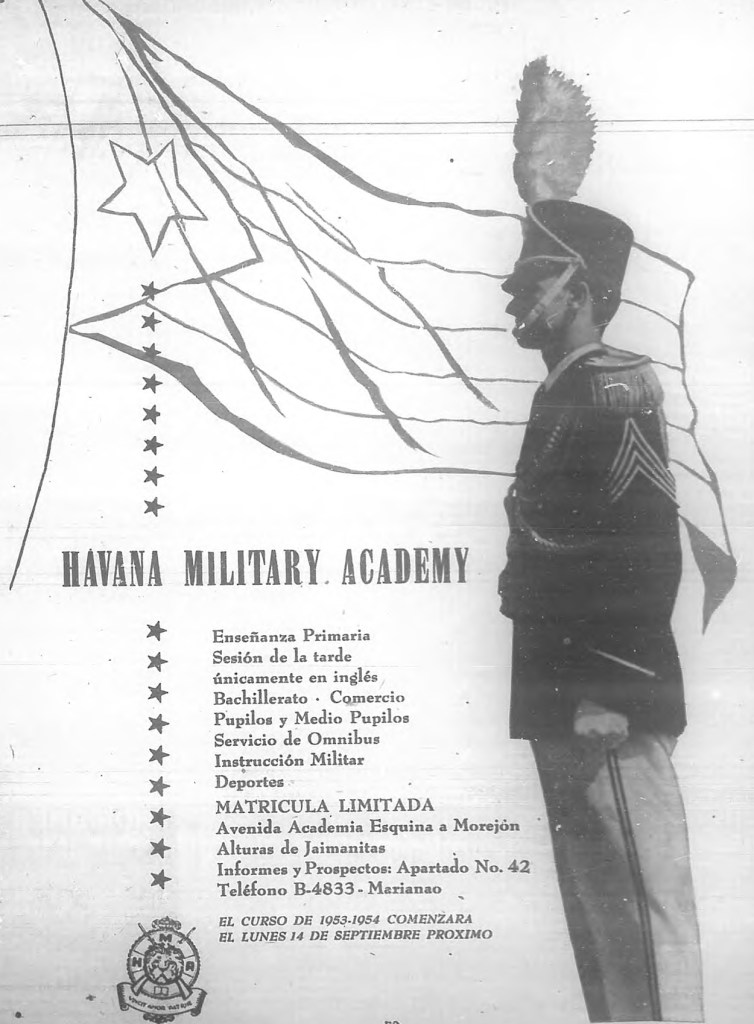
Advertisement for the 1953-1954 School Season of the Havana Military Academy, Havana, Cuba

The 1947 Montreal Royals

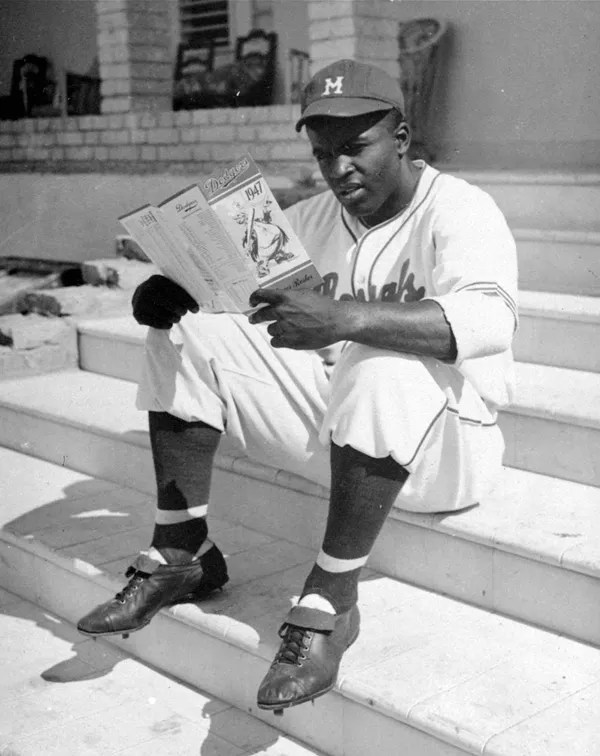
Before opening to students in late 1947, the Academy famously hosted the Brooklyn Dodgers and their AAA farm team, the Montreal Royals, for their 1947 spring training season. After having experienced racial harassment from white crowds in Daytona Beach during the 1946 Spring training season due to the Royals’ integrated roster that included the first black minor league player, Jackie Robinson, management decided to change the training location to Cuba after learning that baseball teams in Cuba had been integrated since the early 1900s. However, Jim Crow laws followed Robinson and the Royals to Havana. While the Dodgers stayed at the swank Hotel Nacional and the Royals at the brand-new Havana Military Academy, Jackie Robinson and other African American teammates were given accommodations at a third-rate boarding house in downtown Havana. This unfair treatment didn’t deter Jackie Robinson from making baseball history. In the 1947 regular season, Jackie Robinson was signed to the Brooklyn Dodgers and became the first African American major league baseball player in American baseball history, as well as the Rookie of the year. With Robinson’s help, the Dodgers went all the way to the 1947 World Series.

Jackie Robinson reading the 1947 Montreal Royals’ roster.
(Associated Press/public domain)

The Cuban Revolution of 1953

Before the Cuban Revolution, Cuban politics were rife with corruption, dictatorships, and episodic American intervention and interference. The Cuban economy, at times robust due to the growing exports of sugar to the United States, continually fluctuated and ultimately stagnated because of restrictive trade policies introduced by the Smoot-Hawley Tariff Act in 1930.

In 1933, the Sergeants’ Revolt, a coup led by Fulgencio Batista, resulted in the deposition of President Carlos Manuel de Cespedes and the introduction of a United States-backed military dictatorship. While the economy prospered under Batista, so did social ills and inequalities. Cuba became known for its decadence, a destination for prostitution and gambling at mafia-infested casinos. Moreover, while the economy under Batista was burgeoning for many, the underclass was experiencing extreme poverty and unemployment. In 1952, a young attorney named Fidel Castro petitioned the courts to overthrow the presidency of Batista due to his corruption, but Castro’s arguments were not persuasive. It was then that Castro concluded that more aggressive steps were needed to rid Cuba of an administration he saw as tyrannical. With the help of his brother Raul, Castro organized a paramilitary organization called “The Movement,” and by the end of 1952, had recruited over 1,200 followers. In 1953, a failed attempt at stealing weapons from a military garrison landed Castro in prison for 15 years, but he was released early due to international pressures. Upon his release, Castro traveled to Mexico to receive paramilitary training and, while there, met a young militant revolutionary named Che Guevara. Guevara joined forces with Castro, and both returned to Cuba to begin the revolution in earnest. On November 25, 1956, Castro, Guevara, and other supporters crash-landed a small yacht onto the shores of Playa Las Coloradas. After a brief but lethal attack by Batista’s army, they fled into the mountains, where they continued plans for a coup. In response to the growing revolutionary movement, Batista solicited the help of the United States to combat the rebels, but the United States played both hands and supplied support to the rebels, as well, sensing the need to establish a relationship should Castro’s revolution be successful. From 1957 through 1958, there was a dramatic shift in public support for the revolution. Batista’s public approval was dwindling, and an arms embargo by the United States further weakened Batista’s military powers. On January 1, 1959, Batista fled Cuba, and Fidel Castro’s first appointed President, Manuel Urrutia Lleo, took office on January 3, 1959. In a speech by Fidel Castro on November 28, 1960, Castro spoke of the Havana Military Academy that had been abandoned by Raúl Chibás upon his defection to the United States. “A gentleman left, leaving a school behind called the Havana Military Academy. Now we are adding to it, and it will be the first rebel army polytechnic school for the revolution … and it has the manpower to do all the tasks and achieve all the goals it proposes.”

Rafael Maria de Mendive

Rafael Maria de Mendive (1821-1886) was a Cuban poet, and mentor to José Marti (1853-1895).

Rafael Maria de Mendive (public domain)

Havana Military Academy Educators and Students

Raúl Chibás

Raúl Chibás (1917-1998), founder of the Havana Military Academy and a long-time critic of the Batista administration, joined Fidel Castro’s revolutionary movement in 1957. Politics was no stranger to the Chibás family. His brother, Eddy Chibás, was the founder of the Partido Ortodoxo in Cuba, a former Senator, and a controversial radio talk show host who committed suicide on air in an act of political contrition. Raul, believing that Castro was the answer to the overthrow of President Batista and the advent of democracy in Cuba, joined Castro in the Sierra Maestra Mountains, where he co-authored the Sierra Maestra Manifesto, laying out the democratic intentions of the revolution. But Castro, needing the support of those with less radical leanings like Chibás, concealed his communist intentions. After the revolution, Chibás became disillusioned with Castro’s authoritarianism and defected to America in August 1960.

Félix Rodríguez

Félix Rodríguez (b. 1941), also known as Félix “El Gato” Ramos Medina, was a Havana Military Academy graduate recruited by the Central Intelligence Agency shortly after his defection to the United States in 1960. In 1961, Rodríguez slipped back into Cuba to prepare for the covert Bay of Pigs operation, but due to the mission’s failure, he sought refuge at the Venezuelan embassy before he was allowed to leave Cuba. Rodríguez was involved in many CIA-backed operations, but he is most well-known for his participation in the assassination of Che Guevera on October 9, 1967, and arms trafficking for the CIA and the Nicaraguan Contras.

Manuel Artime

Manuel Artime (1932 –1977), a professor at the Havana Military Academy, was a former member of Castro’s rebel army. In 1959, after becoming disillusioned by Castro’s increasingly communist leanings, he formed a counter-revolutionary group called the Movimiento de Recuperación Revolucionaria (MRR). However, fearing assassination by Castro’s army, Artime defected to the United States with the help of the American embassy and the CIA. After defecting, Artime was recruited by the CIA and became the leader of the Bay of Pigs resistance fighters and other anti-Castro campaigns, including a failed assassination attempt against Fidel Castro in 1965. In the 1970s, Artime organized the Miami Watergate Defense Relief Fund, collecting money for the convicted Watergate burglars, several of whom were American or Cuban veterans of the Bay of Pigs operation. Artime died suddenly on November 18, 1977, before his scheduled appearance before the House Select Committee on Assassinations to give testimony on the John F. Kennedy assassination.

The Josephine-Louise Public Library, Walden, New York

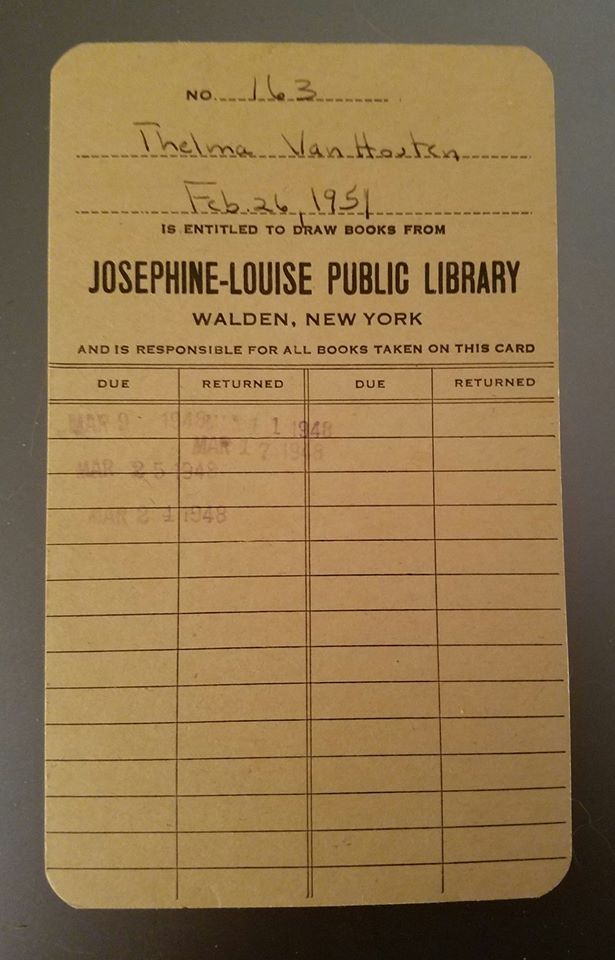
Pre-1951 Josephine-Louise Public Library Card No. 163 issued to Thelma Van Houten

Pre-1951 Josephine-Louise Public Library Card No. 163 issued to Thelma Van Houten (front)

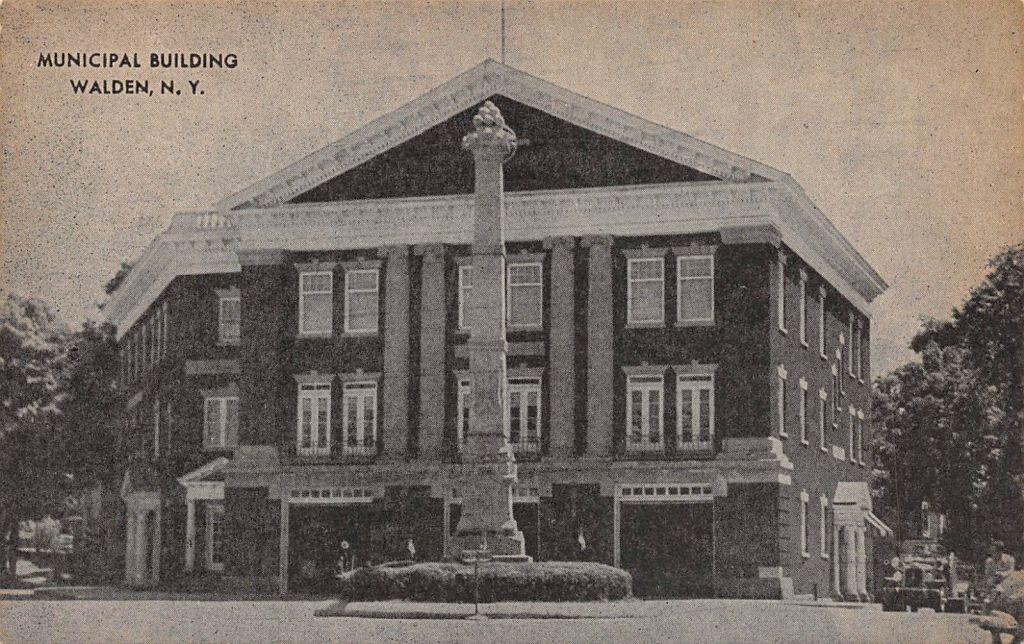
The Josephine-Louise Public Library, Walden, New York

The Josephine-Louise Public Library, Walden, New York (Pre-1923 Public Domain Postcard)

The Josephine-Louise Public Library is a memorial library dedicated to Josephine Dennison Bradley (1843-1903) and Louise Harper Bradley (1869-1900), wife and daughter of Col. Thomas Wilson Bradley (1844-1920), President of the New York Knife Factory, Medal of Honor recipient for his service during the Civil War, and a member of the US Congress.

The library began as a circulating library club in 1896 by a group of Walden residents that included Josephine Bradley. Upon petitioning the Board of Regents of the University of the State of New York, the circulating library was granted a 5-year provisional charter and, in 1901, the first Walden Public Library opened. In 1915, plans to build a new Municipal Building were put into place.  Colonel Bradley, in honor of his wife and daughter, matched “dollar for dollar” the town budget to build the new facility which included a firehouse, as well as offices, an assembly room and, of course, a library space.  In addition, he fully funded a temporary location in the village hall until the new Municipal Building was completed.   The new Walden Municipal Building and Library opened at 5 Scofield Street in Walden in 1916.  

Thelma Van Houten

Thelma Louise Van Houten (1/30/1929 – 6/19/1992), life-long New York native.

Cedar Rapids Public Library, Cedar Rapids, Iowa

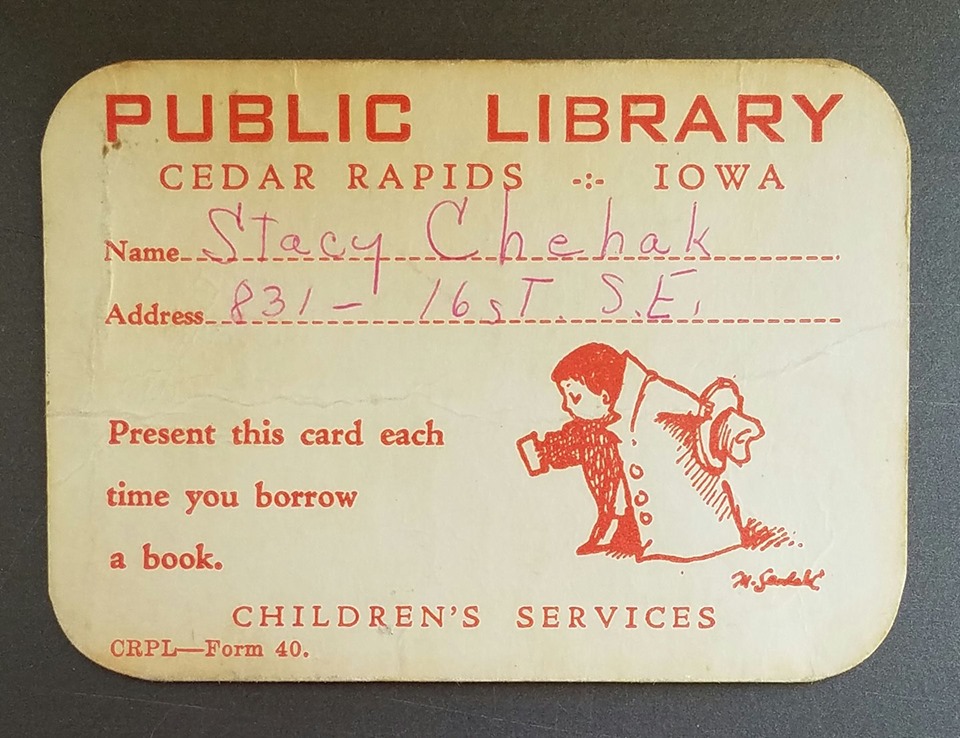
Cedar Rapids Public Library, Children’s Services, 1950s Borrower’s Card, issued to Stacy Chehak

Cedar Rapids Public Library, Children’s Services, Borrower’s Card
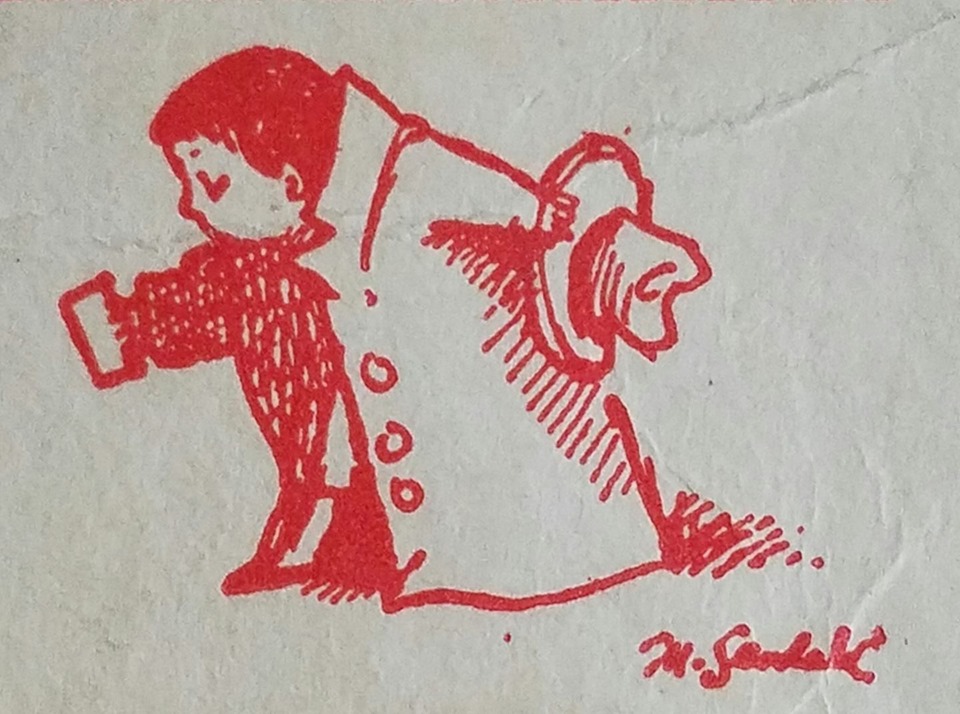
Early Maurice Sendak illustration

Cedar Rapids Public Library

Advertisement of the Free Library and Reading Room at First Avenue, The Cedar Rapids Gazette, Friday, January 12, 1883

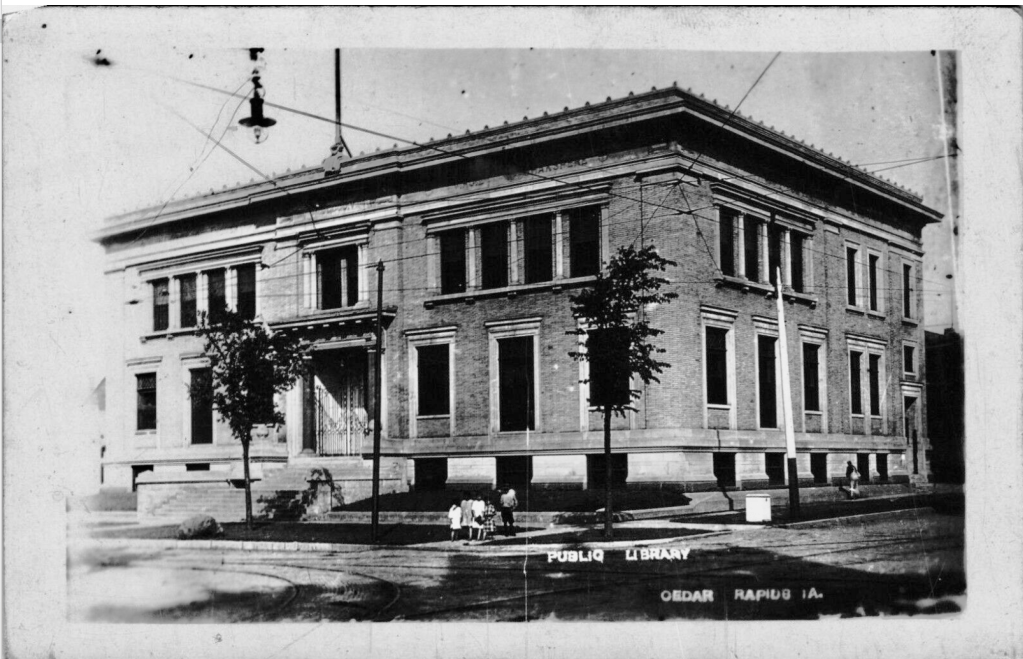
On June 23, 1905, after having outgrown smaller spaces in the Granby Building and Dow Auditorium, which the Cedar Rapids Public Library occupied during the late 1800s, a new 29,000 sq. ft. building funded by Andrew Carnegie opened at Third Avenue and Fifth Street.  By the late 1960s, overcrowding would again become a problem.  New book donations were turned away and overstock was stored in the basement.  In the 1970s, through the donations of the Hall Foundation of Cedar Rapids and other private donors, a new 83,000 sq. ft. building was constructed at 500 First Street SE, which opened on February 17, 1985.  However, on June 13, 2008, the city of Cedar Rapids experienced catastrophic flooding which destroyed many private and city buildings, including the main public library.  Much of the adult and reference collections were destroyed and the library was forced to relocate to leased space while a new permanent location was constructed.  The new Ladd Library opened in August 2013 at 450 Fifth Avenue SE. The former Carnegie building is now the Cedar Rapids Museum of Art and houses the world’s largest collection of the “American Gothic” artist, Grant Wood among other noted Iowan artists.  

Cedar Rapids Public Library at 3rd Avenue and 5th Street (public domain postcard)

Anastasia “Stacy” Marie Chehak

Anastasia Marie Chehak (1953-2017) was a nationally-known diabetes expert, author and medical community leader. She was the founder of Anastasia Marie Laboratories, Inc. and The Voice of Diabetes Network, a live radio program. Serving on the US Senate Health Advisory Board under President Ronald Reagan was among her many achievements.  A 1978 graduate of the University of Oklahoma’s Health Sciences Center, she dedicated her life’s work to finding a cure for diabetes. 

New York Public Library, Fordham Branch, Bronx, New York

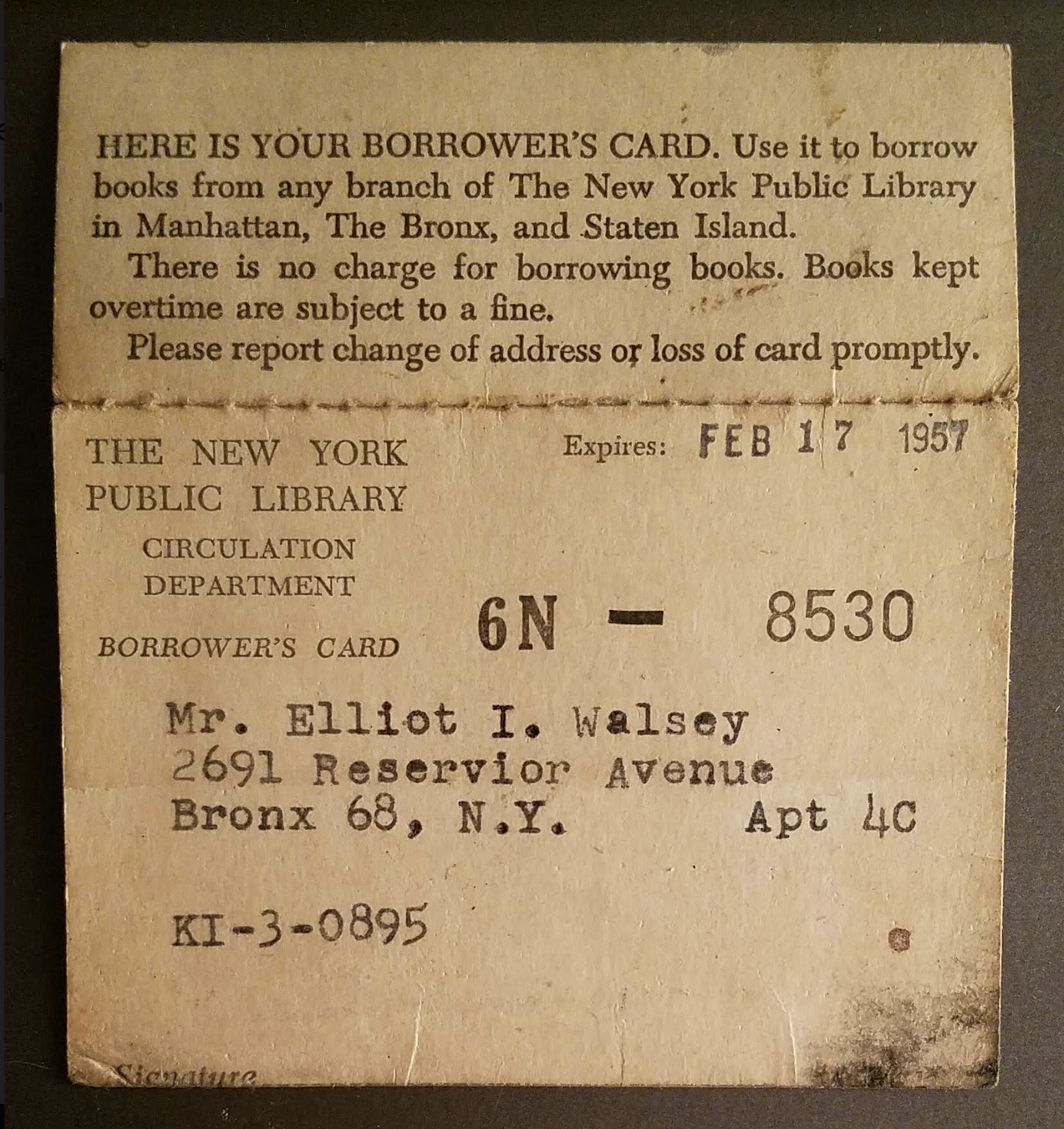
1957 Borrower’s Card No. 6N-8530 Issued to Elliot I. Walsey

The New York Public Library (Bainbridge Avenue/Fordham Branch), Bronx, New York (Source: Wikimedia Commons/Julian A. Henderson) (Usage: https://creativecommons.org/licenses/by-sa/3.0/)(cropped)

The Fordham Branch Library building, designed by the prominent New York architectural firm McKim, Mead and White, who was known for designing the main New York Public Library in Manhattan, opened for circulation on September 24, 1923.  

“Realty Notes,” New York Times Newspaper, May 25, 1923

The New York Public Library, Fordham Branch, was one of many public libraries and public buildings endowed by steel magnate,  Andrew Carnegie.  In the latter years of his life, he believed the rich had a responsibility to “improve society,” and hence, donated $350M (equal to over $5B today) to the construction of over 3,000 libraries and public spaces in his birthplace, Scotland, the United States, and around the world.

Andrew Carnegie by Theodore C. Marceau (1913) (Source: Library of Congress)
(Usage: Public Domain)

The “Fordham Branch Library” having become too small to accommodate neighborhood needs, closed in November 2005 and reopened as the Bronx Library Center at 301 East Kingsbridge Road on January 17, 2006.  The new 78,000 square-foot facility is a state-of-the-art, green library that houses the New York Public Library’s premiere Latino and Puerto Rican Heritage Collection.

The Bronx Library Center (Kingsbridge Road), Bronx, New York
(Source: Wikimedia Commons/Julian A. Henderson)
(Usage: https://creativecommons.org/licenses/by-sa/3.0/)(cropped)

Elliot I. Walsey (1938-2012)

Elliot Ira Walsey, born September 26, 1938 in New York, New York, was an American business owner.  He was the founder and former President of Benchmark Graphics, Ltd.