Ontario City Library, Ontario, California

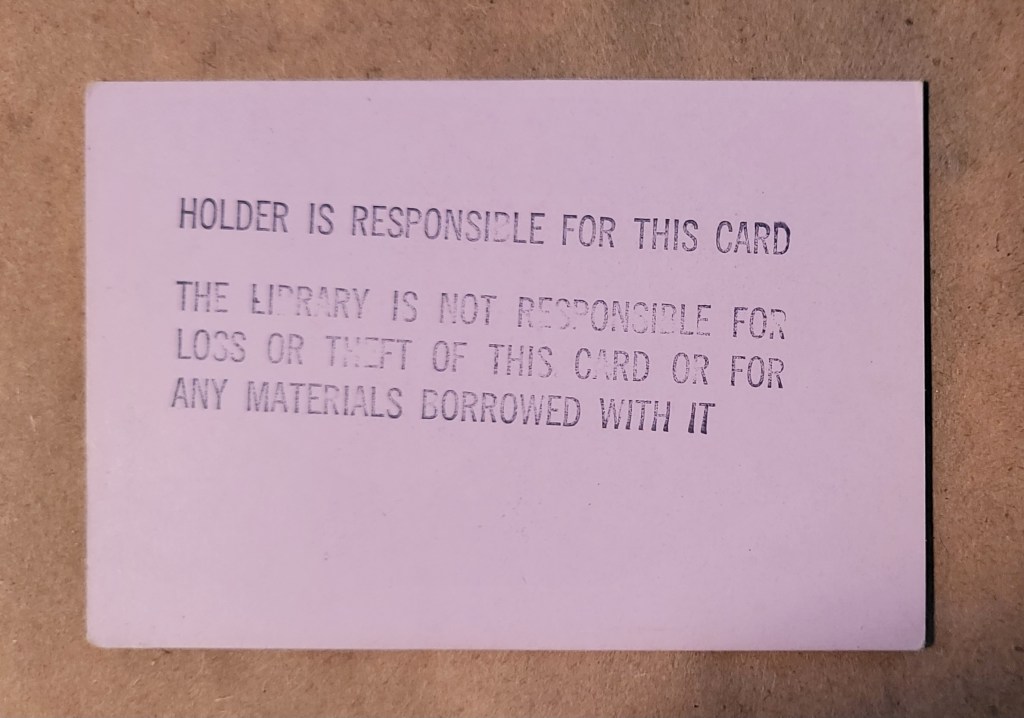
1961-1964 Ontario City Library Card for Chaffey High School Students
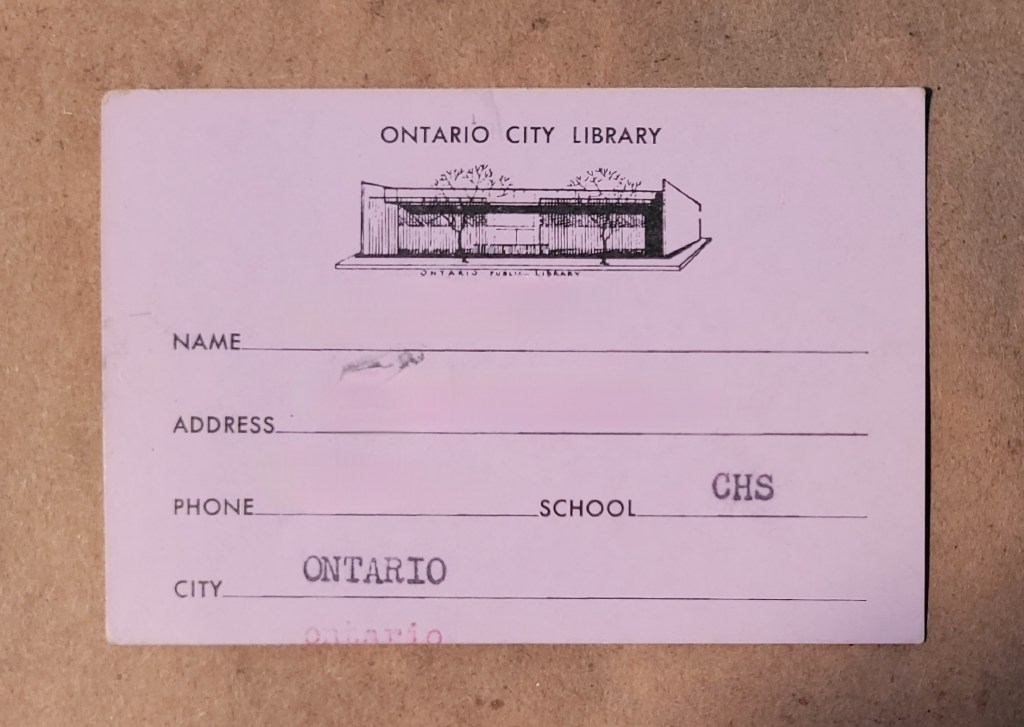
1961-1964 Library Card issued to Chaffey High School students for use at the Ontario City Library (front)
(living person information redacted)
1961-1964 Library Card issued to Chaffey High School students for use at the Ontario City Library (back)

Ontario, California – The Chaffey Brothers’ Vision
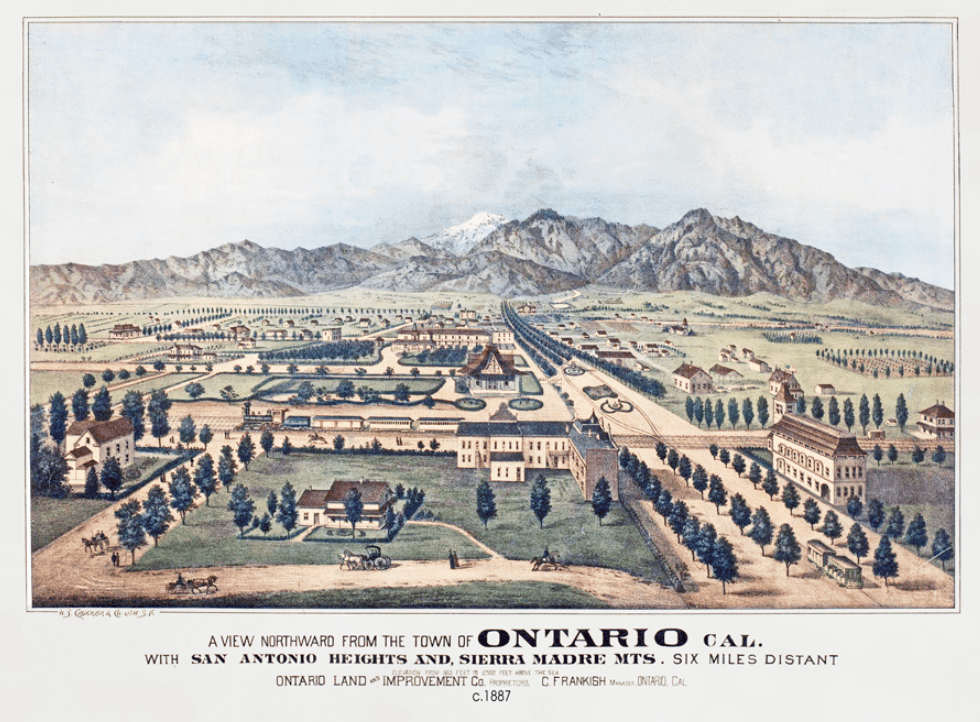
Ontario, California, circa 1887, published by H.S. Crocker Co.
Pre-1923 public domain publication. No known copyright restrictions.

In 1881, brothers William B. (1856-1926) and George Chaffey, Jr. (1848-1938), both engineers from Brockville, Ontario, Canada, began purchasing parcels of land in Southern California with the intention of creating “irrigation colonies” complete with water resources, water-powered cable cars, grand avenues illuminated with electric lights, and convenient access to the existing Southern Pacific Railway. Those land purchases became the Etiwanda, Upland, and Ontario Settlements. Due to the mild winter climate and easy access to water from the nearby mountains, citrus farmers were some of the first landowners in Ontario.

Advertisement announcing the town and settlement of Ontario. Ten-acre and 120-acre parcels were sold for $150-250 per acre.
Pomona Times-Courier, 23 Dec 1882, Sat ·Page 3

Ontario City Library

The Ontario City Library was established in 1885, according to Publication No. 3, “The Libraries of California in 1899”, which was published by the Library Association of California in April 1900. Although it was organized by the town of Ontario, the library earned its revenue through annual subscriptions of $1.00 and community fund-raising events, such as citrus fairs and concerts. Not until 1902 would the library become a free public library.

One of the earliest newspaper mentions of the “Ontario Public Library” was in 1886 when Richard Gird, a successful silver miner and local real estate investor from Tombstone, Arizona, donated fifty volumes to the “Ontario Public Library.”  

Los Angeles Herald, 04 Jun 1886, Fri · Page 5

In 1894, for the first time, the Trustees of the California State Library recognized and included the “Ontario Public Library” in the fiscal report for the Forty-Fourth and Forty-Fifth Fiscal Years (July 1, 1892 to June 30, 1894). It was noted that the library was “too recently organized to furnish statistics.”

One of the earliest locations of the library was at the southwest corner of A Street (now Holt’s Boulevard) and Euclid Avenue in a 2-story brick building known as the Ohio Block. The Ohio Block was built by Miss Eleanor Freeman (1848-1904) in 1888. Freeman, originally from Cincinnati, Ohio, was so charmed by the weather in Ontario that a temporary three-week stay resulted in the purchase of a twenty-acre tract of land. Freeman and her niece, Mary Ellen Agnew (1851-1914), served as the first librarians.
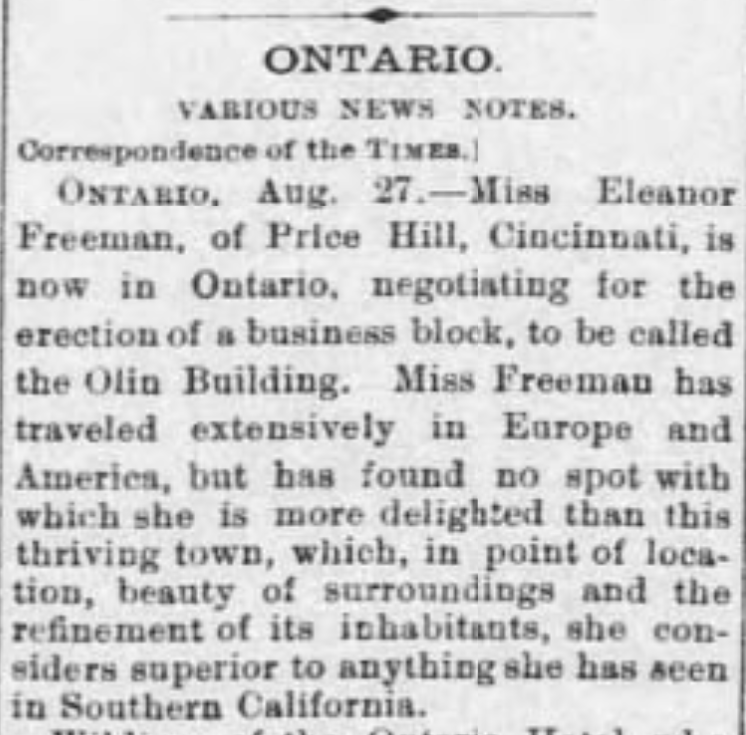
The Los Angeles Times, 29 Aug 1885, Sat ·Page 4
Built in 1888, the Ohio Block was razed in 1931. Photo Source: City of Ontario Facebook Page/Robert E. Ellingwood Model Colony History Room. No known Copyright restrictions.
Euclid Avenue Postcard, circa 1905. Originally published by Brück & Sohn Kunstverlag (Germany).
Creative Commons CC0 1.0 Universal Public Domain Dedication.
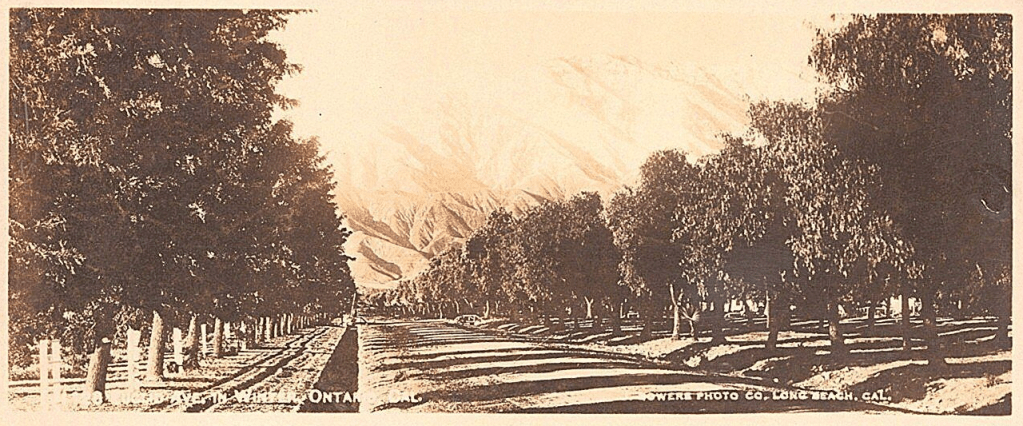
“Euclid Avenue in Winter,” circa 1905-1910. Photographer: John Bowers. (1865-1911)
Pre-1923 public domain postcard. No known copyright restrictions.

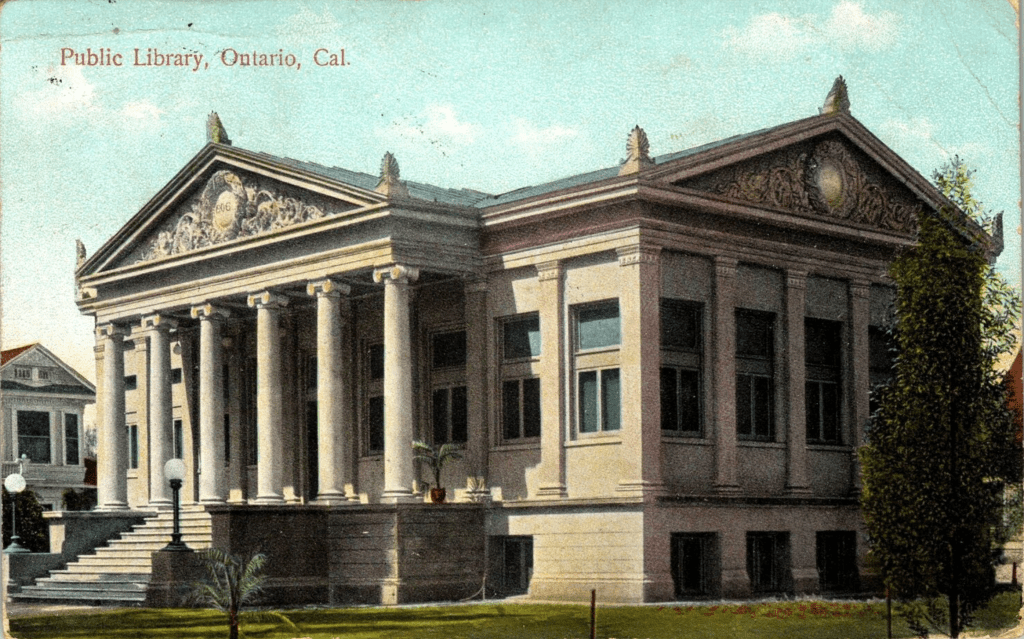
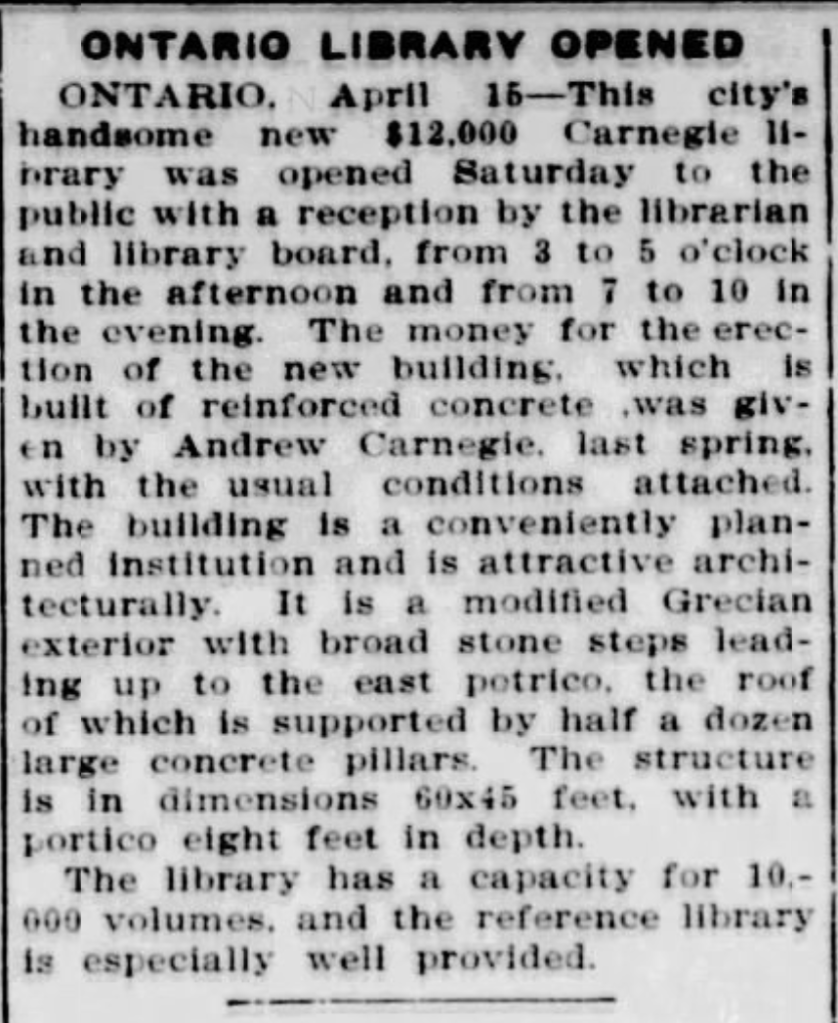
In 1903, the “Ontario Public Library” requested assistance from philanthropist Andrew Carnegie to secure funds for the construction of a new library building. In April 1906, after receiving a donation of $10,000 towards the project, the head librarian, Miss Kezzie A. Monroe, visited the Covina Public Library in California, which had opened in 1905. She gathered ideas from the library tour, and Architect F.P. Burnham was hired to prepare plans for the new Ontario library building. On April 13, 1907, the new library building located at D Street and Euclid Avenue opened, stocked with approximately 3,400 volumes with plenty of room for growth.
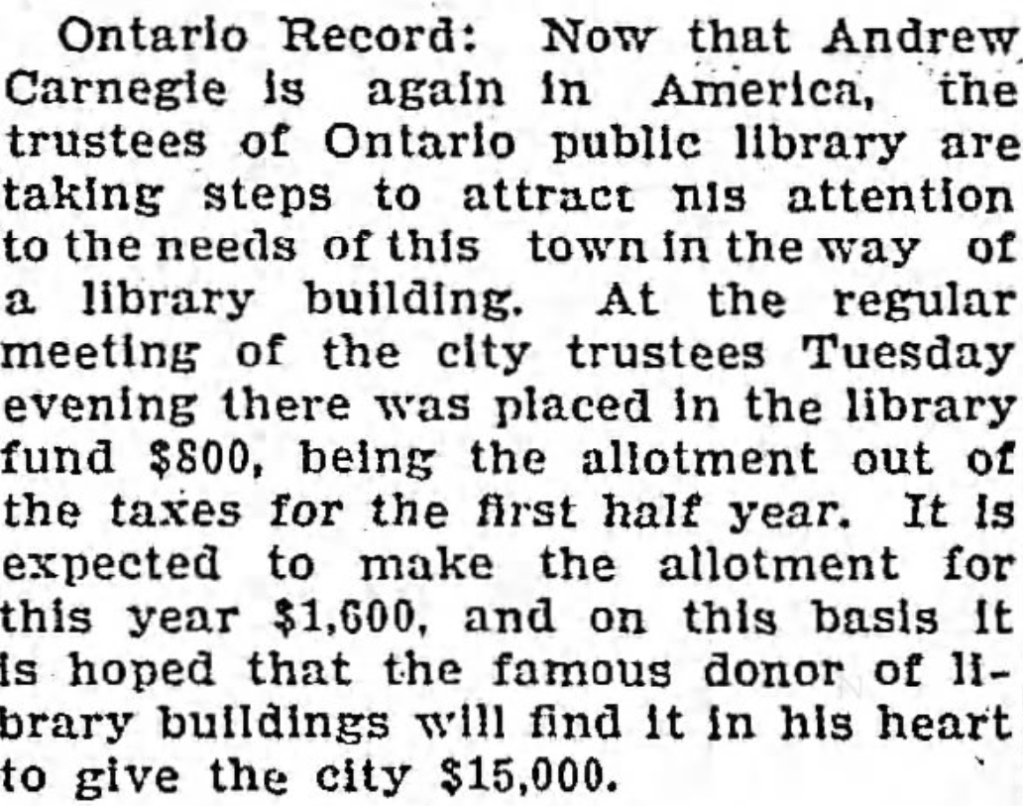
Daily Times-Index, 26 Jan 1903, Mon ·Page 2
Long Beach Tribune, 16 Apr 1907, Tue ·Page 2
Ontario Public Library. Pre-1923 public domain postcard. No copyright restrictions.

Over the next decade, the library saw steady growth in inventory and readership, and, once again, additional space was needed, as reported by the head librarian, Miss Monroe, in the 1919 annual report. 

Los Angeles Evening Express, 29 Jul 1919, Tue ·Page 2

In the meantime, the Library faced trials and tribulations, such as unwanted neighbors, bees, and pests! Oh my!

The San Bernardino County Sun, 07 Apr 1921, Thu ·Page 11

As a result of vigorous action by the community to halt the conversion, Mr. Owen announced that he had “no desire to offend the people of Ontario and would place the property on the market and seek another site.”1

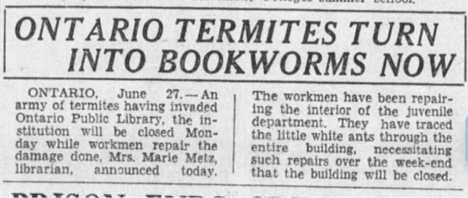
The Pasadena Post, 16 May 1929, Thu ·Page 17
The Los Angeles Times, 29 Jun 1930, Sun ·Page 52

On July 22, 1932, the newly expanded (and insect-free!) Carnegie Library building was opened to the public. The new wing, designed by Los Angeles Architect Harry L. Pierce, nearly doubled the floor space and reading rooms.

By mid-1943, the Library Board again proposed constructing a new library building. However, the selection of a new site would prove daunting. In April 1948, the Board purchased an additional lot adjoining the library property at D Street and Euclid Avenue, but an ongoing disagreement regarding the new library’s location lingered. In October 1953, the City Planning Commission approved a site at G Street and Euclid Avenue. However, having never officially reached an agreement for a new location, the library eventually fell into disrepair, and in July 1959, the library building was closed to the public, forcing the librarian to process loans and returns at the front door.
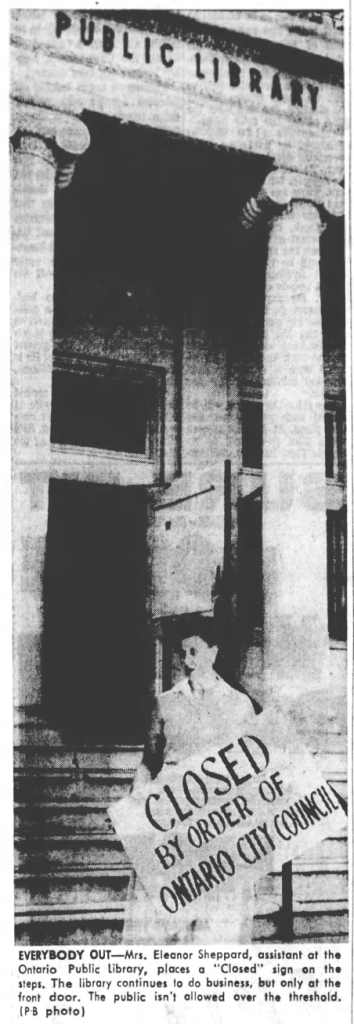
Progress-Bulletin, 29 Jul 1959, Wed ·Page 61

By August, the former Jack Clark Buick Co. building at 302 E. B Street was leased for use as a temporary library location. The building included a showroom, garage, and a much-needed parking lot. The temporary quarters opened on September 15 after the building’s interior was revamped for use as a library by the installation of new library shelving and 700 ft. of new fluorescent lighting. The former showroom was converted into the main reading room, and the builk of the library’s 60,000 volumes was available in the former garage.
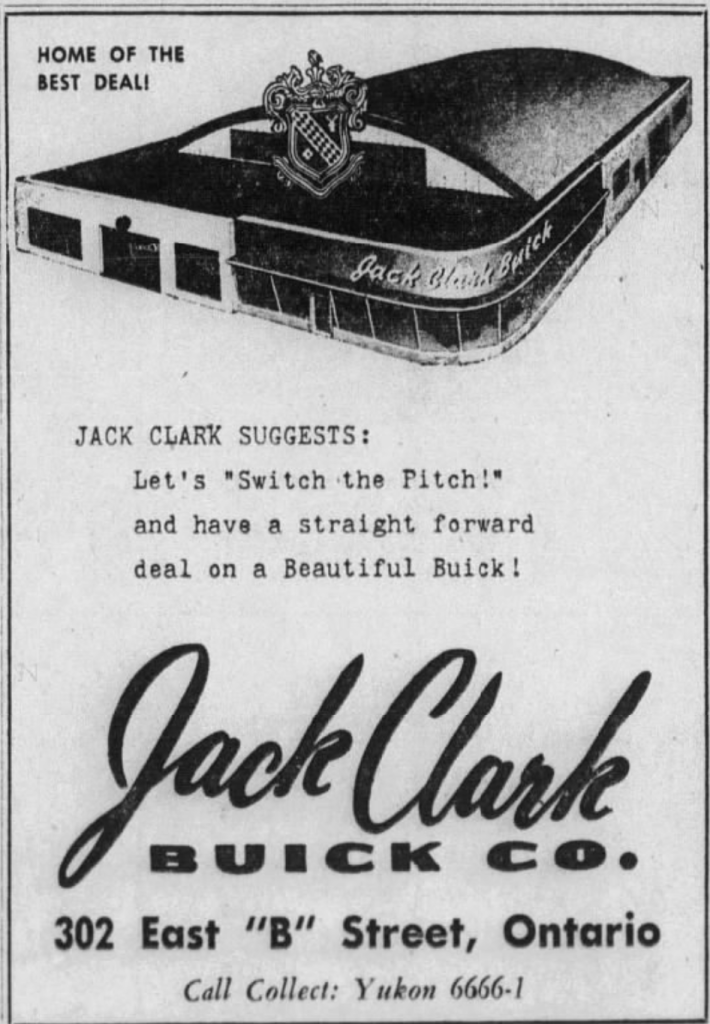
Jack Clark Buick Co. Newspaper Advertisement, The Los Angeles Times, 12 Jun 1955, Sun ·Page 162
Site of the temporary library, the Jack Clark Buick Co. building, Progress-Bulletin, 05 Aug 1959, Wed ·Page 57

Plans for the construction of a permanent library building on the north side of C Street between Lemon and Plum Avenues were put into motion almost immediately. By February 1960, a construction contract had been awarded to the Campbell Construction Co. of Ontario. The new library was opened to the public in mid-December 1960 and formally dedicated on January 16, 1961.

Architect’s (Dewey Harnish & Associate) rendering of the new library, Progress-Bulletin, 29 Apr 1960, Fri ·Page 21
Early 1960s postcard of the Ontario City Library. Publisher: Columbia Wholesale Supply. No known copyright restrictions

Library expansion was back in the news by April 1968 when voters overwhelmingly approved a $370,000 bond for the project. Architects Harnish, Morgan & Causey were contracted, and the expansion project began in January 1969. As part of a multi-phase plan, the library would eventually extend to the east of Plum Street. The library was expanded from 18,500 to 42,500 sq ft and was dedicated on March 1, 1970. 
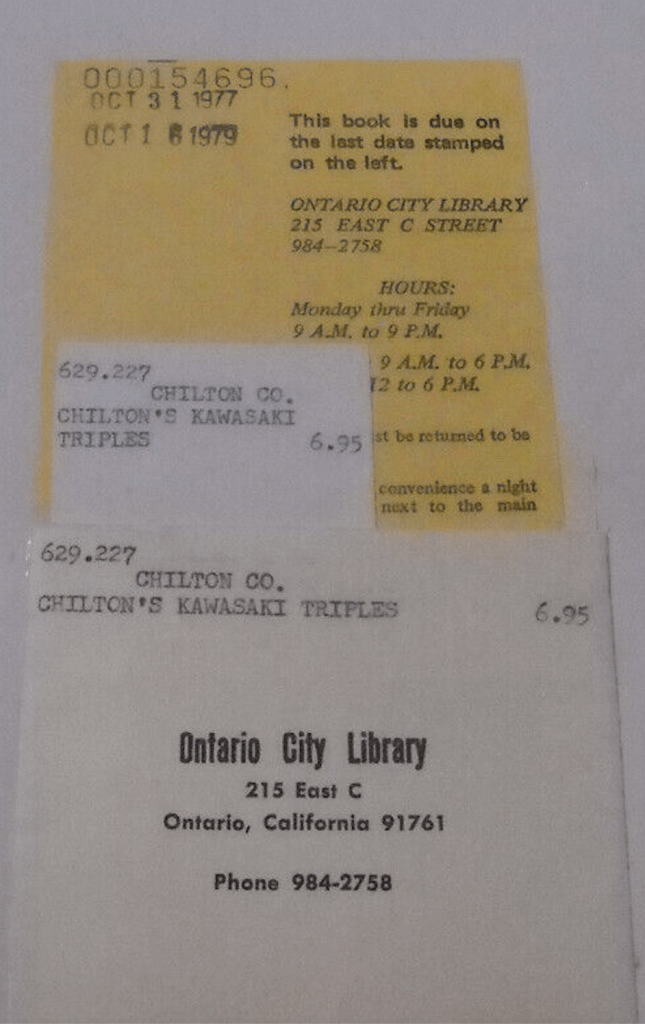
Late 1970s Ontario City Library card pocket and due date slip

In 2002, the library began another expansion project, which would add an additional 11,000 sq ft. During the construction, the library was temporarily housed at the Ontario Ranch Market at 120 E. D Street. Purchase, renovation, and relocation to the temporary location cost upwards of $3M.

The Ontario City Library after renovations (2006) Photo by Rockero (Wikimedia Commons). Public Domain – no copyright restrictions.

In 2010, the Ontario City Council renamed the library to the Ovitt Family Community Library in honor of the Ovitt family’s years of service to the city of Ontario. The Ovitt Library continues to operate at 215 E. C Street in Ontario.

DETROIT PUBLIC LIBRARY

Pre-1926 Library Card (Downtown Branch) issued to Mrs. Sam K. Gardner

Pre-1926 Library Card for the Detroit Public Library (Downtown Branch) issued to Mrs. Sam K. Gardener

Early Detroit Library History

The Detroit Library Association’s City Library of Detroit

John Monteith (1788-1868), a soon-to-be Presbyterian minister and professor of Greek, Latin and Hebrew classics, arrived in Detroit on June 25, 1816 after accepting a job offered by Governor Lewis Cass (1782-1866) to come to Detroit to “introduce the gospel to Detroit.”   Detroit, having a population of less than 1,000 inhabitants in 1816, was lacking the intellectual and educational resources that Monteith had grown used to at Princeton Theological Seminary.  Anticipating the harsh winter months ahead, Monteith had his private library shipped to Detroit, along with a number of new books from a bookseller in Pittsburgh.  However, these shipments didn’t arrive until Spring 1817, leaving Monteith with little intellectual stimulation during the winter of 1816-1817.    On March 17, 1817, Rev. John Monteith (1788-1868 ), penned in his diary, “a meeting of citizens is held to determine the guise of a public library.  Attendance is good.  Appointed a committee to prepare a Constitution.  Adjourned to the 24th.”   Detroit’s first library was borne out of Monteith’s disappointment and discontent during that long winter season. 

As with most early libraries, the City Library was not accessible to all.  Shares for the new library were purchased for $5.00/share (approx.. $100 today).  One share entitled the shareholder to borrow one book at a time and to cast one vote during elections.  Additional shares increased these privileges.  On April 6, 1817, Monteith “set out on horseback through Canada for N.Y. & Princeton” to purchase books for the new library and to complete his ordination at the Princeton Theological Seminary.  While in New York, Monteith carefully selected approximately 300 volumes to be shipped to Detroit. The Library opened Monday, August 4, 1817.

Detroit Gazette, August 1, 1817, page 3
Detroit Gazette, January 2, 1818, page 3
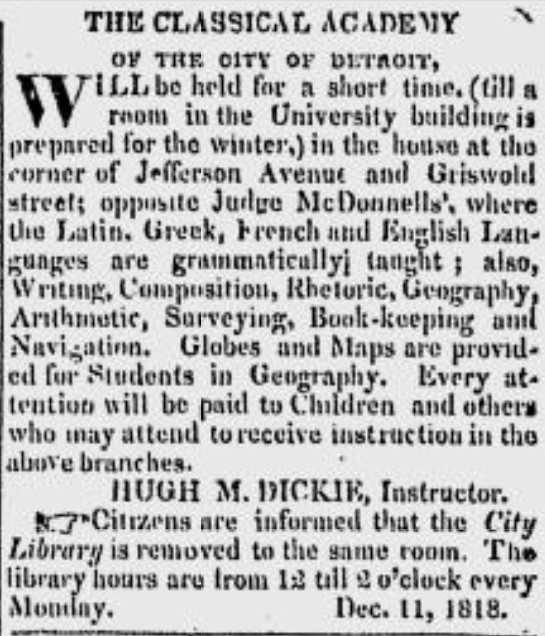
Detroit Gazette, December 11, 1818, page 3
The Detroit Classical Academy in 1825. Location of the City Library from 1819 until 1831. Also home to a number of higher education institutions, including Catholopistemiad, later known as the University of Michigania, of which Rev. Monteith served as President. The University of Michigan, as we know it today, relocated to Ann Arbor, Michigan in 1837. Etching by Wilfred B. Shaw. (Public Domain)

On July 23, 1821, Monteith ended his duties as librarian of the City Library having accepted a professorship at Hamilton College in New York.  It wasn’t until October 1829, when Gershom Mott Williams (1810-1857) was officially appointed librarian of the City Library, that the practice of librarian duties fell into the hands of teachers of the Detroit Classical Academy.  Over the years, shares in the library waned and financial strain was ever present.  In 1829, to renew interest in the library, and to be competitive with new reading rooms and clubs that were opening in shops and bookstores in Detroit, hours were increased.  Unfortunately, any attempts to revitalize the City Library became useless when the Academy building was turned over to the newly-elected Commissioners of Common Schools, and the rent-free arrangement was ended.  During the summer of 1831, the City Library inventory was turned over to the newly-formed and short-lived Detroit Athenaeum.  Library books, record and furniture were moved to the Athenaeum’s rented rooms above the Newberry & Kercheval’s clothing store on the “southwest corner of Jefferson Avenue and Griswold Street.” 

The Detroit Young Men’s Society Library

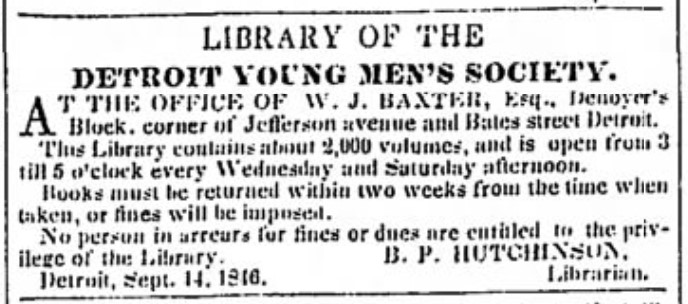
In 1832, a group of young men in Detroit desiring “intellectual improvement” approached local business leaders to assist in the establishment of a library.  As a result of that initial meeting, The (Detroit) Young Men’s Society was established to promote the “general diffusion of knowledge and a condensation of the talents and acquirements of the young men of Detroit, for intellectual and moral improvement.” The Articles of the Constitution of the Society were published in the January 30, 1833 edition of the Democratic Free Press.  Men under the age of thirty were eligible for membership upon sponsorship by a society member, a majority vote by the Directors, and a membership fee of $2 dollars. Upon reaching the age of thirty, members had “no voice” in the Society, and were declared “honorary members.” The Society advertised topics for weekly debates in the local newspapers, and held lectures by prominent business and political leaders. 

Detroit Free Press, 18 Sep 1846, Fri · Page 2
Detroit Free Press, 04 Nov 1850, Mon · Page 2

Prior to the 1850 construction of the Young Men’s Society Hall on Jefferson Avenue between Bates and Randolph, the Society library was house at the office of J. W. Baxter, Esq. and Horace Hallock’s clothing store at 124 Jefferson Avenue. The Society remained in the Jefferson Avenue building until 1861 until a new hall that could accommodate over 1,500 people was constructed a block away on Woodbridge Street.  While the new hall was in great demand at first, public interest waned as newer facilities were constructed in Detroit.  By 1875, deep in debt, the Society sold the property and rented rooms on the first floor of the Merrill block. 

“The Merrill Block,” From The History of Detroit and Michigan Or, The Metropolis Illustrated; a Chronological Cyclopaedia of the Past and Present, Including a Full Record of Territorial Days in Michigan, and the Annals of Wayne County · Volume 1, by Silas Farmer, 1889. 
Detroit Free Press, 17 Aug 1875, Tue · Page 2

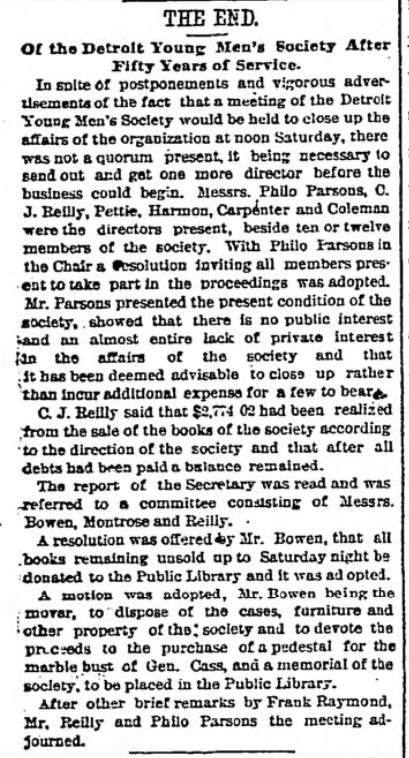
In August of 1882, the Society began liquidating their assets of art work and over 16,000 volumes, and ceased operations on September 30th bringing to close the 50-year history of the Young Men’s Society in Detroit.

“The End of the Detroit Young Men’s Society After Fifty Years of Service,” Detroit Free Press, 01 Oct 1882, Sun · Page 6

The Detroit Reading Room

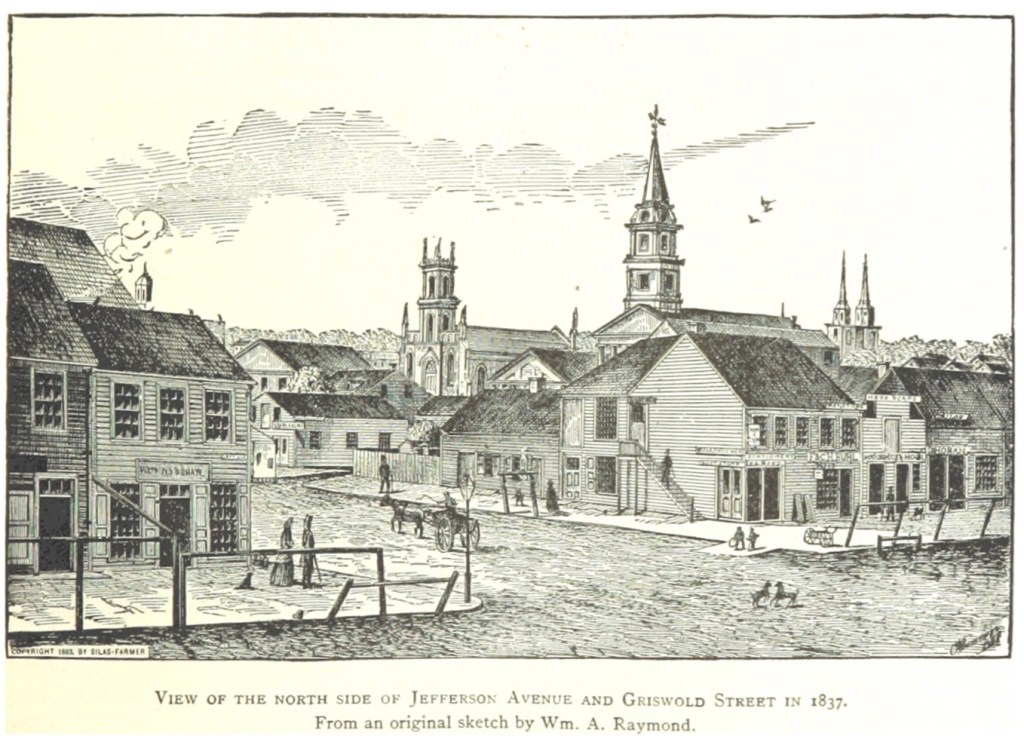
The Detroit Reading Room was established in 1837 by Benjamin Kingsbury, Jr. and George F. Burnham, editors of the Evening Spectator, a semiweekly literary gazette published between 1836-1838.  Located at Republican Hall, 154 ½ Jefferson Avenue, the Detroit Reading Room made available to [who could join] “the first periodicals in the country” and “important monthlies and quarterlies.”  Use of the library was for subscribers only (and visitors to the city if introduced by a subscribing member).  The subscription fee was $4/year.   

A glimpse of Detroit in 1837.  From The History of Detroit and Michigan Or, The Metropolis Illustrated; a Chronological Cyclopaedia of the Past and Present, Including a Full Record of Territorial Days in Michigan, and the Annals of Wayne County · Volume 1, by Silas Farmer, 1889

.Other Libraries

Kingsbury and Burnham established a Circulating Library that offered the “popular literature of the day,” for a subscription fee of $5 yearly.

From The Directory of the City of Detroit With its Environs, and Register of Michigan, for the Year 1837 by Julius P. Bolivar MacCabe (public domain)

George W. Pattison, Rare and Antiquarian Book Dealer, offered a circulating library at his book store on Grand River Avenue.

Detroit Free Press, 25 Jul 1880, Sun · Page 14

The Detroit Public Library

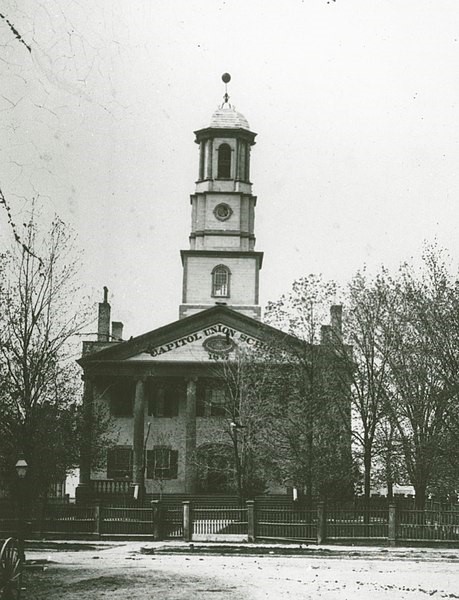
The seeds for the Detroit Public Library were planted in 1835 when the Michigan state constitution contained a provision that “all fines and penalties collected in criminal cases should be devoted to the establishment and maintenance of public libraries.” In 1842 a similar resolution was adopted by Detroit’s Board of School Inspectors.  However, it wasn’t until 1859, when a Detroit newspaperman, Henry E. Baker proposed establishing a committee to look into the whether the Board received “its proper share of such fines.”  After investigation, it was reported that library funds were directed elsewhere.  A lawsuit brought by the Committee against the courts of the county eventually reached the Supreme Court of Michigan, and it was decided that “about three-fifths of $17,000 collected in fines during the preceding years belonged to the city.”  Steps to establish the first public library were taken immediately upon receipt of the positive outcome of the lawsuit.  Recitation Room No. 3 on the second floor of the old capitol was “fitted up with a table, chairs, bookshelves and a lamp as a library and committee room for the use of the board and teachers.”   In 1861, the public library fund received a settlement of $7,000.  Four years later, on March 25, 1865, a public library on the first floor of the old capitol building was formally opened to the public, and on May 2, 1865, the library was available for circulation.  The number of volumes at the old capitol building library were approximately 9,000. 
1847 photo of Michigan’s first state capitol building located in Detroit, Michigan.  In 1847, Michigan’s capitol city was changed to Lansing, and the “Old Capitol Building” became the Capitol Union School, and the location of Detroit’s first public library in 1865.  Author: unknown.  (Public Domain)

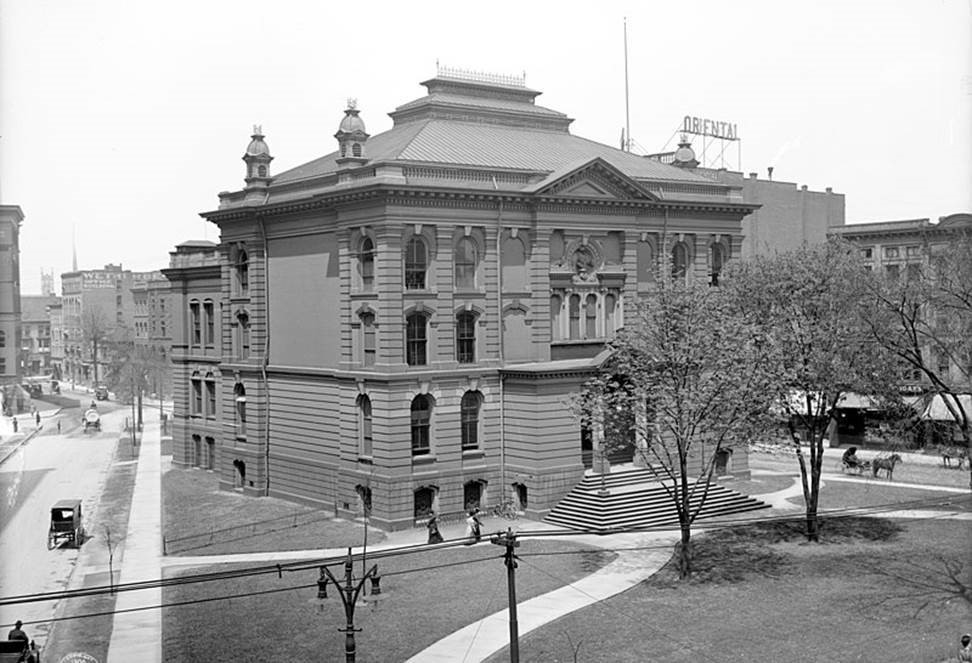
 On January 22, 1877, a new library building on Center Park was opened to the public containing over 33,000 volumes.

Detroit’s Centre Park Library designed by Brush & Smith (1906). Repository: Library of Congress Prints and Photographs Division, Detroit Publishing Company Photograph Collection. No known restrictions on publication; Call Number: LC-D4-19537 [P&P]

By the early 20th century, Detroit’s public library was again in need of additional space.  Accordingly, on March 29, 1921, a new public library designed by Cass Gilbert, architect of the United States Supreme Court, was opened on Woodward Avenue.  A grant in the amount of $750,000 from Andrew Carnegie aided in the construction of the main library and eight branch libraries throughout Detroit.  The new main library opened with over half million publications. 

Detroit Public Library System currently has 21 branch libraries, and over 7.5M publications. The main library continues to operate from the Woodward Avenue location. 

Detroit Public Library built 1922. Published by Detroit Publishing Co. (Public domain)


Library of Hawaii, Honolulu, Territory of Hawaii

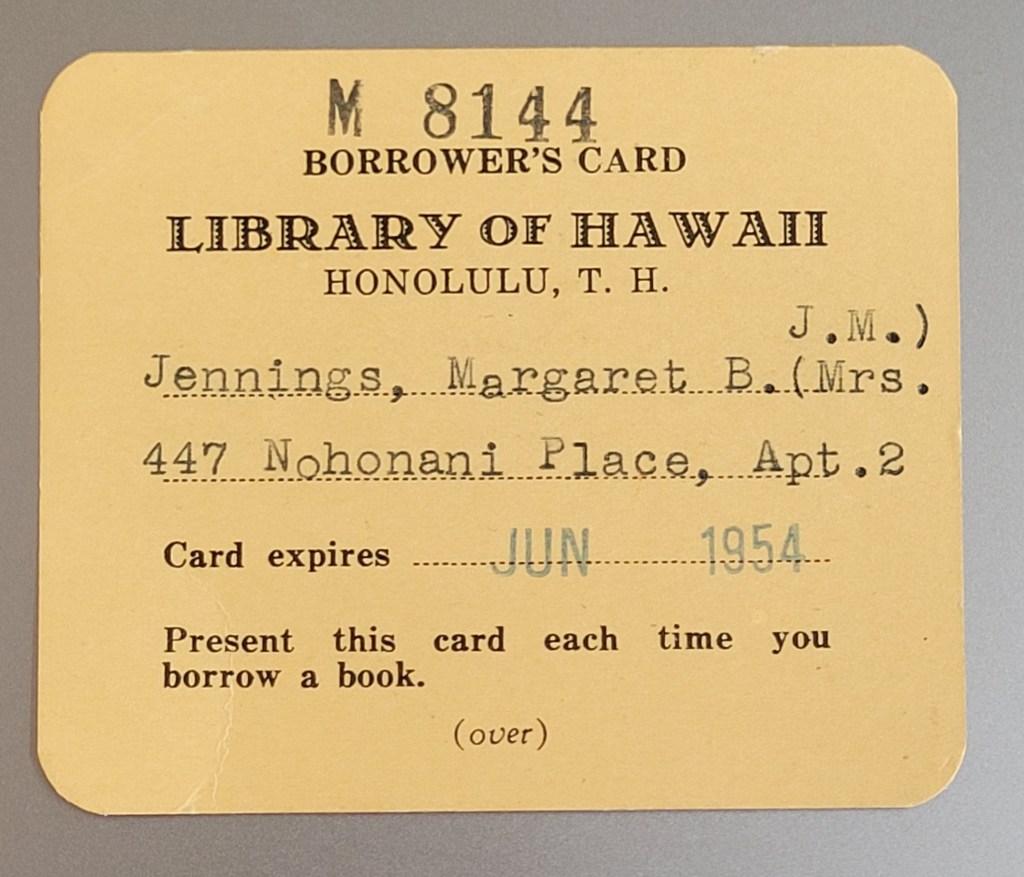
Pre-1954 Library of Hawaii Borrower’s Card No. M 8144 issued to Mrs. Margaret B. Jennings

Pre-1954 Library of Hawaii Borrower’s Card No. M 8144 issued to Mrs. Margaret B. Jennings (front)
Pre-1954 Library of Hawaii Borrower’s Card No. M 8144 issued to Mrs. Margaret B. Jennings (back)

Library of Hawaii

The Library of Hawaii, had its official beginning in 1909, when on April 17th of that year, the Territorial Governor of Hawaii, Walter Francis Frear (1863-1948), signed House Bill No. 143, Act 83, entitled “An Act to provide for the establishment and maintenance of the Library of Hawaii.” 1

Prior to the passing of the Bill, Governor Frear met with Andrew “Andy” Carnegie to discuss Carnegie’s offer of $100,000 to build a new public library building. By selling the property at the corner of Alakea and Hotel Streets, which was occupied by the The Honolulu Library and Reading Room Association (a membership library established in 1879), the proceeds  of the sale would aid in the establishment of the proposed public circulating library. In addition, the Association’s 20,000 volume inventory would be transferred to the proposed public library.2

The Honolulu Library and Reading Room Association at Alakea and Hotel Streets. Pre-1910. Photo by Ray Jerome Baker from the Bernice P. Bishop Museum, R. J. Baker Collection of the Kamehameha Preparatory Department. (Public Domain)

The Carnegie Library

In May 1910, it was announced that New York architect, Henry Davis Whitfield, Andrew Carnegie’s brother-in-law, was chosen to design the new library, and Honolulu architect, Henry Livingstone Kerr, would supervise the construction of the building.3 Whitfield, who also designed Eaton Hall at Tufts University (1908) and the Federal Building in Hilo, Hawaii (1915), was considered at the time to be the world’s foremost expert on library design, having already designed many of the larger Carnegie libraries. Kerr designed over 900 buildings in Hawaii, including Honolulu’s historic McCandless Building (1906) and the Yokohama Specie Bank Building (1910).

Construction of the new Library building began on Saturday, October 21, 1911, when a two by three foot by twenty inch ironstone cornerstore, inscribed “Library of Hawaii, 1911,”4 was laid by members of the Hawaiian Lodge during an elaborate ceremony officiated by the Masons. 

The Library Opens

On February 1, 1913, the Library of Hawaii opened to the public with much enthusiasm. Governor Frear, the recipient of Card No. 1, was issued the first book, “The Government of Our Cities,” by W. B. Munro, by the Librarian,Miss Allyn. A free concert by the Hawaiian Band, and speeches by Chairman A. Lewis, Jr., of the Library Board, and Prof. M. M. Scott of the Honolulu Library and Reading Room Association proceeded the official opening of the doors to the public.5

The Sunday Advertiser, Honolulu, Hawaii, February 2, 1913, page 10;

The two-story Mediterranean Revival style building located at 478 South King Street in Honolulu, was fronted by the signature Carnegie columns. Inside, patrons were greeted by an airy and spacious front delivery area, separate children’s area, catalogue, reading and reference rooms. A lanai reading room, and separate lecture, study, and children’s story rooms were located on the second floor In addition to the new library building, a traveling library was instituted to ensure citizens on islands other than O’ahu would have access to the new public service.6

Pre-1923 photograph by Rice and Perkins.(Public Domain)

In 1927, much needed renovations to expand the building were approved by the territory legislature. Two wings were added to the original building, as well as an open-air courtyard in the middle.

In 1978, the building was designated a historic site and was added to the National Register of Historic Places.

The Library of Hawaii is now part of the Hawaii State Public Library System, which is comprised of fifty-one libraries on all of the major islands. The library system contains over 3 million books and reference materials.

Margaret B. Jennings

Margaret Bronson Jennings (1924-2018) born February 15, 1924 in New Orleans, Louisiana. She was an LSU fan and a member and officer of the Krewe of Attakapas.

Sources: [1] The Honolulu Advertiser, Honolulu, Hawaii, April 17, 1909, page 2; [2] The Hawaiian Star, Honolulu, Hawaii, March 26, 1909, page 4; [3] The Hawaiian Star, Honolulu, Hawaii, May 21, 1910, page 5; [4] The Hawaiian Star, Honolulu, Hawaii, October 16, 1911, page 8; [5] The Honolulu Advertiser, Honolulu, Hawaii, February 1, 1913, page 10; [6] The Sunday Advertiser, Honolulu, Hawaii, February 2, 1913, page 10.

San Diego Public Library, San Diego, California

Pre-1937 San Diego Public Library Borrower’s Card No. 75273 issued to Lee R. Moore

Pre-1937 San Diego Public Library Borrower’s Card No. 75273 issued to Lee R. Moore (front)
Pre-1937 San Diego Public Library Borrower’s Card No. 75273 issued to Lee R. Moore (back)

San Diego Public Library

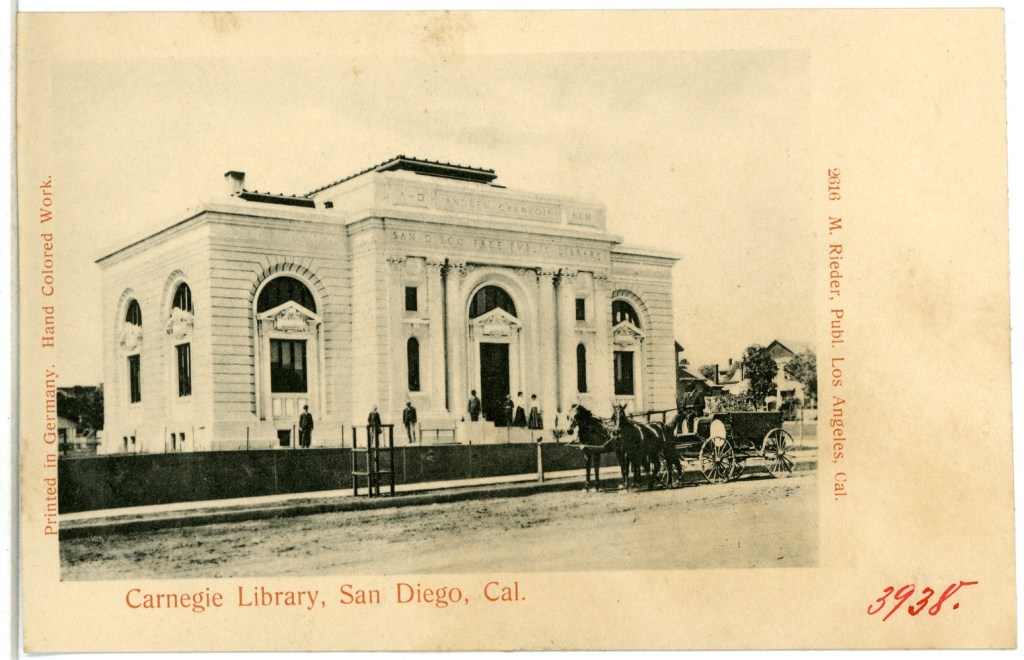
San Diego Public Library (pre-1923 public domain postcard)

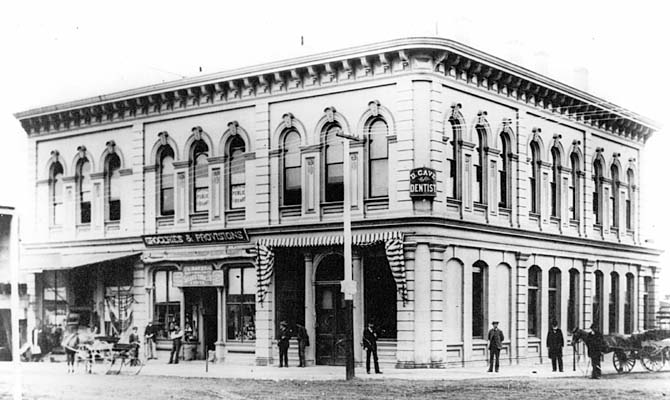
Opened to the public on July 15, 1882, the San Diego Public Library’s first location was the Commercial Bank building (aka the Consolidated National Bank) at 5th and G Streets.  The use of rooms on the 2nd floor2 was provided to the library non gratis for the first six month,1 after which rent was paid from the $650 city appropriation.

Commercial Bank Building (pre-1923 public domain photo; photographer unknown)

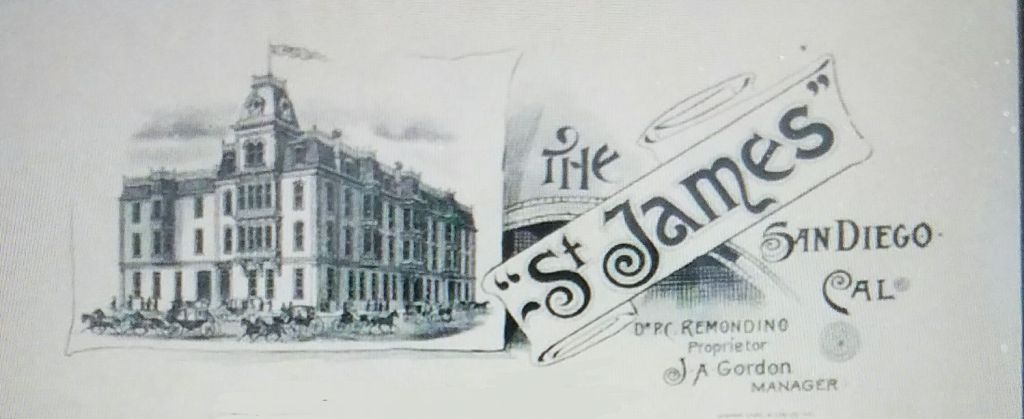
In 1893, the library was moved once again to the fashionable St. James Building at 7th and F Streets and would remain there for at least five years.3

Drawing from a 1890’s St James Hotel breakfast menu (No known copyright restrictions)

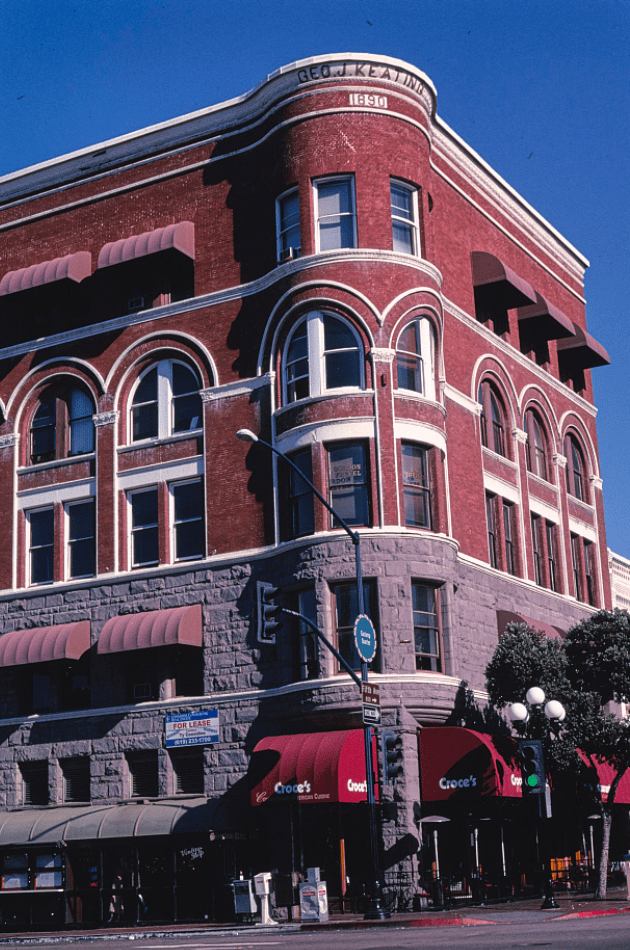
By 1898, the library began to outgrow its accommodations, so arrangements were made for space on the 4th floor of the new Keating Building at Fifth and F Streets.  Rent increased from $50 to $85, but the rooms were more spacious and well-lit, and a modern elevator made access to the library much easier.4 The Keating Building was designed by George J. Keating, founder of a farm equipment company, and built in 1890 by his wife, Fannie, after his death on June 25, 1888.


Keating Building.  Photo by John Margolies.  No known copyright restrictions.   From the John Margolies Roadside America photograph archive (1972-2008), Library of Congress, Prints and Photographs Division

While the Keating Building provided adequate square footage to accommodate the growing library, library space had been a concern several years prior to the move into the Keating Building.   Efforts to raise funds for the building of a permanent home large enough to house the growing library was undertaken by the Ladies’ Wednesday Club as early as 1896.5. But it wasn’t until mid-1899, that a new library building became a realistic goal.  In response to a letter sent to the Andrew Carnegie Corporation by library trustee, Mrs. Lydia K. Horton, in which she asked for photographs of previously built Carnegie libraries in hopes that the photographs would spark interest by her fellow trustees, the Carnegie Corporation promised a $50,000 grant to build the first Carnegie library west of the Mississippi River.6  On April 23, 1902, the new library building opened at Eighth and E Streets.  The building designed by architects, Ackerman & Ross of New York, had room for 75,000 volumes and boasted a museum, art gallery, and lecture room. The Carnegie Library building would serve as the main library until 1952 when the building was razed to allow the construction of a new, modernized building. The new library opened at the same location on June 27, 1954. The current location of the San Diego Central Library is 330 Park Blvd. in San Diego.

San Diego Public Library and Comic-Con

Since 2013, the San Diego Public Library has partnered with Comic-Con and designed limited-edition comic-themed library cards, which are only available at the San Diego Public Library booth at the yearly Comic-Con convention in San Diego.  The 2019 card, of which only 3,000 were made available, features Waldo over an image of  the San Diego Central Library, which is located at 330 Park Boulevard in San Diego.  

2019 San Diego Public Library Special Edition Comic-Con Library Card and Keychain Card (front)
2019 San Diego Public Library Special Edition Comic-Con Library Card and Keychain Card (back)

Lee R. Moore

Lee Reed Moore was born August 7, 1921, in Kansas City; He was the son of Lee R. Moore, Sr  of Texas and Orpha Moore.  Lee R. Moore was a salesman for Ryan Aeronautical Co.  He died on April 29, 1980.

1 Catalog of the San Diego Free Public Library: Compiled by the Order of the Board of Trustees, by Lulu Younkin, April 1889

2 The Record (National City, California), June 11, 1885, p. 2

3 The Los Angeles Times (Los Angeles, California) April 5, 1893, p. 7

4 The Los Angeles Times (Los Angeles, California) April 7, 1898, p. 13

5 The Los Angeles Times (Los Angeles, California), December 7, 1896, p. 5

6 The Los Angeles Times (Los Angeles, California), July 18, 1899, p. 15

Winnipeg Public Library, Winnipeg, Manitoba, Canada

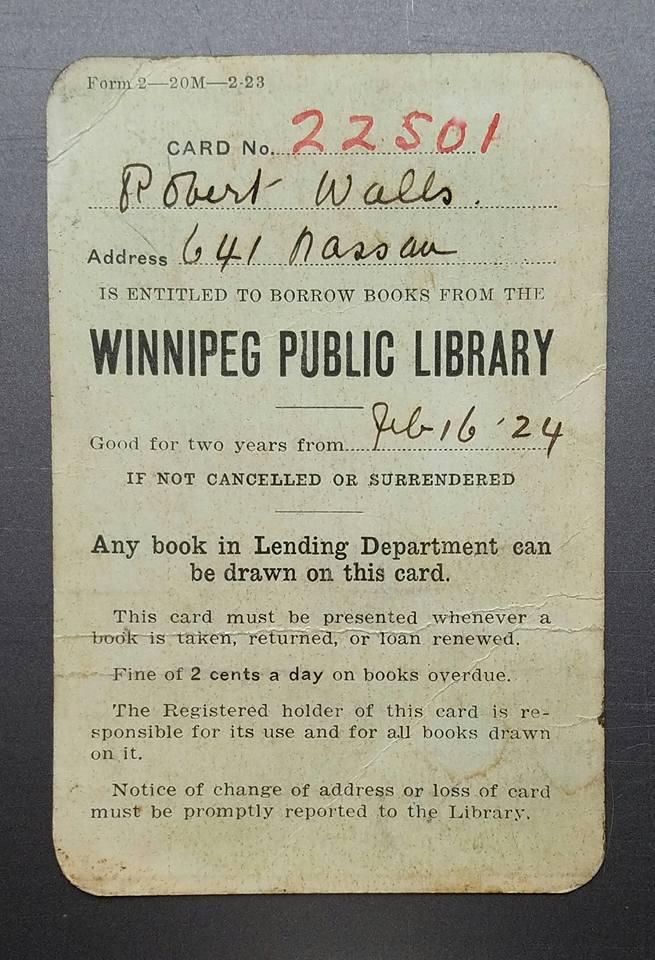
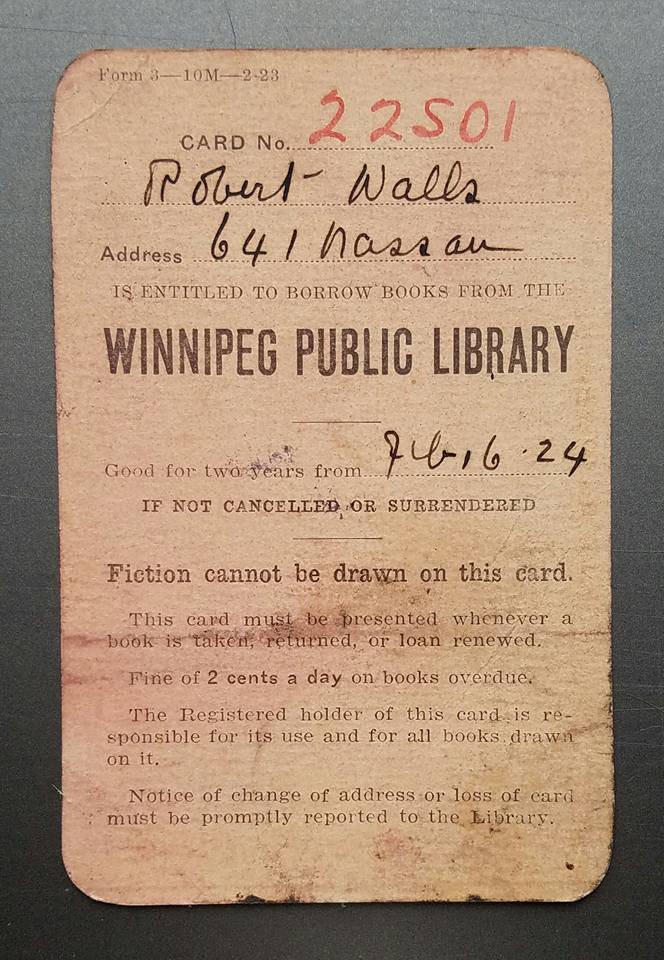
1924 Winnipeg Public Lending Department and Non-Fiction Library Cards No. 22501 Issued to Robert Walls

1924 Winnipeg Public Library, Lending Department Library Card No. 22501,
issued to Robert Walls (front)
1924 Winnipeg Public Library, Lending Department Library Card No. 22501,
issued to Robert Walls (back)
1924 Winnipeg Public Library, Non-Fiction Library Card No. 22501,
issued to Robert Walls (front)
1924 Winnipeg Public Library, Non-Fiction Library Card No. 22501,
issued to Robert Walls (back

Winnipeg Public Library, Winnipeg, Manitoba, Canada

Winnepeg Public Library (Public Domain, Pre-1923 Postcard)

The Winnipeg Public Library had its beginning as a circulating library at the Historical and Scientific Society of Manitoba. In 1888, due to the disabling costs of maintaining their library, the Society transferred their 3,000 volume circulating library to the city and was renamed The City Library.  It was the intent of the Society for the transfer to become “the nucleus” for a new public library [from The Historical and Scientific Society of Manitoba Annual Report published 1888, p. 8].

Contrary to local gossip, it was not a free library. A news article in the Manitoba Free Press on February 25, 1888, sought to dispel the rumor, stating that the new library would continue to charge a $2 yearly membership fee to use the library. 

In July 1901, Andrew Carnegie Corporation began negotiations with the city of Winnipeg to fund a new library building. Conditions for funding a new library building were that the city would purchase a suitable site for the library and guarantee annual upkeep at a sum equal to 10% of the amount donated by the Corporation.  By August 1902, the city purchased a site at William and Dagmar Streets for $12,200.  In early November 1902, the Corporation released the funds for building the library, and on November 22, 1902, through an announcement in local newspapers, local architects were invited to submit designs for the new library.  In July 1903, Architect Samuel Hooper, and builders Smith & Sharpe were chosen for the tasks.  

On November 3, 1903, Sir Daniel McMillan (1846-1933), Lieutenant-Governor of Manitoba, laid the library cornerstone, and on October 13, 1905, the library opened to the public.

In 1977, the Centennial Library (now known as the Millennium Library) was built at 251 Donald Street and the Carnegie building became a branch library, and subsequently, the City of Winnipeg Archives in 1995.  In 2013, the city began renovations to the Carnegie building, but due to serious damage sustained during a heavy rainstorm, the renovations were halted and the archive collections relocated.  The building currently stands empty and its future is unknown. 

Freeport Public Library, Freeport, Illinois

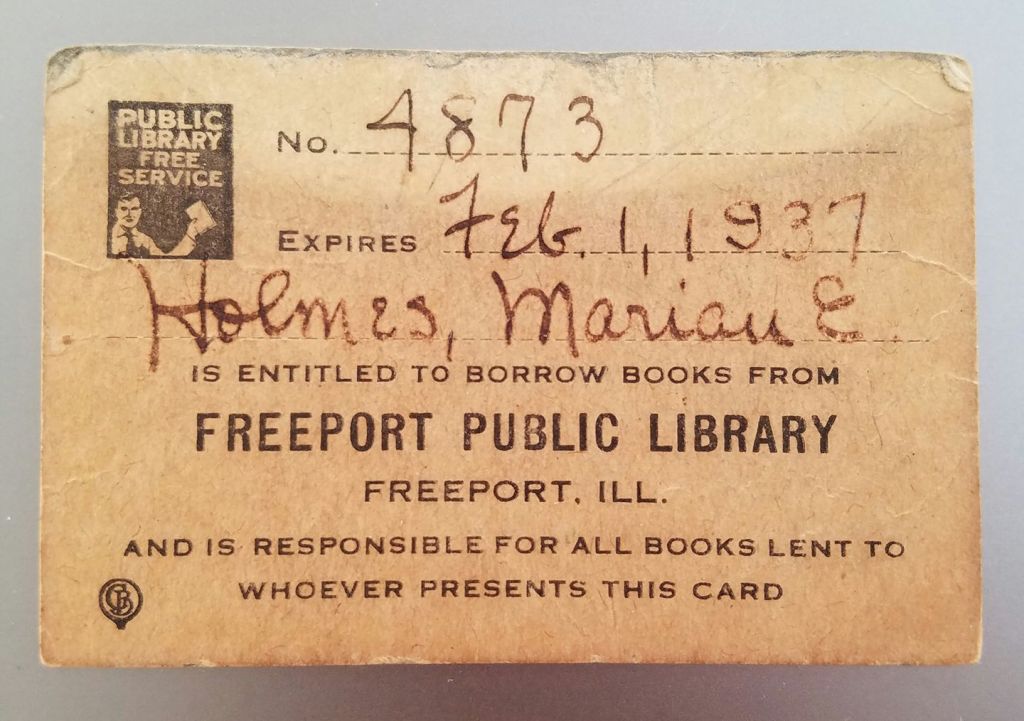
Pre-1937 Freeport Public Library Borrower’s Card No. 4873 issued to Marian E. Holmes

Freeport Public Library, Freeport, Illinois

The Freeport Public Library had modest beginnings in 1874 as a small collection of 250 volumes housed in a spare room at the YMCA, which was located over Emmert & Burrell’s drug store at 111 Stephenson Street in Freeport.  A subscription fee of 75 cents quarterly permitted the subscriber to borrow books every Saturday afternoon and Wednesday evening.   In 1889, the YMCA opened a new building at a site formerly occupied by the First Presbyterian Church at Walnut and Stephenson and made room for the small library. 

The Y.M.C.A. building at Walnut and Stephenson Streets, Freeport, IL, second home of the Freeport Library (Public Domain Pre-1923 postcard)

On February 21, 1901, the Carnegie Corporation provided  a $30,000 grant to build a new public library building.  In 1902, the new public library opened at 314 West Stephenson Street with 19,000 volumes.  Designed by Patton and Miller of Chicago, the new library was the first Carnegie library in Illinois.  By 1924, the library had issued over 1,200 library cards and inventory had increased to over 43,000 volumes.  As the years passed, the city outgrew the West Stephenson Street building, so in 1991 plans were put into motion to construct a new, modernized building.  After years of planning, a new 40,000 sf building was opened on Douglas Street in 2002.  In 2017, the old Carnegie building underwent a $2.3M renovation and now serves as Freeport’s City Hall.

Freeport Public Library (Public Domain Pre-1923 postcard)

Marian E. Holmes

Marian Elaine Holmes was born in Illinois on May 5, 1889.  She married Lloyd Eugene Holmes (1886-1930) and had one son, Stanley Campbell Holmes (1929-2005).  After being widowed in 1930, she and Stanley moved to Florida where she was a bookkeeper and secretary.  She died in Panama City, Florida in 1966.  

Free Public Library, St. Joseph, Missouri

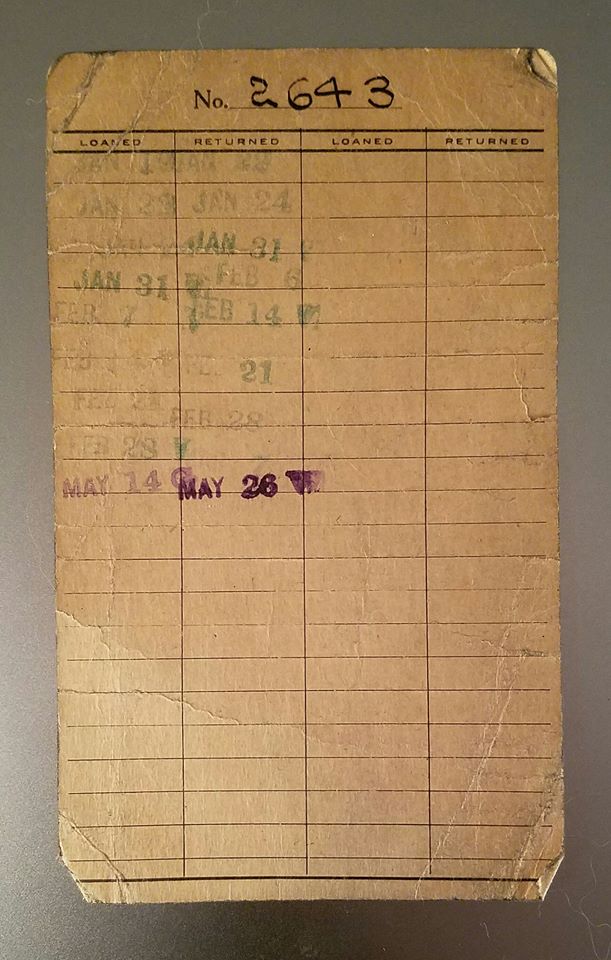
Free Public Library, St. Joseph Missouri, Pre-1915 Library Card No. 2643 issued to Orta Gabbert

Free Public Library, St. Joseph Missouri,
Pre-1915 Free Library Card No. 2643 (front)
Free Public Library, St. Joseph Missouri,
Pre-1915 Free Library Card No. 2643 (back)

Free Public Library, St. Joseph, Missouri

The Free Public Library of St. Joseph had its beginning as a membership library on the 2nd Floor of the Samuels Building at Sixth and Charles Streets.  The space was offered free of charge by Mr. Warren Samuels if money  could be raised for the books.  After a campaign led by Mrs. John S. Lemon, which raised $3000 through the sale of lifetime memberships at $50 each, the library opened on November 8, 1887.  The library inventory held over 3,200 books in its first year of operation.  In 1890, public interest in a free library grew and by 1900, construction on a new building began.  In the meantime, having outgrown the Samuels Building space, the library relocated to Tenth and Sylvanie Streets.  On February 9, 1891, with an inventory of over 5,500 volumes, the Public Reading room opened, followed by the opening of the Circulation Department on March 16, 1891. The library remained at the Tenth and Sylvanie Streets location until March 13, 1902, when the new Carnegie library building opened at Tenth and Felix Streets.  Designed by Edmund Jacques Eckle, the French Baroque style building features terrazzo flooring in the foyer, a glass-floored balcony, and a stained glass dome.  The building was added to the National Register of Historic Places on September 20, 1982.

Free Public Library at Tenth & Felix Streets  built in 1902
(Photo: Edmund Jacques Eckle, Courtesy of United States Library of Congress, Prints and Photographs Division (no know copyright restrictions) 

Edmund Jacques Eckle

Edmond Jacques Eckel (1845-1934), was a French architect trained at the Ecole des Beaux Arts. He settled in St. Joseph, Missouri around 1870 and established the architectural firm of Eckel & Meier.  Other significant projects include. the German-American Bank Building (now Mosaic), the Corby Building (the tallest building in St. Joseph), the Paxton Hotel in Omaha, Nebraska, and the Courthouse and “Squirrel Cage” Jail in Council Bluffs, Iowa.

Orta Gabbert

Orta Allen Gabbert Conner (1901-1966), was a Missouri native.

Cedar Rapids Public Library, Cedar Rapids, Iowa

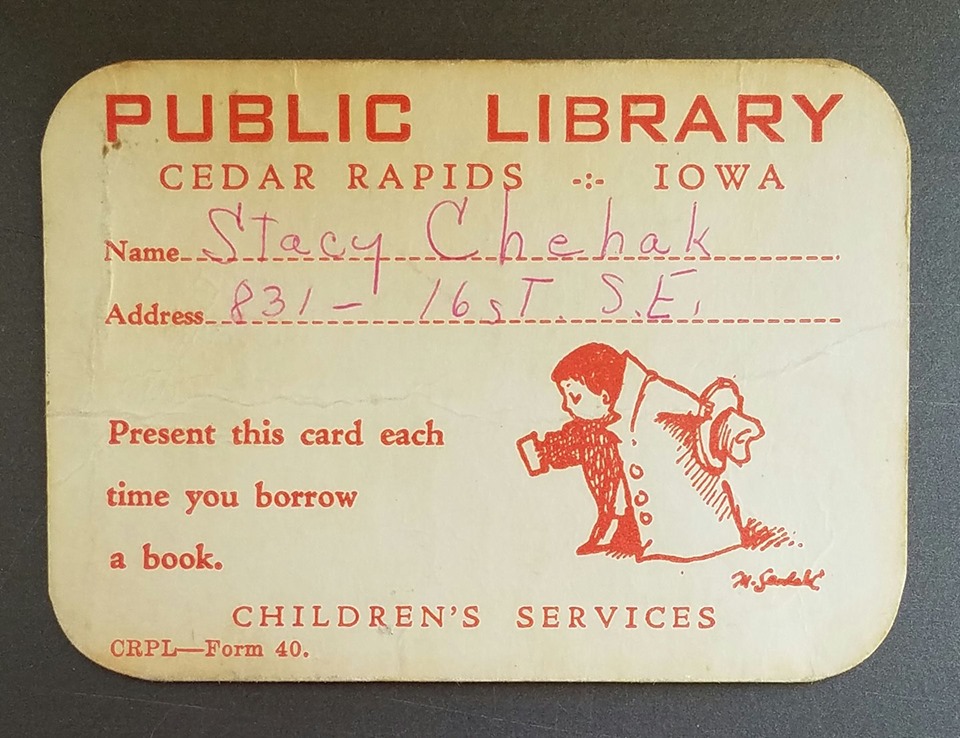
Cedar Rapids Public Library, Children’s Services, 1950s Borrower’s Card, issued to Stacy Chehak

Cedar Rapids Public Library, Children’s Services, Borrower’s Card
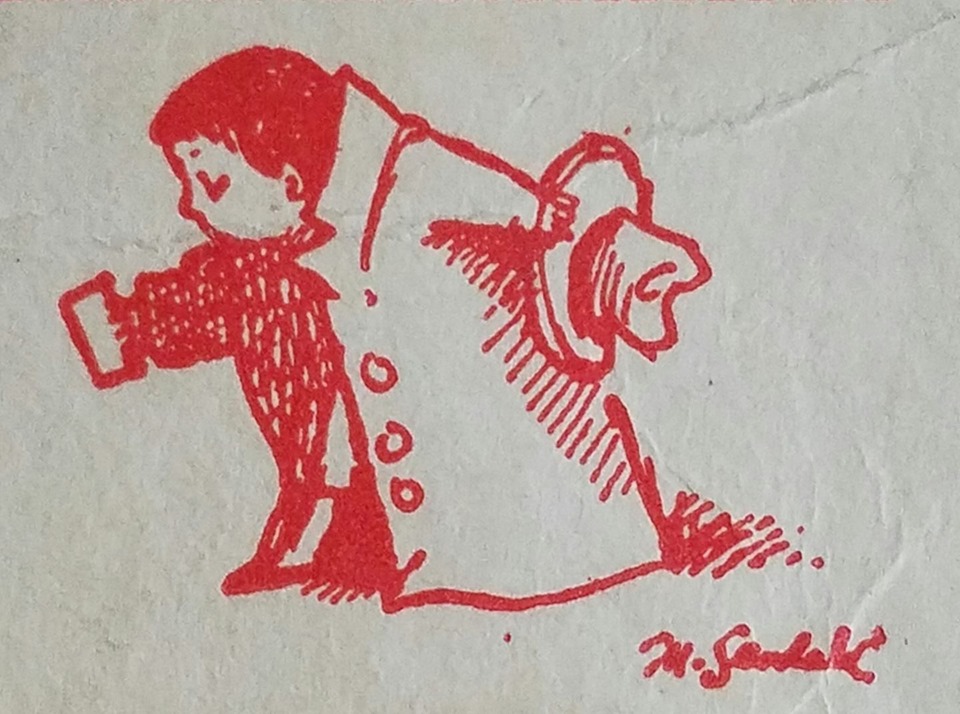
Early Maurice Sendak illustration

Cedar Rapids Public Library

Advertisement of the Free Library and Reading Room at First Avenue, The Cedar Rapids Gazette, Friday, January 12, 1883

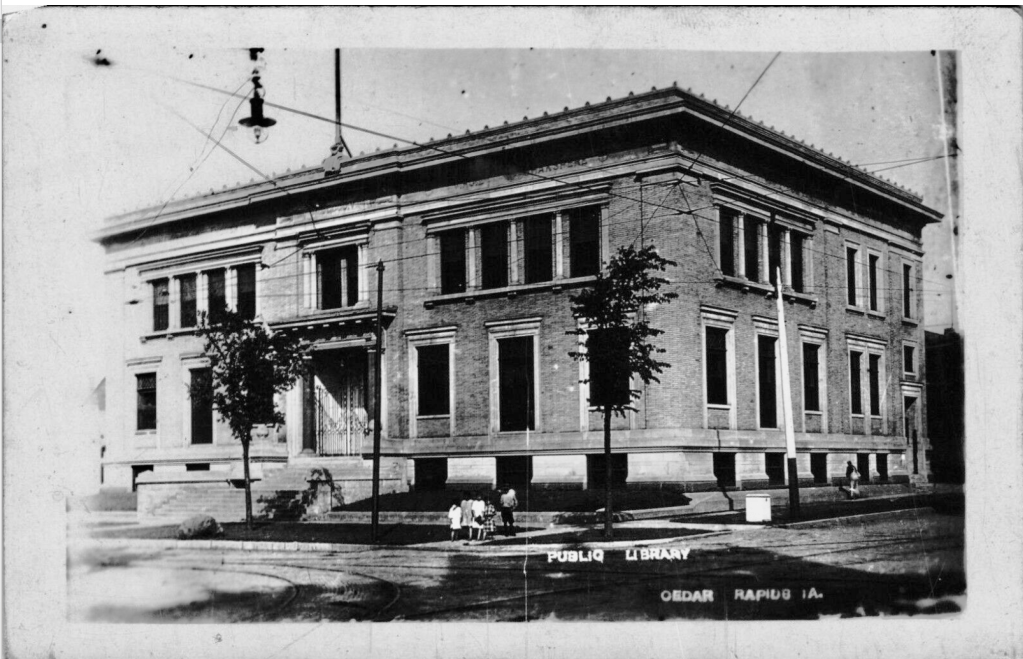
On June 23, 1905, after having outgrown smaller spaces in the Granby Building and Dow Auditorium, which the Cedar Rapids Public Library occupied during the late 1800s, a new 29,000 sq. ft. building funded by Andrew Carnegie opened at Third Avenue and Fifth Street.  By the late 1960s, overcrowding would again become a problem.  New book donations were turned away and overstock was stored in the basement.  In the 1970s, through the donations of the Hall Foundation of Cedar Rapids and other private donors, a new 83,000 sq. ft. building was constructed at 500 First Street SE, which opened on February 17, 1985.  However, on June 13, 2008, the city of Cedar Rapids experienced catastrophic flooding which destroyed many private and city buildings, including the main public library.  Much of the adult and reference collections were destroyed and the library was forced to relocate to leased space while a new permanent location was constructed.  The new Ladd Library opened in August 2013 at 450 Fifth Avenue SE. The former Carnegie building is now the Cedar Rapids Museum of Art and houses the world’s largest collection of the “American Gothic” artist, Grant Wood among other noted Iowan artists.  

Cedar Rapids Public Library at 3rd Avenue and 5th Street (public domain postcard)

Anastasia “Stacy” Marie Chehak

Anastasia Marie Chehak (1953-2017) was a nationally-known diabetes expert, author and medical community leader. She was the founder of Anastasia Marie Laboratories, Inc. and The Voice of Diabetes Network, a live radio program. Serving on the US Senate Health Advisory Board under President Ronald Reagan was among her many achievements.  A 1978 graduate of the University of Oklahoma’s Health Sciences Center, she dedicated her life’s work to finding a cure for diabetes. 

New York Public Library, Fordham Branch, Bronx, New York

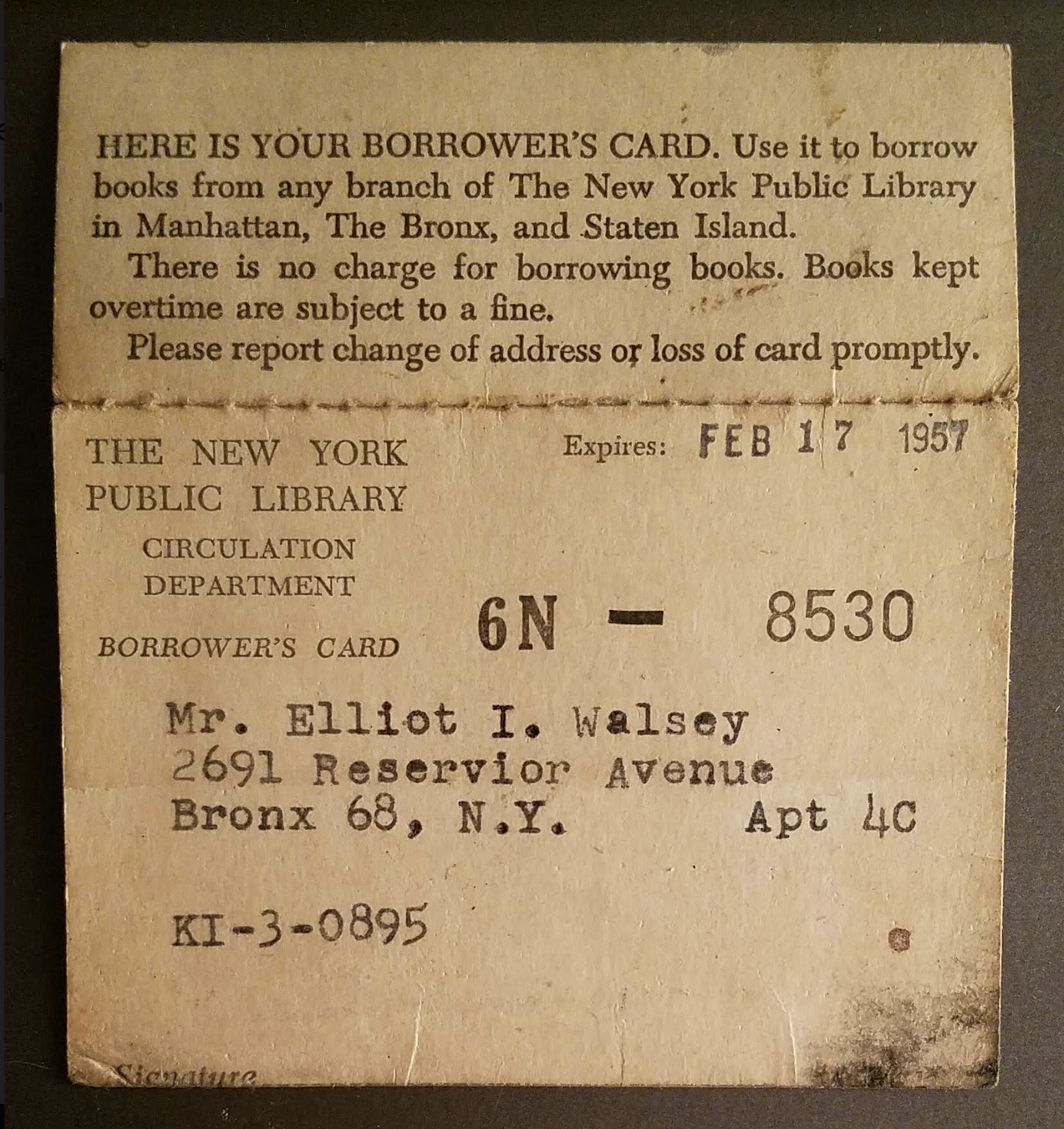
1957 Borrower’s Card No. 6N-8530 Issued to Elliot I. Walsey

The New York Public Library (Bainbridge Avenue/Fordham Branch), Bronx, New York (Source: Wikimedia Commons/Julian A. Henderson) (Usage: https://creativecommons.org/licenses/by-sa/3.0/)(cropped)

The Fordham Branch Library building, designed by the prominent New York architectural firm McKim, Mead and White, who was known for designing the main New York Public Library in Manhattan, opened for circulation on September 24, 1923.  

“Realty Notes,” New York Times Newspaper, May 25, 1923

The New York Public Library, Fordham Branch, was one of many public libraries and public buildings endowed by steel magnate,  Andrew Carnegie.  In the latter years of his life, he believed the rich had a responsibility to “improve society,” and hence, donated $350M (equal to over $5B today) to the construction of over 3,000 libraries and public spaces in his birthplace, Scotland, the United States, and around the world.

Andrew Carnegie by Theodore C. Marceau (1913) (Source: Library of Congress)
(Usage: Public Domain)

The “Fordham Branch Library” having become too small to accommodate neighborhood needs, closed in November 2005 and reopened as the Bronx Library Center at 301 East Kingsbridge Road on January 17, 2006.  The new 78,000 square-foot facility is a state-of-the-art, green library that houses the New York Public Library’s premiere Latino and Puerto Rican Heritage Collection.

The Bronx Library Center (Kingsbridge Road), Bronx, New York
(Source: Wikimedia Commons/Julian A. Henderson)
(Usage: https://creativecommons.org/licenses/by-sa/3.0/)(cropped)

Elliot I. Walsey (1938-2012)

Elliot Ira Walsey, born September 26, 1938 in New York, New York, was an American business owner.  He was the founder and former President of Benchmark Graphics, Ltd.  

The Public Library, Washington, DC (Also Known as the Carnegie Library)

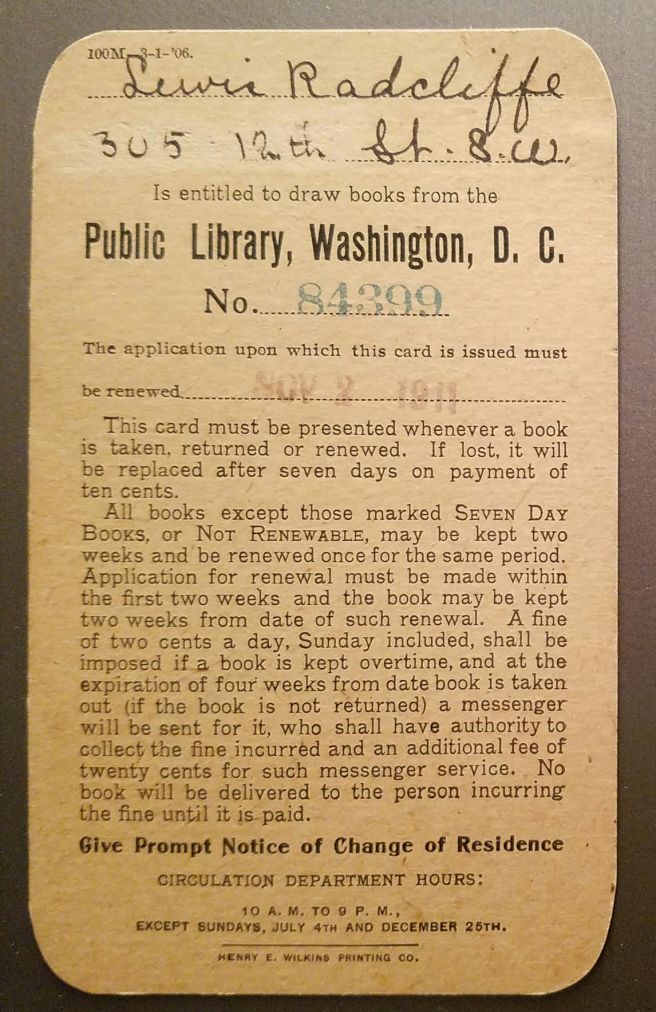
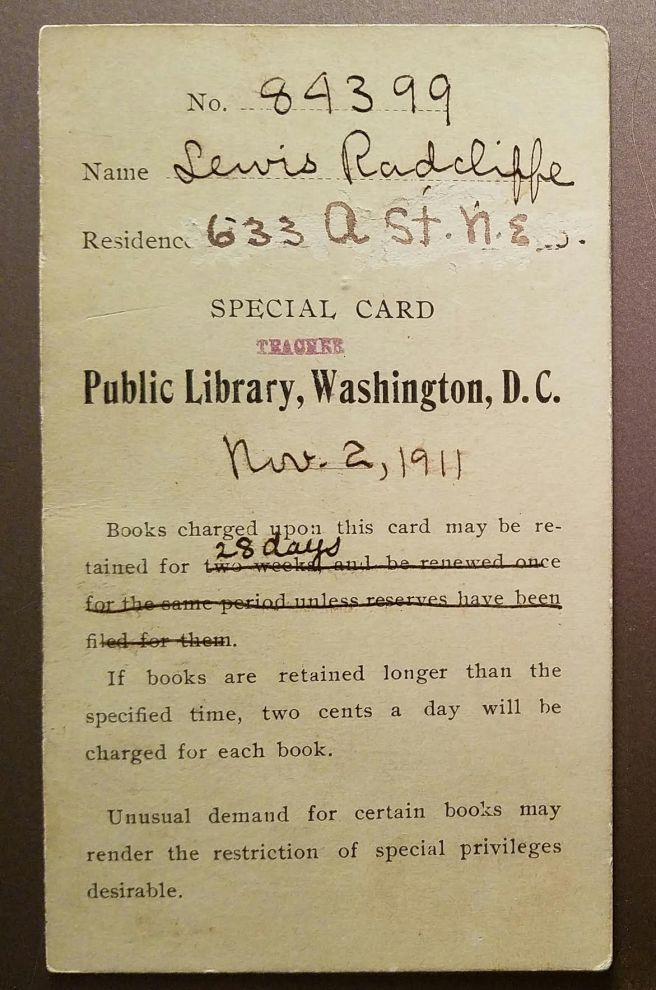
1908 Card No. 84399 and 1909 Special Card No. 84399 Issued to Lewis Radcliffe

Library Card for the Public Library, Washington, DC (back)
Special Card (teacher) for the Public Library, Washington, DC (front)
Special Card (teacher) for the Public Library, Washington, DC (back)
Special Card (teacher) for the Public Library, Washington, DC (inside)

The Public Library, Washington, DC

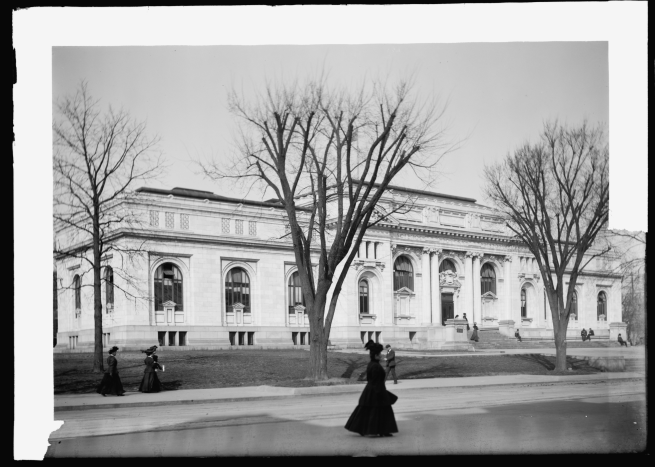
The Public Library of Washington, DC, also known as The Carnegie Library or Central Public Library, is located in Mount Vernon Square at 8th and K Streets, NW. The Beaux-Arts building, designed by New York-based Ackerman & Ross, was dedicated by President Theodore Roosevelt and benefactor, Andrew Carnegie, on January 7, 1903.  The Carnegie Library was the first public library in Washington, DC, as well as the first desegregated public building in the Nation’s Capitol.

The Public Library, Washington, DC (also known as The Carnegie Library
(Source: Library of Congress – Usage: Public Domain)

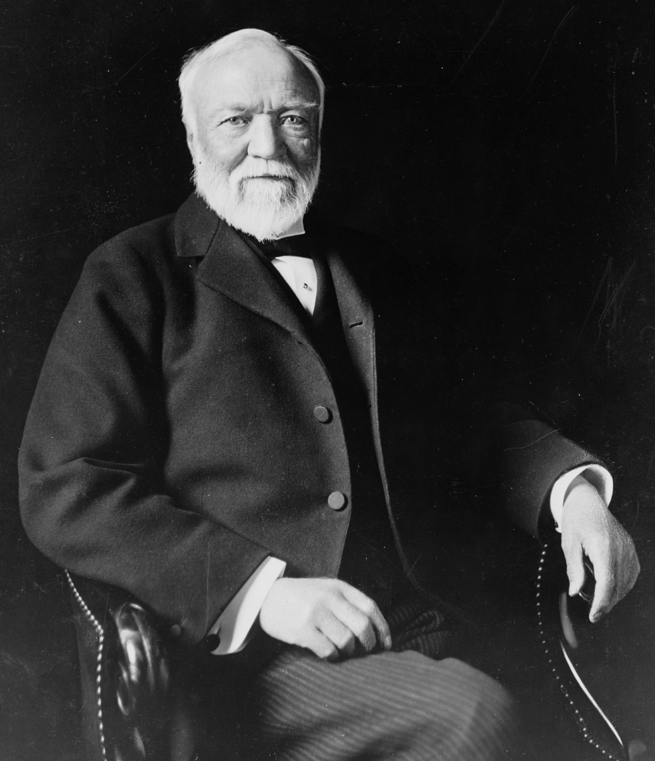
The Public Library of Washington, DC was one of many public libraries and public buildings endowed by steel magnate,  Andrew Carnegie.  In the latter years of his life, he believed the rich had a responsibility to “improve society,” and hence, donated $350M (equal to over $5B today) to the construction of over 3,000 libraries and public spaces in his birthplace, Scotland, the United States, and around the world.

Andrew Carnegie – Photo by Theodore C. Marceau (1913)
(Source: Library of Congress Usage: Public Domain)

The “Central Public Library” was added to the National Register of Historic Places in 1969.  In use for over 70 years as the main public library in Washington, DC, the Carnegie Library, after undergoing a $30M historic renovation, is currently the cite of the Apple Carnegie Library,  a multi-discipline learning center, which houses the DC History Center, Kiplinger Research Library,  three galleries, a museum store and an Apple products showroom. 

Lewis Radcliffe (1880-1950)

Lewis Radcliffe (Source: Binghamton Press, October 28, 1927

Lewis Radcliffe, born January 2, 1880 in Savannah, New York was an American naturalist, malacologist, and ichthyologist.  Educated at Cornell University (B.A. 1905) and George Washington University (M.S. 1915),  Radcliffe served as Deputy Commissioner of the United States Bureau of Fisheries until 1932. He was also the director of the Oyster Institute of North America until his death in 1950.